

TL;DR:
- Miniatures gaming is a vibrant, creative hobby that combines physical models, storytelling, and tactical play for all skill levels. It involves turn-based mechanics, terrain interaction, and both competitive and narrative uses in wargames and RPGs like D&D. The community around collecting, painting, and integrating miniatures continues to grow, blending analog craftsmanship with digital innovations for a dynamic future.
Think miniatures gaming is only for grizzled wargamers with paint-stained fingers and a room full of shelves? Think again. Miniatures gaming is a sprawling, creative, and wildly fun corner of the tabletop world that blends physical models, storytelling, tactical play, and artistic craft into one hobby that lights up your brain like a Nat 20. Whether you’re a D&D player curious about putting actual figures on the table or a total newcomer wondering what the fuss is about, we’re here to break it all down, no jargon overload required. Welcome to the hobby, friends.
Table of Contents
- What is miniatures gaming?
- Core mechanics: Turn-based play, measurement, and terrain
- Miniatures in RPGs: From optional tool to immersion engine
- The miniatures hobby: Collecting, painting, and creative community
- A fresh perspective: Why miniatures gaming thrives in a digital age
- Ready to start your own adventure? Explore miniatures gaming supplies and tools
- Frequently asked questions
Key Takeaways
| Point | Details |
|---|---|
| Miniatures gaming basics | Miniatures gaming uses scale models and terrain to create immersive, tactical tabletop experiences. |
| Wargames vs. RPGs | Wargames prioritize competition, while RPGs use miniatures for storytelling and clarity. |
| Core gameplay | Standard mechanics include turn-based play, movement by measurement, and resolving combat with dice. |
| Creative hobby opportunities | Collecting, painting, and terrain building are major parts of the community-driven miniatures hobby. |
| Accessibility | Minis are beginner-friendly and more accessible than ever thanks to pre-painted models and a supportive community. |
What is miniatures gaming?
Miniature wargaming uses physical scale models of soldiers, vehicles, and units on a model battlefield to simulate battles. That’s the textbook definition. But in practice? It’s so much more than that.
Miniatures gaming covers a wide spectrum. On one end you have competitive wargames, where players build armies, follow strict rules, and fight for victory points. On the other end, you have tabletop RPGs like Dungeons and Dragons, where miniatures serve as visual aids that bring your characters and monsters to life on the table. Both uses are totally valid, and both are more accessible than most people assume.
Here’s a quick comparison to get your bearings:
| Feature | Wargaming | RPG use (D&D, Pathfinder) |
|---|---|---|
| Focus | Competitive battles | Storytelling and immersion |
| Army size | Large forces | Individual characters |
| Rules complexity | High | Optional and flexible |
| Grid requirement | Often yes | Common but not required |
| Painting required | Usually expected | Personal choice |
The core of miniatures gaming comes down to a few simple ideas. Models represent characters or units. The table is your battlefield or dungeon. Measuring distances and resolving actions with dice drives the action forward.
There are two main structural formats worth knowing. Skirmish and tactical games operate at very different scales. Skirmish games focus on individual warriors and small warbands, making them faster and more intimate. Tactical games deal with groups of units on bases and simulate larger engagements. Both use 3D terrain to determine line of sight, which is where things get genuinely exciting visually.
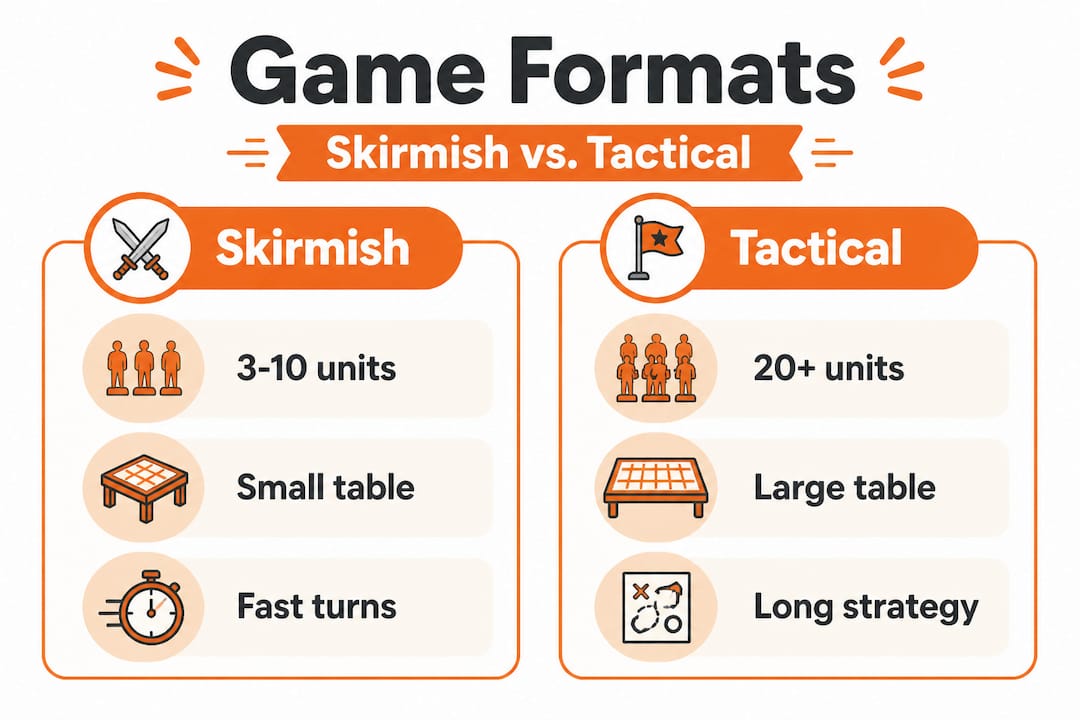
In D&D specifically, RPG miniatures typically come in 28mm to 32mm scale, where a 1-inch base equals 5 feet of in-game space. They’re optional tools for tactical combat on grids, giving players a clear visual sense of who’s where and what’s happening. Think of them as living props and immersion tools that make the narrative pop off the table.
For anyone curious about how miniatures fit into your broader game setup, check out our deep dive on tabletop immersion tips for a full picture of how physical tools elevate your sessions.
Core mechanics: Turn-based play, measurement, and terrain
Knowing what defines miniatures gaming genres is great, but let’s get into the nuts and bolts of how these games actually play out at the table.
At their heart, most miniatures games share a handful of core mechanics:
- Turn-based play: Players alternate activating their models, moving them across the table, and taking actions.
- Movement measurement: Distances are measured from model bases using a tape measure or ruler, typically on a table 4 feet wide.
- Combat resolution: Attacks are resolved with dice rolls, usually with some simple math applied for modifiers.
- Terrain interaction: Models can hide behind walls, climb elevations, and use cover for tactical advantages.
- Objectives: Many games include mission goals beyond just elimination, like capturing zones or escorting characters.
The terrain element is especially exciting. Real 3D terrain (hills, ruins, forests, and dungeon walls) creates dynamic battlefields where elevation and line of sight genuinely matter. A unit hiding behind a crumbled wall has real mechanical advantages, not just visual ones. This is where battle mats become a game changer, literally and figuratively.
Here’s a simple breakdown of common miniatures game mechanics and their purpose:
| Mechanic | How it works | Why it matters |
|---|---|---|
| Movement | Measured in inches from base | Keeps positioning fair and precise |
| Combat | Dice roll plus modifiers | Creates tension and variability |
| Line of sight | Determined by 3D terrain | Rewards smart positioning |
| Turn order | Alternating activation | Balances player agency |
| Morale/Resolve | Roll after casualties | Adds narrative drama |
One of the most interesting quirks of miniatures gaming is the social dimension of measurement. Non-discrete movement (measuring freely rather than snapping to a grid) requires player collaboration on distances, which technically enables disputes. But here’s the twist: this creates a social contract at the table. Players build trust, negotiate edge cases, and develop unspoken codes of fair play. It’s wonderfully human for a game involving plastic soldiers.
Pro Tip: If you’re new to miniatures gaming and worried about rules complexity, start with a skirmish game of fewer than 10 models per side. The learning curve shrinks dramatically, and you can focus on having fun rather than managing an entire army.
Our essential miniatures gaming gear guide has everything you need to kit out your first gaming session without overspending.
Miniatures in RPGs: From optional tool to immersion engine
While mechanics lay the foundation, how do miniatures actually transform role-playing games like D&D? And what should you know as a player or GM?
The classic debate in D&D circles is “minis vs. theater of the mind.” Theater of the mind means everyone just imagines the scene, relying purely on the DM’s description. It’s cinematic, fast, and endlessly flexible. Miniatures, by contrast, bring grid-based combat to the table, where positioning, flanking, and area-of-effect spells all have exact visual representations.
Both approaches are valid. Seriously. Neither is “the right way.” But here’s what miniatures do that pure imagination can’t:
- Resolve position arguments: “Wait, am I within 30 feet of the dragon?” No more guessing.
- Clarify spell areas: That fireball’s 20-foot radius becomes visually obvious on a grid.
- Boost immersion: Seeing your painted paladin next to a towering demon model? That’s electric.
- Help new players: Spatial awareness on a grid removes cognitive load and lets newcomers focus on story choices instead of geometric math.
D&D miniatures at 28mm to 32mm scale work perfectly on standard 1-inch grid maps, where each square equals 5 feet of in-game distance. This standardization means nearly any miniature from any manufacturer fits the system, which is great news for your wallet and creative freedom.
“For D&D enthusiasts, minis resolve position arguments and shine brightest in grid combat systems like 5e and Pathfinder. Narrative-first play, the kind Gary Gygax himself preferred, happily skips them entirely.” Solo RPGs, minis, and models
It’s also worth noting that in purely narrative systems like Powered by the Apocalypse games (Monster of the Week, Apocalypse World, etc.), miniatures are purely aesthetic. There’s no grid, no measurement, no mechanical benefit. They’re just vibes and beautiful vibes at that.
The common pitfalls to watch for? Analysis paralysis (players spending five minutes calculating optimal grid positions instead of doing cool stuff) and what we lovingly call “gridlock,” where the game slows to a tactical crawl and loses its storytelling momentum. The fix is simple: set a timer for player turns, encourage bold narrative choices, and remind everyone that the story is the point.
Pro Tip: Mix both approaches within a single session. Use theater of the mind for social encounters and exploration, then deploy the grid only for major combat set pieces. You get the best of both worlds without the downsides of either.
Curious about how accessories transform your game table? Our breakdown of using accessories in D&D and our Dungeon Master essentials guide are packed with practical wisdom.
The miniatures hobby: Collecting, painting, and creative community
Beyond play, miniatures gaming is a thriving hobby. Let’s look at the creative side and the community buzzing away behind the scenes.
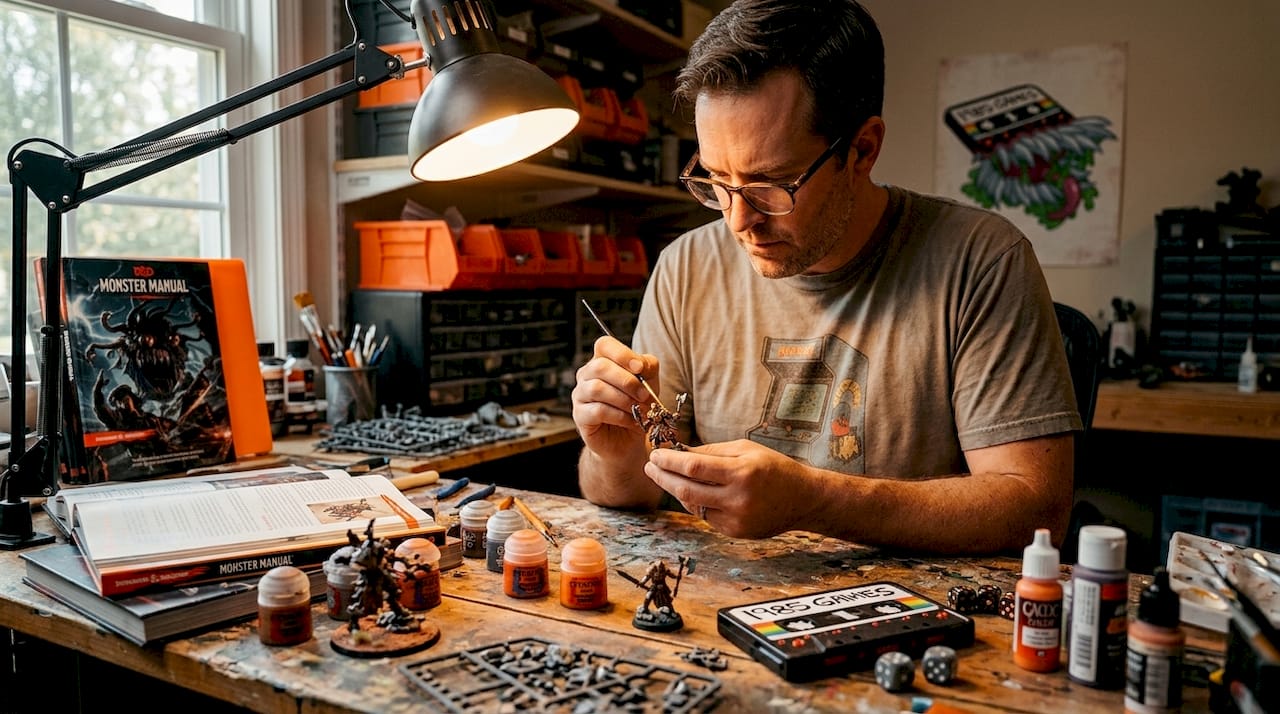
Here’s the thing that surprises a lot of newcomers: for many miniatures enthusiasts, the painting and collecting IS the hobby. The actual gaming is almost secondary. That’s not a knock on gameplay. It just shows how deep and multi-layered this world truly is.
The numbers tell a fascinating story. The global miniatures market was valued at roughly $1.34 to $1.47 billion in 2022, and it’s projected to hit $2.8 to $2.85 billion by 2030, growing at a compound annual growth rate of 8.7%. That’s not a niche anymore. That’s a serious industry growing faster than most people realize.
What’s driving that growth? A few things:
- Painting culture: Beginners typically spend 3 to 6 hours per figure when starting out. It’s meditative, creative, and deeply satisfying to see a gray lump of plastic become a fully realized character.
- Collecting habits: Around 40% of hobbyists buy new miniatures every single month. The “pile of shame” (unpainted minis stacking up faster than you can finish them) is a beloved running joke in the community.
- 3D printing revolution: STL file sales (digital miniature designs for home printing) have grown by 40% in recent years. This has dramatically lowered the cost of entry and exploded the options available for custom characters and unique terrain pieces.
- Community spaces: Local game stores, painting clubs, Discord servers, and events like AdeptiCon bring hobbyists together in ways that feel genuinely warm and welcoming. Mentorship from experienced painters is incredibly common.
The most beginner-friendly painting workflow looks something like this:
- Prime the model with spray primer (gray or black works great)
- Base coat each area with a solid, flat color
- Apply a wash (thin, dark paint that flows into recesses and adds shadow)
- Drybrush highlights by dragging a nearly dry brush across raised surfaces
- Add details like eyes, gems, and weapon edges
- Seal with a matte or gloss varnish to protect your work
That workflow produces genuinely impressive results even for total beginners, and there’s a massively supportive community online to cheer you on every step of the way.
For the terrain builders in the room, our guides on creating tactical terrain and terrain for D&D will spark more ideas than you know what to do with.
Pro Tip: Start your painting journey with Reaper Bones miniatures. They’re inexpensive, widely available, and forgiving for beginners. A starter set plus a basic brush kit costs less than a board game and keeps you busy for months.
A fresh perspective: Why miniatures gaming thrives in a digital age
With the full picture in sight, let’s reflect on something that genuinely fascinates us. Why is this very physical, very tactile hobby growing in an era of virtual tabletops, digital automation, and AI dungeon masters?
The easy answer is nostalgia. And sure, that’s part of it. But we think the real answer is richer than that.
Here’s our hot take: the “flaws” of miniatures gaming are actually features. The measurement disputes, the slightly wonky terrain you built yourself, the mini that keeps falling over because its base isn’t quite flat? Those imperfections create shared moments. They become stories. “Remember when Kyle’s dragon kept toppling off the bridge during our big fight?” That doesn’t happen in a virtual tabletop. The friction of physical play generates genuine human connection.
There’s real insight here when you consider how analog human skills like spatial perspective, empathy, and physical dexterity interact differently with gaming than pure digital precision does. When you’re eyeballing whether a model is within range, you’re using your whole body and your social relationship with your opponent. That’s irreplaceable.
We’d also push back on the idea that miniatures gaming has a high barrier to entry. In 2026, pre-painted miniatures (shout out to WizKids and D&D Nolzur’s Marvelous Miniatures), 3D printing, and massive online communities have made starting easier than ever. The community mentorship culture is real and genuinely wholesome. Veterans actively want to help beginners. Walking into a local game store hobby night and being welcomed is a nearly universal experience.
The future of miniatures gaming isn’t analog OR digital. It’s both. QR-coded terrain tiles, hybrid apps that track game state, 3D-printed terrain paired with digital maps? That’s already happening. The hobby is evolving fast, and the players shaping it are doing so with creativity and joy. Our guide on modern tabletop best practices captures exactly where that evolution is headed.
Ready to start your own adventure? Explore miniatures gaming supplies and tools
If this article has your imagination sparking and your fingers itching to start placing models on a table, we’ve got you covered. At 1985 Games, we believe every adventurer deserves a table that feels as epic as the story happening on it.

Our Dungeon Craft Vol. 2 and Dungeon Craft Cursed Lands collections are built specifically for players and Dungeon Masters who want to bring miniatures gaming to life with stunning, immersive terrain and battle maps. Whether you’re running your first dungeon crawl or upgrading a veteran campaign, these tools are designed to make every encounter unforgettable. Explore everything at 1985 Games and find your next favorite piece of gear. Your table is waiting.
Frequently asked questions
Do I need miniatures to play D&D or other RPGs?
No, miniatures are completely optional in D&D. They enhance tactical combat clarity, but narrative-style play works beautifully without them using theater of the mind instead.
What’s the difference between wargaming and miniatures in RPGs?
Wargaming focuses on competitive army-building and battle outcomes, while RPG use of miniatures centers on immersion, character representation, and tactical clarity within a story-driven experience.
What size are most miniatures?
The industry standard is 28mm heroic scale, which dominates both fantasy wargaming and D&D. It’s compatible with most maps, terrain, and accessories on the market.
Do I need to paint my own miniatures?
Not at all. Pre-painted options like WizKids are widely available and ready to use straight out of the box. Painting your own is a rewarding creative hobby but completely optional.
How is 3D printing changing miniatures gaming?
STL sales have grown 40% in recent years, making custom miniatures and terrain far more affordable and accessible than ever before. Home printers have genuinely democratized the hobby.