

Most Dungeons & Dragons players treat terrain as mere decoration, placing miniatures on a flat grid without considering how cliffs, rivers, or rubble should influence their tactics. This oversight wastes one of D&D’s most powerful tools for creating memorable, strategic encounters. Understanding terrain’s role in combat mechanics transforms ordinary skirmishes into dynamic puzzles where positioning matters as much as spell slots. This guide reveals how terrain shapes movement, line of sight, and attack outcomes, giving you practical methods to leverage elevation, cover, and environmental hazards for richer gameplay.
Table of Contents
- Understanding Terrain’s Impact On Combat Mechanics
- The Strategic Value Of Verticality And Elevation
- Using Terrain Interaction And Battlefield Shaping Tactics
- Creating Dynamic And Memorable Encounters With Terrain
- Enhance Your Campaigns With Specialized Terrain Maps And Tools
- Frequently Asked Questions
Key takeaways
| Point | Details |
|---|---|
| Combat mechanics | Terrain directly affects movement speed, attack rolls, and saving throws through cover and difficult ground rules. |
| Verticality advantages | Elevated positions increase ranged attack effectiveness by 15% and provide superior tactical control. |
| Battlefield shaping | Using spells, consumables, and bonus actions to manipulate terrain creates choke points and damage opportunities. |
| Dynamic encounters | Interactive terrain elements like collapsing bridges transform combat into memorable, player-driven narratives. |
| Strategic depth | Terrain features function as tactical tools that reward creative problem-solving and spatial awareness. |
Understanding terrain’s impact on combat mechanics
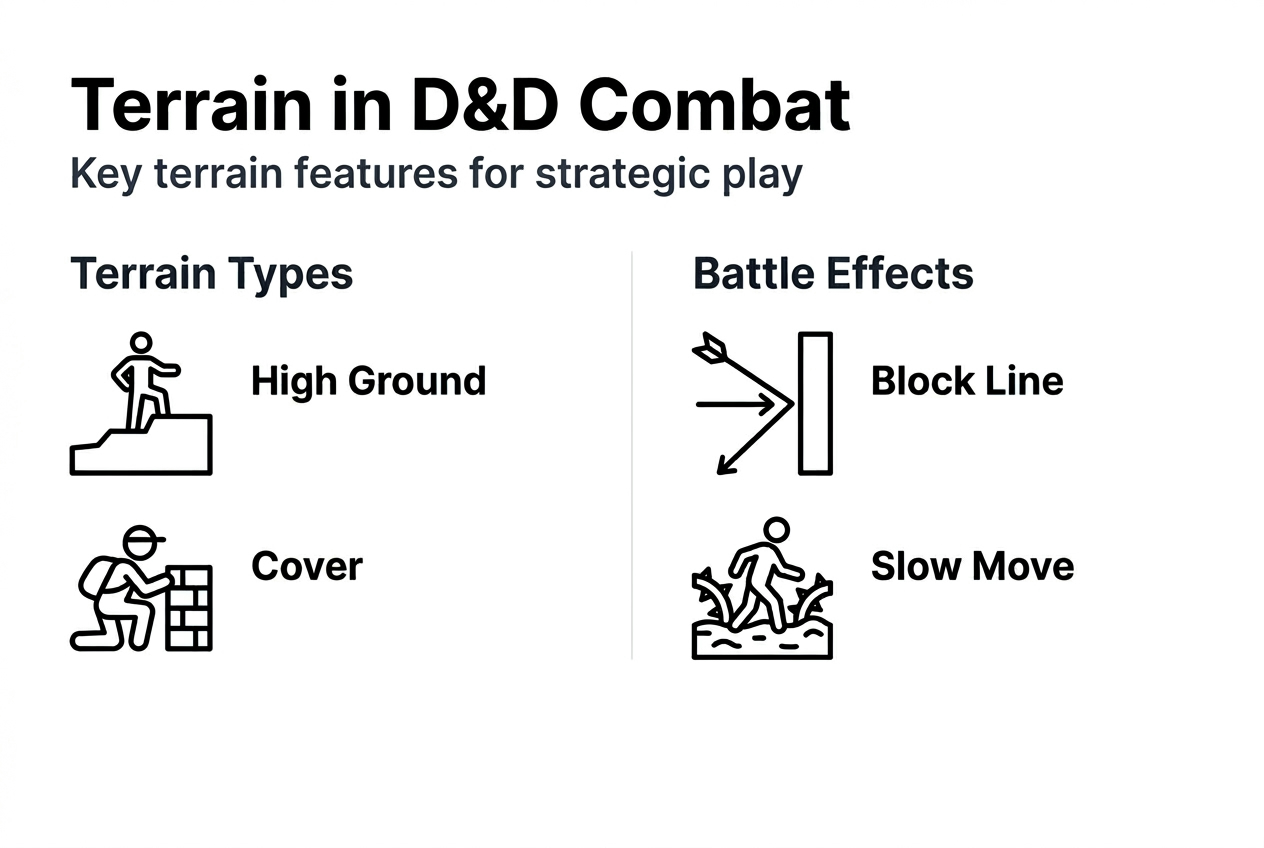
Terrain features fundamentally alter how D&D combat resolves. Cover grants AC and Dexterity saving throw bonuses, turning a simple wall into the difference between a hit and a miss. Half cover adds +2 to AC and Dex saves, while three-quarters cover provides +5, dramatically shifting survival odds in ranged exchanges.
Difficult terrain halves movement speed, forcing tactical choices about positioning versus action economy. A character with 30 feet of movement can only traverse 15 feet through rubble or thick vegetation, potentially leaving them exposed or unable to reach objectives. This movement penalty makes terrain control a critical tactical consideration, especially when combined with area denial spells.
Elevation changes create asymmetric advantages in ranged combat. Attackers on high ground gain clearer lines of sight while defenders below struggle with obscured vision. This vertical dimension adds layers of decision-making absent from flat battlefields.
Terrain impact on combat outcomes:
| Terrain Type | Mechanical Effect | Tactical Advantage |
|---|---|---|
| Half cover | +2 AC and Dex saves | Reduces hit probability by 10% |
| Three-quarters cover | +5 AC and Dex saves | Reduces hit probability by 25% |
| Difficult terrain | Movement halved | Controls enemy approach routes |
| High ground | Advantage on ranged attacks | Increases damage output by 15% |
| Water (deep) | Movement quartered | Creates natural barriers |
Spell targeting often depends on terrain configuration. Wall of Fire becomes exponentially more effective when cast across a narrow canyon, funneling enemies through flames. Conversely, Fireball loses effectiveness in cluttered environments where cover breaks line of effect.
Using terrain effectively can shift combat outcomes by up to 30%, transforming disadvantaged parties into victors through superior positioning. Recognizing these mechanical interactions separates tactical players from those who ignore the battlefield’s three-dimensional nature.
Pro Tip: Always identify three terrain features before initiative: the nearest cover, the highest elevation point, and any movement obstacles. This 10-second scan gives you instant tactical options when your turn arrives.
The strategic value of verticality and elevation
Vertical terrain elements introduce complexity that flat battlefields cannot match. Verticality significantly impacts tactical decision-making, affecting movement costs, attack angles, and defensive options simultaneously. A 10-foot elevation change creates meaningful strategic choices about whether to climb, circumvent, or exploit the height difference.
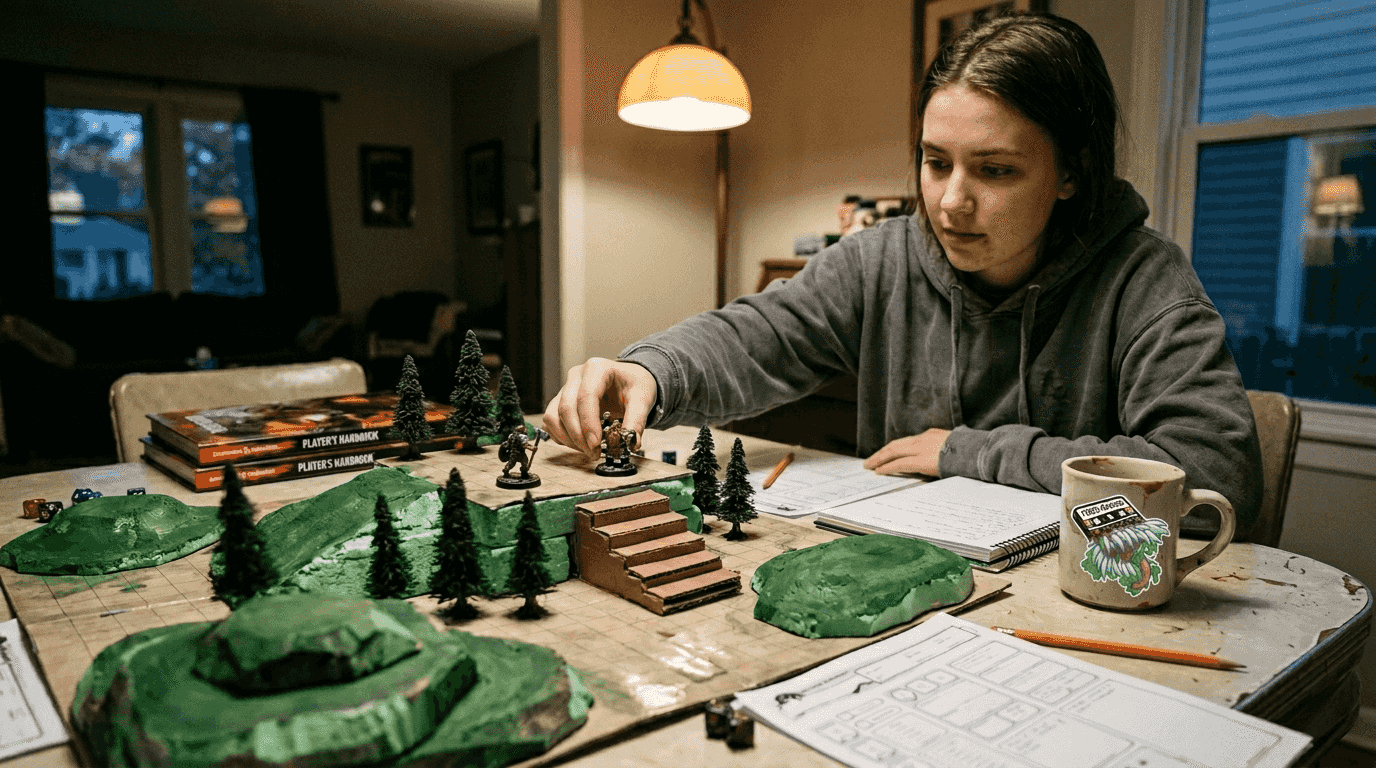
Controlling high ground provides consistent combat advantages, increasing both offensive and defensive capabilities. Ranged attackers gain clearer shots while melee combatants below waste actions climbing or using ranged attacks at disadvantage. This dynamic forces lower-positioned players to adapt their tactics or accept inferior positioning.
Ledges and balconies create natural chokepoints where defenders can concentrate firepower. A single archer on a 20-foot platform controls a surprisingly large area, forcing attackers to split attention between advancing and neutralizing the elevated threat. This tactical pressure multiplies when combined with area effect spells cast from height.
Key vertical terrain advantages:
- High ground offers a 15% increase in damage output for ranged attackers through improved accuracy
- Elevated positions complicate enemy spell targeting by breaking line of effect
- Climbing costs reduce attacker action economy, buying defenders critical turns
- Fall damage (1d6 per 10 feet) creates environmental hazard opportunities
- Vertical spacing increases battlefield complexity, rewarding spatial awareness
“Verticality in combat significantly impacts tactical decision-making, movement, and line of sight, adding complexity and strategic depth to encounters that flat battlefields simply cannot provide.”
Environmental hazards combined with elevation multiply their effectiveness. A flaming oil pool at the base of a ladder forces enemies into impossible choices: climb through fire, find alternate routes, or engage at range. These terrain combinations create memorable moments where the environment becomes as threatening as any monster.
Player engagement increases measurably when verticality enters combat. Surveys of DMs report that encounters with meaningful elevation changes generate 40% more tactical discussion among players compared to flat battlefields. This engagement stems from the expanded decision space: players must consider not just positioning on a 2D plane but also vertical movement costs and advantages.
Varying floor levels, staircases, and multi-story structures provide natural vertical elements for urban or dungeon encounters. Even simple 5-foot elevation differences create tactical texture, giving melee fighters reasons to think about positioning beyond “move adjacent and attack.”
Using terrain interaction and battlefield shaping tactics
Active terrain manipulation transforms static battlefields into dynamic tactical puzzles. Bonus actions like Jump and Shove enable movement over obstacles without sacrificing attack actions, making terrain interaction more accessible during combat rounds. A fighter can shove an enemy off a ledge and still make weapon attacks, combining environmental damage with regular offense.
Spells and consumables create terrain where none existed before. Consumables and spells shape the battlefield, establishing choke points and tactical advantages through player creativity. Grease transforms open ground into difficult terrain, while Spike Growth creates area denial that enemies cannot ignore.
Practical terrain shaping sequence:
- Identify enemy approach vectors and objective locations on the battlefield
- Use area effect spells or consumables to create barriers along predicted paths
- Position party members to exploit the channeled enemy movement
- Maintain pressure on created choke points to maximize tactical advantage
- Adapt terrain control as enemy tactics change during the encounter
Flaming oil, acid pools, and alchemical items provide low-level terrain manipulation options. A flask of alchemist’s fire creates a 5-foot square of burning terrain for multiple rounds, dealing damage to any creature ending its turn there. These consumables cost gold but deliver battlefield control accessible to any character class.
Using terrain shaping tactics effectively requires anticipating enemy movement. Creating a wall of ice perpendicular to the enemy’s advance forces them to commit additional movement circumventing it or waste actions destroying the barrier. Either choice benefits the party through improved action economy.
Terrain manipulation comparison:
| Method | Cost | Duration | Tactical Effect |
|---|---|---|---|
| Grease spell | 1st level slot | 1 minute | Creates 10-foot square difficult terrain |
| Flaming oil | 5 silver pieces | 2 rounds | Deals 1d4 fire damage per round |
| Spike Growth | 2nd level slot | 10 minutes | 2d4 damage per 5 feet moved |
| Wall of Stone | 5th level slot | Permanent | Blocks movement and line of sight |
| Shove action | Bonus action | Instant | Moves enemy 5 feet, potential fall damage |
Balancing terrain complexity prevents analysis paralysis. Too many interactive elements bog down encounter pacing as players debate optimal terrain use each turn. Focus on two or three meaningful terrain features per encounter, giving players clear tactical options without overwhelming decision-making.
Pro Tip: Prepare a quick reference card listing your character’s terrain interaction options (spells, consumables, special abilities). Having this information accessible prevents forgetting useful tactics during combat’s intensity.
Creating dynamic and memorable encounters with terrain
Interactive terrain elements transform combat from mechanical exchanges into narrative experiences.
Environmental hazards add complexity layers that standard monster stat blocks cannot provide. Poisonous gas clouds force movement decisions independent of enemy positions. Lava streams create natural barriers that reshape battlefield geometry as combat progresses. These hazards function as persistent threats demanding ongoing tactical attention.
Magical barriers and enchanted terrain introduce fantastical elements unique to D&D. An area where magic fails differently affects spellcasters versus martial characters, creating asymmetric challenges. Zones of wild magic add unpredictability that keeps even familiar encounters fresh.
Interactive terrain element examples:
- Collapsing floors that trigger on weight thresholds, forcing careful movement planning
- Magical crystals that redirect spell energy, creating ricocheting fireball hazards
- Flowing water that pushes creatures downstream, altering positioning each round
- Unstable footing that requires Athletics checks or imposes movement penalties
- Environmental darkness that shifts advantage dynamics toward darkvision-equipped creatures
Sandbox adventures leverage terrain to boost player agency through emergent narratives. When terrain offers multiple interaction possibilities, players generate creative solutions the DM never anticipated. This emergent problem-solving creates uniquely memorable moments that pre-scripted encounters rarely achieve.
Balancing pre-designed and improvised terrain caters to diverse play styles. Some tables prefer detailed battle maps with explicit terrain features, while others thrive on theater-of-the-mind descriptions. Effective DMs recognize their group’s preferences and adjust terrain complexity accordingly.
Terrain approach comparison:
| Approach | Strengths | Best For | Preparation Time |
|---|---|---|---|
| Detailed maps | Clear mechanical effects, visual engagement | Tactical-focused groups | 30-60 minutes |
| Theater of mind | Narrative flexibility, quick setup | Story-focused groups | 5-10 minutes |
| Modular tiles | Reusable, adjustable layouts | Mixed groups | 15-30 minutes |
| Digital tools | Dynamic lighting, instant terrain changes | Tech-comfortable groups | 20-40 minutes |
Terrain can function as a character within encounters, influencing story outcomes as significantly as any NPC. A cursed forest that rearranges paths creates navigation challenges driving plot tension. Terrain that responds to character actions (doors that seal after passage, bridges that collapse under weight) makes the environment feel alive and reactive.
Environmental storytelling through terrain builds world immersion. Crumbling fortifications suggest historical conflicts. Magical corruption visible in twisted vegetation communicates setting details without exposition. These terrain-based narrative cues enrich campaigns while providing tactical elements.
Enhance your campaigns with specialized terrain maps and tools
Bringing sophisticated terrain strategies into your sessions requires tools that streamline implementation without overwhelming preparation time. Dungeon Craft Vol 2 provides ready-to-use terrain layouts featuring elevation changes, environmental hazards, and interactive elements that support the tactical depth discussed throughout this guide.

These pre-designed maps eliminate hours of drawing while ensuring mechanically sound terrain features. Each layout considers line of sight, movement costs, and cover positioning, letting you focus on narrative and monster tactics rather than battlefield geometry. The collection includes vertical elements like platforms and pits that create the strategic depth players crave.
Dungeon Notes journals help track terrain details across campaign sessions, recording which environmental features players discovered and how they modified battlefields. This documentation ensures consistency and allows callbacks to previous terrain interactions, strengthening campaign continuity and rewarding player creativity with lasting world impact.
Frequently asked questions
What is the role of terrain in D&D?
Terrain serves as both mechanical modifier and narrative element, affecting combat outcomes through cover bonuses, movement costs, and line of sight restrictions while simultaneously supporting storytelling through environmental detail. Effective terrain use transforms static grid combat into dynamic tactical challenges where positioning matters as much as character builds.
How does verticality affect D&D combat?
Vertical terrain creates asymmetric tactical advantages, with elevated positions providing increased attack accuracy, superior defensive positioning, and control over approach routes. High ground offers approximately 15% damage increase for ranged attackers while forcing lower-positioned enemies to spend additional actions climbing or accept disadvantageous engagement conditions.
What are the best ways to manipulate terrain during combat?
Bonus action abilities like Shove and Jump provide immediate terrain interaction without sacrificing attack actions, while spells such as Grease, Wall of Stone, and Spike Growth create persistent terrain modifications. Consumable items like alchemist’s fire and acid flasks offer low-cost battlefield shaping accessible to any character class regardless of spellcasting ability.
How do environmental hazards enhance encounters?
Environmental hazards add persistent threats independent of monster actions, forcing players to balance multiple danger sources simultaneously and creating tactical complexity beyond standard combat mechanics. Hazards like poisonous gas, lava flows, or magical anomalies generate memorable moments where environmental awareness becomes as critical as enemy positioning.
Should DMs use detailed terrain maps or theater of the mind?
The optimal approach depends on group preferences and play style, with tactical-focused tables benefiting from detailed maps providing explicit mechanical effects while narrative-focused groups often prefer theater of the mind’s flexibility. Many successful DMs use hybrid approaches, employing detailed maps for complex set-piece battles while using simplified descriptions for minor encounters to balance preparation time with tactical engagement.
How does terrain support sandbox campaign styles?
Terrain provides multiple interaction possibilities that enable emergent player-driven solutions, supporting sandbox philosophies where player agency drives narrative rather than predetermined story paths. Varied terrain features offer creative problem-solving opportunities that generate unique, unrepeatable moments distinguishing each group’s campaign experience from others playing the same adventure module.