

TL;DR:
- Terrain design enhances immersion, combat, and exploration by creating a visual three-dimensional environment.
- It influences movement, tactical decisions, and storytelling through rules for different terrain types.
- Building modular, clear, and layered terrain improves gameplay and adds storytelling detail efficiently.
Forget flat maps for a second. Imagine your players leaning over the table, eyes wide, scanning a three-dimensional dungeon corridor where every doorway and crumbling pillar is right there in front of them. That’s the magic of terrain design, and it hits different from a blank grid. Terrain design in tabletop RPGs refers to using environmental features, maps, and physical or virtual elements to enhance combat, exploration, and player immersion. Whether you’re a brand-new Game Master taping together cardstock dungeons or a seasoned DM with a foam carving kit and a dream, terrain design is the upgrade your sessions deserve.
Table of Contents
- What is terrain design in tabletop RPGs?
- Core mechanics: How terrain affects movement and combat
- Popular methods and materials for building terrain
- Why and when to use terrain: Rules-heavy vs. narrative play
- Top tips for enhancing immersion and gameplay through terrain design
- Our take: What most guides miss about terrain design
- Upgrade your tabletop with quality terrain and accessories
- Frequently asked questions
Key Takeaways
| Point | Details |
|---|---|
| Terrain design defined | Terrain design is creating physical or virtual features to enhance immersion and tactics in tabletop games. |
| Core terrain mechanics | Understanding movement and combat rules for terrain boosts your game’s strategic depth and clarity. |
| Modular systems recommended | Reusable, modular terrain offers the best balance of flexibility, replayability, and value. |
| Match terrain to playstyle | Choose your terrain approach based on your group’s rules preference and narrative style. |
What is terrain design in tabletop RPGs?
Now that we’ve set the stage, let’s clarify exactly what terrain design means in the world of tabletop role-playing games.
At its core, terrain design is about giving your game world a physical or visual form that players can see, touch, and interact with. We’re talking about anything that represents the environment where your adventures unfold. Terrain design in tabletop RPGs covers environmental features, maps, and elements that enhance combat, exploration, and immersion for both players and Dungeon Masters.
So what’s the difference between a map and terrain? Great question, dice goblin. A 2D map (think printed grid paper or a dry-erase mat) gives players a bird’s eye view of the battlefield. It’s flat, simple, and totally functional. Terrain, on the other hand, adds a third dimension. We’re talking foam mountains, resin pillars, cardboard walls, and sculpted dungeon tiles that rise off the table and say “we mean business.”
Here’s a quick breakdown to put it in perspective:
| Feature | 2D Map | 3D Terrain |
|---|---|---|
| Visual immersion | Low to moderate | High |
| Setup time | Fast | Moderate to slow |
| Tactical clarity | Good | Excellent |
| Cost | Low | Moderate to high |
| Reusability | High | Very high (modular) |
Why does this matter? Because grid-based games like D&D 5e use a standard scale where 1 inch equals 5 feet, and that spatial clarity directly shapes how players move, fight, and explore. A fighter needs to know if they can reach the goblin king before spending their full movement. A rogue needs to identify that shadow for a hiding spot.
Understanding terrain in D&D explained is more than a visual exercise. It shapes the whole flow of the encounter. Some key things terrain design does for your table:
- Defines where characters can and cannot go
- Creates chokepoints and flanking opportunities
- Adds environmental storytelling (the crumbling temple says something without a word)
- Gives players a visceral sense of the space they’re inhabiting
Terrain also supercharges narrative immersion. When your paladin stands on a raised stone dais or your ranger peers through sculpted tree cover, the story feels real. And real feels good. Brain-lighting-up-like-a-Nat-20 good.
Core mechanics: How terrain affects movement and combat
Defining terrain design is just the foundation. Understanding the rules that govern it can transform how you run and play your game.
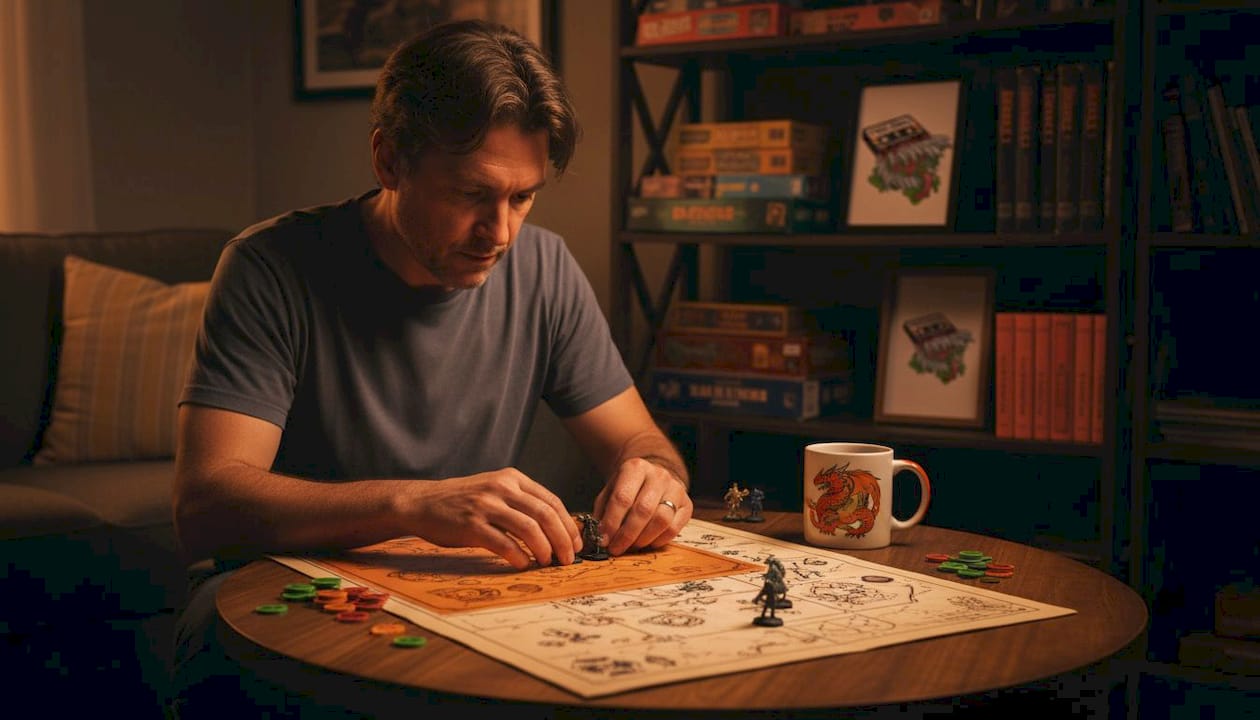
Here’s where things get crunchy (in the best possible way). Terrain in TTRPGs isn’t just decorative. It comes with rules that directly change what your characters can do each turn. Systems like Pathfinder lay this out very specifically, and knowing the mechanics makes you a sharper GM and a smarter player.
Core terrain mechanics include categories that modify movement and combat in distinct ways. Let’s walk through them:
| Terrain Type | Movement Cost | Extra Effect |
|---|---|---|
| Normal | Standard | None |
| Difficult | 2x movement | Slows progress |
| Greater difficult | 2x and special | May require action to cross |
| Hazardous | Standard or 2x | Deals damage on entry or each turn |
Hazardous terrain is the spicy one. Walking through lava? That’s gonna leave a mark. A cloud of toxic spores? Same deal. The GM’s job is to telegraph these clearly so players can make informed choices. That’s what great terrain design enables.
Here’s a numbered breakdown of how terrain interacts with combat step by step:
- Identify terrain types before placing miniatures. Know which zones are difficult or hazardous.
- Calculate movement costs using the terrain modifier (double cost for difficult, etc.).
- Factor in creature size. Larger creatures may be able to ignore some difficult terrain or, conversely, find narrow passages more challenging.
- Consider special actions. In Pathfinder, the Stride action moves you through terrain, while abilities like Leap or Climb interact with vertical and obstructed terrain differently.
- Apply damage where relevant. Hazardous terrain deals damage at the start or end of a creature’s turn (depends on the system).
- Reward creative play. Players who use terrain intelligently should feel the payoff. Pushing an enemy into hazardous terrain? Chef’s kiss.
Your terrain guide for TTRPGs is also a strategy guide for your players. When they understand the rules, they engage more deeply. Suddenly that patch of mud isn’t just scenery. It’s a tactical puzzle.
Pro Tip: Always walk your players through any non-standard terrain types at the start of a session. A quick “this swamp counts as difficult terrain everywhere” saves a ton of mid-combat questions and keeps the energy high.
Also, don’t forget the fun side of flanking. In many systems, positioning around an enemy grants bonuses. Terrain shapes whether flanking is even possible. A narrow hallway cuts that option out. An open courtyard invites it. Design with intention and watch your combats sing.
Popular methods and materials for building terrain
With mechanics in mind, let’s look at how to physically (or virtually) bring your game world to life.
There are more ways to build terrain than there are monsters in the Monster Manual. Seriously. Whether you’re building on a budget or treating yourself like the terrain royalty you are, there’s an approach for every table.
Physical terrain building uses modular systems like resin, foam, and 3D printed pieces for reusability. DIY methods like XPS foam carving are also a fan favorite. Here’s what the terrain landscape looks like:
- Modular resin terrain: Brands like Dwarven Forge have set the gold standard here. These pieces are dense, detailed, and snap together in endless configurations. They’re an investment but they last forever and look absolutely stunning on the table.
- 3D printed terrain: Fat Dragon Games and similar creators sell printable STL files. If you have access to a 3D printer, this is a fantastic mid-range option. You can print exactly what you need, when you need it.
- XPS foam carving: Extruded polystyrene (XPS) foam is cheap, lightweight, and carveable with basic tools. Dedicated crafters can create incredibly detailed dungeons for next to nothing. YouTube tutorials make it accessible even for beginners.
- Wet-erase battle mats: These are the budget champion. A good wet-erase mat paired with dry-erase markers gives you a fully customizable 2D playing surface. No sculpting required. Draw it, play it, wipe it clean.
- Papercraft and cardstock: Print and fold. Seriously. There’s a whole community of designers creating gorgeous terrain you can print at home and assemble in an afternoon.
Pro Tip: If you’re just starting out, grab a wet-erase mat and a pack of basic foam blocks from a craft store. Spend under $30. You’ll be shocked how much that alone transforms your table.
Remember the golden rule: scale matters. Nearly all TTRPG terrain uses the 1 inch to 5 feet standard. That means a 2-inch-square platform represents a 10-foot-by-10-foot area in game. Mixing scales is a fast track to confusion. Stick to the standard and everything clicks into place.
Want to go deeper into the modular world? Check out modular terrain building for some seriously inspiring examples of what’s possible when you commit to the craft.
Why and when to use terrain: Rules-heavy vs. narrative play
Once you know how to build terrain, it’s important to recognize when and why to use it in your sessions.
Not every group needs elaborate 3D terrain. And that’s completely okay! The terrain design philosophy you choose should match your table’s style, your group’s preferences, and honestly, your time budget as a GM.
Here’s the core tension, as described by the TTRPG community:
“Success in terrain design is measured qualitatively by immersion and tactical depth, but the approach varies sharply between rules-heavy systems like D&D and Pathfinder versus theater-of-the-mind narrative systems.”
Rules-heavy games vs. narrative systems show a clear divide in how terrain functions. For rules-heavy games, terrain is practically a mechanical requirement. For narrative systems, it’s optional storytelling flavor.
Here’s a quick guide to help you figure out where your table falls:
- D&D 5e / Pathfinder 2e players: These systems are built around grids and measured distances. Terrain makes tactical decisions clearer and combat more engaging. Physical terrain is a strong upgrade here.
- Narrative systems (Blades in the Dark, FATE, etc.): Combat is often abstract. Position and distance matter less. Theater-of-the-mind works beautifully. Simple terrain (like a single prop or sketch) can still add atmosphere for key scenes.
- Mixed or hybrid tables: Many groups use 2D battle maps for big fights and pure narration for travel and social encounters. This hybrid approach is super popular and practically stress-free to manage.
Check out why battle maps for tactics matter so much in structured combat, and also explore the role of battle mats in the broader TTRPG experience.
The honest truth? The best terrain choice is the one that keeps your players engaged. If drawing a quick sketch gets everyone leaning forward, that’s a win. If a sculpted dungeon module makes the final boss fight feel legendary, that’s also a win. Use the tool that serves the moment.
Top tips for enhancing immersion and gameplay through terrain design
Now that you understand the options and philosophies, here are some tips to help you get the most out of terrain design in your own games.
Let’s get practical. These tips come from the kind of experience that only hundreds of sessions (and at least a few terrain disasters) can teach you. Modular physical terrain is preferred for practicality, and commercial examples like Dwarven Forge have established the standard. But here’s what actually matters at your table:
- Start simple and build up. Resist the urge to build an entire dungeon before your first session. Start with a mat and a few foam pieces. Add complexity as you learn what your group responds to.
- Prioritize clarity above all else. An incredible-looking terrain setup that confuses players about where they can move is a bad terrain setup. Every piece should read clearly from a player’s perspective across the table.
- Keep pieces modular and reusable. Every piece of terrain you build or buy should work in multiple configurations. A stone wall section can be a dungeon, a ruined city, or a fortress corridor with a little creativity.
- Use terrain to tell stories. Scorch marks on dungeon floors. Broken furniture. A shrine still bearing offerings. These details don’t just look cool. They hint at history and make the world feel lived-in.
- Match your investment to your frequency. If you DM once a month, a modest terrain collection is plenty. If you’re running weekly campaigns, a robust modular set will pay for itself in joy pretty fast.
- Layer flat and 3D elements. Use a battle mat as your base layer and add 3D pieces on top. This gives you the best of both worlds: flexible layout with striking visual depth.
For specific strategies on using battle maps in D&D, or how to unlock tactical play through smart terrain choices, we’ve got you covered.
Pro Tip: Photograph your terrain setups after each session. You’ll build a personal library of layouts you can recreate quickly. It also makes for amazing social content if you share your game nights online.
Our take: What most guides miss about terrain design
Here’s our honest, slightly spicy take: most terrain design guides are obsessed with realism at the expense of playability. We see it all the time. GMs spend forty hours building a gorgeous forest encounter, complete with hand-sculpted trees and painted mushrooms, only to find that players can’t figure out where the enemies are standing. The terrain won beautiful photography. The combat was a mess.
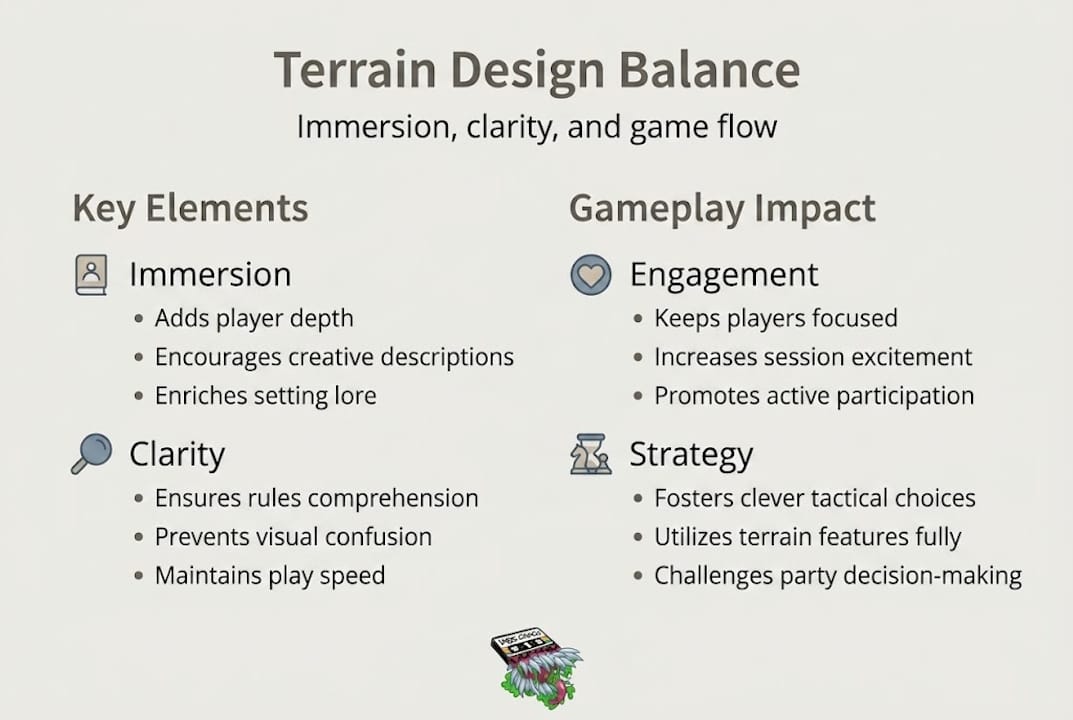
The truth is that great terrain design is about balancing three things: immersion, clarity, and game flow. If even one of those breaks down, the whole thing falls apart.
We also want to push back gently on the idea that physical terrain is always superior. Sometimes terrain strategy insights point to a different truth: a vivid verbal description of a crumbling bridge can hit harder than the most detailed foam model. Theater-of-the-mind, done well, fires up imaginations in ways no terrain piece can match.
Start small. Adapt to your table. Don’t let the pursuit of perfect terrain become a barrier to actually playing. The dice goblins at your table aren’t grading your craftsmanship. They’re there for the adventure.
Upgrade your tabletop with quality terrain and accessories
If you’re ready to take your tabletop games further, here’s how to start upgrading your sessions today.
We know that feeling when the terrain setup comes together perfectly, the minis are in position, and everyone around the table goes a little quiet before the chaos begins. That’s the sweet spot we’re always chasing. At 1985 Games, we’re here to help you get there faster and with more style.

Whether you’re building your first dungeon layout or leveling up your campaign setup, our collection of terrain battle maps, game aids, and exclusive dice sets gives you the tools to make every session feel legendary. Quality accessories aren’t just decorations. They’re the difference between a good night of gaming and a night your players talk about for months. Browse our best-sellers, pick up something that sparks joy, and roll with confidence.
Frequently asked questions
What is the best scale for TTRPG terrain?
Most games use 1 inch to represent 5 feet of in-game distance, aligning with common grid systems in D&D 5e and Pathfinder for clear spatial reference.
Does using physical terrain slow down gameplay?
Physical terrain can add setup time before a session, but it typically speeds up combat by making movement and positioning immediately clear for all players.
Can terrain be used in narrative-driven RPG systems?
Yes! Even narrative-focused systems can benefit from simple terrain during pivotal scenes, adding visual context without needing a full grid setup.
Are DIY terrain methods as effective as commercial ones?
Absolutely. DIY methods like XPS foam carving produce immersive, reusable terrain at a fraction of the cost, especially when combined with paint and creative detailing.