

TL;DR:
- A Dungeon Master is a storyteller, world-builder, and facilitator, not just a rules referee.
- Effective DMing involves pre-session planning, live narration, rules moderation, and adaptability.
- Trust, creativity, and managing group dynamics are key to creating memorable gaming experiences.
Think a Dungeon Master (DM) just sits behind a screen barking rules at players? Think again! That’s one of the biggest myths in tabletop gaming. The DM is so much more than a referee with a rulebook. They’re a storyteller, a world-builder, a comedian, a therapist (sometimes), and the engine that powers the whole adventure. Whether you’re brand new to tabletop role-playing explained or you’ve been rolling dice for years, this guide will show you exactly what a DM does, why the role is so rewarding, and how to step into those big, legendary boots with confidence.
Table of Contents
- Defining the Dungeon Master: More than a rules referee
- Core responsibilities of a Dungeon Master
- DMing styles: Rules as written vs. rules as intended
- Skills and qualities of a great Dungeon Master
- DMs as catalysts for group fun and storytelling
- Beyond the rules: Our perspective on authentic Dungeon Mastery
- Gear up for DM greatness: Tools and resources from 1985 Games
- Frequently asked questions
Key Takeaways
| Point | Details |
|---|---|
| Role versatility | Dungeon Masters combine facilitator, storyteller, and rules referee functions to lead tabletop RPGs. |
| Balance matters | Success comes from balancing rules knowledge, improvisation, and fostering player agency. |
| Styles differ | Dungeons & Dragons welcomes both strict and flexible DMing approaches tailored to the group. |
| Skills needed | Great DMs use creativity, communication, and empathy to create memorable shared adventures. |
| Community building | DMs help turn gaming groups into communities through collaborative storytelling and fun. |
Defining the Dungeon Master: More than a rules referee
Let’s set the record straight. The title “Dungeon Master” was born inside Dungeons & Dragons (D&D), the granddaddy of all tabletop RPGs. It refers to the person who runs the game, shapes the world, and brings the story to life. In other RPG systems, you might hear the term “Game Master” or GM instead. Same job, different badge.
“A game master (GM) is a facilitator/organizer and rules arbitrator who runs the multiplayer RPG.” That definition alone tells you the role is WAY bigger than just calling fouls.
So what does a DM actually do? Here’s the short list:
- Facilitator: Keeps the game moving and makes sure every player gets their moment.
- Organizer: Prepares the adventure, maps, and non-player characters (NPCs) before anyone sits down.
- Story guide: Narrates the world, introduces plot twists, and reacts to player choices.
- Rules arbitrator: Makes the final call when rules get fuzzy or players disagree.
Think of the DM like a film director mixed with an improv actor. They have a script (the adventure), but when the lead actor decides to go completely off-book (and players ALWAYS do), the DM rolls with it and makes it feel intentional. It’s part craft, part chaos, and 100% fun.
The DM also sets the tone of the entire session. A goofy, lighthearted DM creates a very different experience than a gritty, dramatic one. Neither is wrong. Both are valid. The key is matching the vibe to what your group loves.
Core responsibilities of a Dungeon Master
With a clear definition in mind, let’s explore what the Dungeon Master actually does each time the group gathers to play.
DMing happens in two phases: before the session and during it. Both matter enormously.
Before the session:
- Plan the adventure. Write or read through the story beats, encounters, and key NPCs.
- Prepare maps and environments. Know where the action happens and how the space looks.
- Build NPCs. Give villains, shopkeepers, and allies distinct voices and motivations.
- Anticipate player choices. Think about what your players might do and plan for wild detours.
- Review relevant rules. Brush up on mechanics likely to come up so rulings feel confident.
During the session:
- Narrate events. Paint the scene with vivid descriptions that pull players into the world.
- Moderate rules. Make quick, fair calls so the game flows without long pauses.
- Facilitate interaction. Draw quieter players in and manage table energy.
As DMing research notes, the DM must balance rules adjudication with maintaining player agency and coherent fiction. That balance is the secret sauce. Push too hard on rules and the story feels stiff. Ignore rules entirely and the game loses stakes.
Pro Tip: Keep a simple campaign journal to track NPC names, player decisions, and plot threads. You’ll thank yourself when a player references something from three sessions ago.
Good DMs also adapt on the fly. If the group is exhausted and just wants a fun, low-stakes session, lean into comedy. If they’re emotionally invested in a story arc, honor that investment. Check out these beginner DM tips and a full guide on running a D&D session to build your toolkit fast.
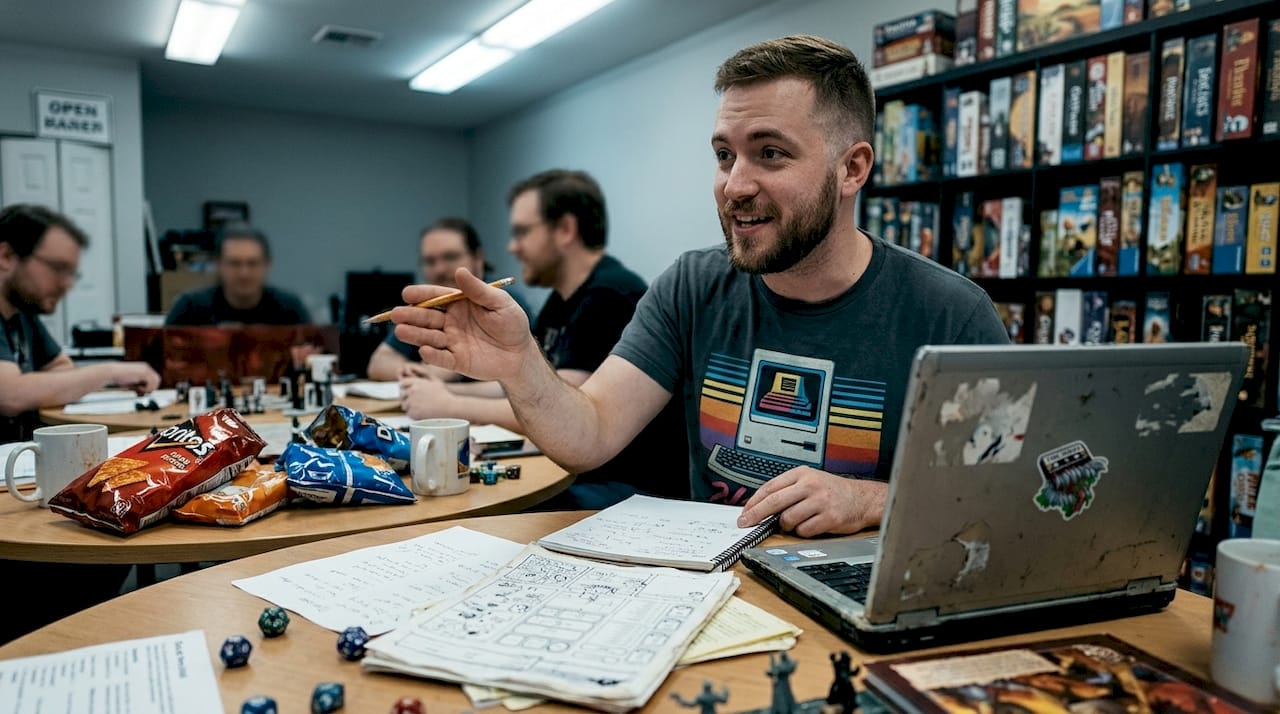
DMing styles: Rules as written vs. rules as intended
Understanding a DM’s responsibilities naturally leads to a key question: how should one interpret and apply the rules?
This is one of the spiciest debates in the RPG community. Two camps exist:
| Style | What it means | Best for |
|---|---|---|
| Rules as Written (RAW) | Apply rules exactly as printed in the rulebook | Competitive play, consistency |
| Rules as Intended (RAI) | Interpret rules based on the spirit behind them | Narrative-heavy, creative groups |
Neither approach is universally better. RPG communities actively debate how strictly to apply rules versus interpreting them during unclear situations. It’s a recurring, passionate conversation for good reason.
Here’s what each style looks like in practice:
- RAW pros: Predictable, fair, and harder to argue with. Players know exactly what to expect.
- RAW cons: Can shut down creative solutions that feel totally reasonable in the fiction.
- RAI pros: Rewards clever thinking and keeps the story feeling alive.
- RAI cons: Can feel inconsistent if the DM isn’t transparent about their reasoning.
Most experienced DMs land somewhere in the middle. They know the rules well enough to bend them intentionally, not accidentally. A great DM explains their rulings briefly and moves on. No 20-minute rules debates allowed!
For immersive campaign tips that help you blend both styles, we’ve got you covered. And if you want your table to LOOK as epic as it feels, check out the Dungeon Craft maps benefits for setting the visual scene.
Skills and qualities of a great Dungeon Master
Depending on your approach to rules and story, certain qualities and skill sets become even more vital to DM success.
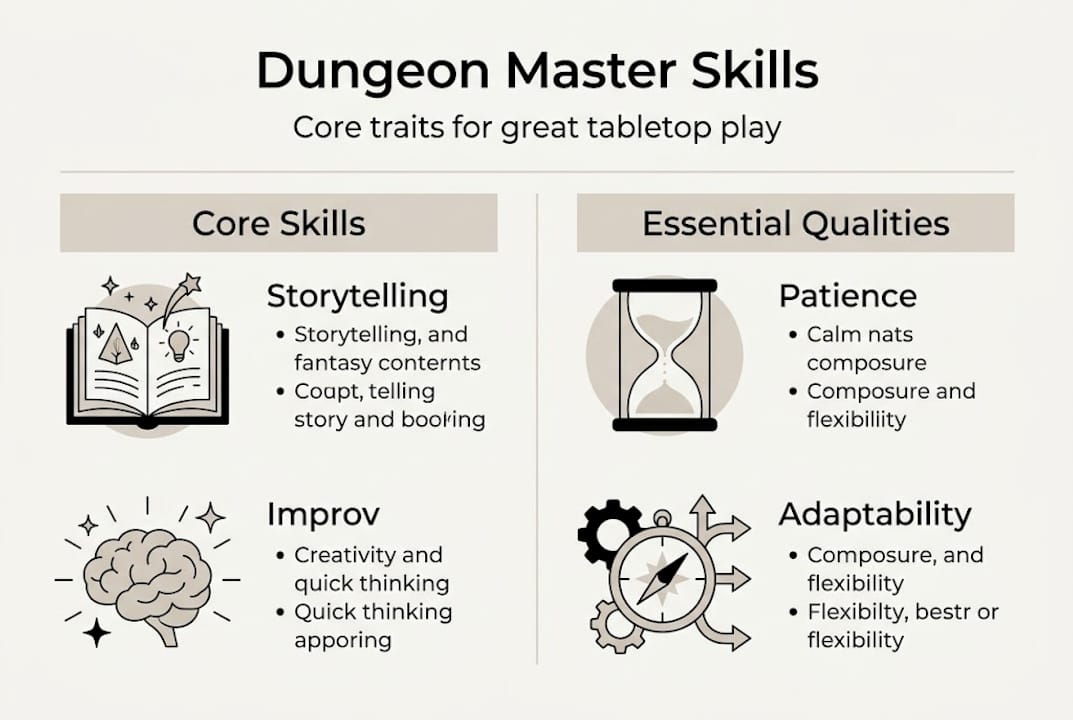
Let’s be real: nobody is born a perfect DM. These skills grow with every session. Here’s what to focus on:
| Skill | Why it matters | How to build it |
|---|---|---|
| Communication | Keeps everyone on the same page | Practice clear, vivid narration |
| Improvisation | Handles unexpected player choices | Play improv games, say “yes, and” |
| Rule knowledge | Speeds up rulings and builds trust | Read the rulebook, play often |
| Empathy | Ensures everyone feels included | Check in with players regularly |
| Adaptability | Matches the session to the group’s mood | Read body language and energy |
As DM research confirms, DMing requires balancing referee and worldbuilding functions while adapting to player interests and upholding fun. That last part, “upholding fun,” is the whole point.
Beyond the table, a few habits separate good DMs from legendary ones:
- Ask for feedback. After sessions, a quick “what worked?” goes a long way.
- Steal like an artist. Borrow ideas from books, movies, and other games shamelessly.
- Rest and recharge. DMing is mentally demanding. Don’t burn out.
Pro Tip: Explore our boosting table immersion guide for tools that make your sessions feel cinematic. Pair that with a solid dice guide for DMs and check out our essential session gear list to show up prepared every time.
DMs as catalysts for group fun and storytelling
With practical DM skills in hand, it’s worth asking: what bigger difference can DMs make for the group and the hobby?
Here’s the truth that doesn’t get said enough: the DM is the single biggest factor in whether a campaign becomes a legendary memory or a forgettable Tuesday night. That’s a LOT of power and a LOT of responsibility.
As Wikipedia notes, “The DM’s role is both collaborative and performative, shaping shared stories through player interaction and game mechanics.” That performative element is what transforms a rules session into a story people talk about for years.
Great DMs do more than run encounters. They:
- Create safe spaces. Establish session zero conversations about comfort levels and boundaries.
- Foster group bonding. Shared adventures build real-world friendships and inside jokes.
- Inspire creativity. When players see the DM improvise brilliantly, they get braver too.
- Drive replay value. A good DM makes players hungry for the next session before the current one ends.
The RPG hobby is growing fast, and DMs are at the center of that growth. More people than ever are discovering why RPGs are immersive and transformative experiences. The DM is the reason those experiences stick.
Every time a DM says “yes, and” to a wild player idea, they’re not just running a game. They’re co-authoring a story that exists nowhere else in the universe. That’s genuinely magical. No notes.
Beyond the rules: Our perspective on authentic Dungeon Mastery
Okay, dice goblins, here’s our hot take: most DM guides spend way too much time on rules and not nearly enough time on trust.
Conventional wisdom says “know your rulebook cold.” And sure, that helps. But the DMs who create truly unforgettable sessions? They’re the ones their players trust completely. Trust to be fair. Trust to be flexible. Trust to make a mistake and turn it into something brilliant.
The biggest DM mistake we see isn’t a rules flub. It’s treating every session like a performance review instead of a shared adventure. When you’re terrified of getting it wrong, you stop taking risks. And risks are where the magic lives.
Our advice: lean into the mess. When something goes sideways, laugh about it and build it into the story. Players remember the moments of joyful chaos far more than the perfectly executed encounters. Check out our beginner Dungeon Master advice for practical ways to build that trust from session one. You’ve got this.
Gear up for DM greatness: Tools and resources from 1985 Games
Ready to take your Dungeon Master game to the next level? Here are some tools and resources designed with DMs in mind.

At 1985 Games, we live and breathe tabletop RPG goodness. Whether you’re prepping your first session or running your fiftieth campaign, the right gear makes everything better. Grab our mystery dice set for a surprise that sparks joy every time you crack it open, or treat yourself (and your players) to our premium dice bundles for maximum table envy. From campaign journals to battle maps, we’ve got everything a DM needs to run sessions that feel epic. Explore even more DM resources and find your next obsession.
Frequently asked questions
Is a Dungeon Master the same as a Game Master?
“Dungeon Master” is the D&D-specific title, while Game Master (GM) is the broader term used across most tabletop RPGs for the same facilitation role.
What are the hardest challenges for new DMs?
Balancing strict rules with improvisation tops the list. DM communities confirm that rules adjudication versus player agency is the most debated challenge new DMs face.
Can a Dungeon Master play a character in the game?
DMs voice NPCs constantly, but playing a full player character is usually avoided. DM guides advise against it to prevent conflicts of interest and keep the focus on group facilitation.
What makes a session memorable for players?
Collaboration and surprise. Sessions shine brightest when the DM shapes stories through player interaction, adapts to unexpected choices, and weaves those choices into something meaningful.