

Finding the perfect accessories for your Dungeons & Dragons sessions can feel like a quest in itself. These items are more than just decorative pieces—they are storytelling tools that shape collaborative adventures with every roll and decision. From custom dice to themed maps and hand-crafted miniatures, the right accessory transforms gameplay into a vivid narrative experience. Discover how curated accessories help build immersive worlds, deepen player engagement, and give your campaign its own unique character.
Table of Contents
- Defining Accessories In Dungeons & Dragons
- Types Of D&D Accessories And Their Uses
- How Accessories Boost Immersion And Play
- Choosing Quality Accessories For Your Table
- Mistakes To Avoid When Using Accessories
Key Takeaways
| Point | Details |
|---|---|
| Role of Accessories | Accessories in Dungeons & Dragons are essential tools that enhance storytelling, engagement, and immersion for players. |
| Types of Accessories | Key categories include core gameplay items, narrative enhancement tools, and immersive environment accessories, each serving a distinct purpose in gameplay. |
| Strategic Selection | Choose accessories based on your campaign style and player preferences to maximize their effectiveness and enrich the storytelling experience. |
| Avoiding Pitfalls | Be mindful of over-reliance on accessories that may limit player creativity; maintain a balance between visual aids and narrative freedom. |
Defining Accessories in Dungeons & Dragons
In the immersive world of Dungeons & Dragons, accessories are far more than mere decorative items - they are powerful storytelling tools that transform gameplay from a simple tabletop experience into a rich narrative adventure. Game world accessories serve multiple critical functions beyond aesthetic appeal, acting as intricate elements that help players and game masters collaboratively construct fictional universes.
Accessories in D&D encompass a wide range of items that extend well beyond traditional gameplay equipment. These can include:
- Character-specific props like specialized dice sets
- Terrain and battle maps
- Miniature figurines
- Player journals and campaign tracking materials
- Costume pieces and thematic decorations
- Specialized gaming screens for Dungeon Masters
Crucial to understanding D&D accessories is recognizing their role in world-building. They aren’t just objects, but narrative devices that communicate character background, cultural context, and magical potential. By carefully selecting and utilizing these items, players can enhance immersion, provide visual cues, and add layers of depth to their roleplaying experiences.
Accessories transform D&D from a game of rules into a collaborative storytelling platform where imagination meets tangible representation.
Game Master’s Perspective
For Dungeon Masters, accessories are strategic tools for engagement. They help translate abstract narrative concepts into physical representations that players can interact with and understand. A well-chosen map, a meticulously crafted miniature, or a thematic dice set can instantly elevate the game’s atmosphere and player investment.
Pro tip: Start building your accessory collection around your campaign’s specific theme, focusing on items that genuinely enhance storytelling rather than simply collecting random props.
Types of D&D Accessories and Their Uses
Dungeons & Dragons accessories represent a rich ecosystem of tools designed to enhance gameplay, storytelling, and player immersion. Essential RPG accessories range from core functional items to creative storytelling implements that transform tabletop experiences from simple game mechanics to interactive narrative adventures.
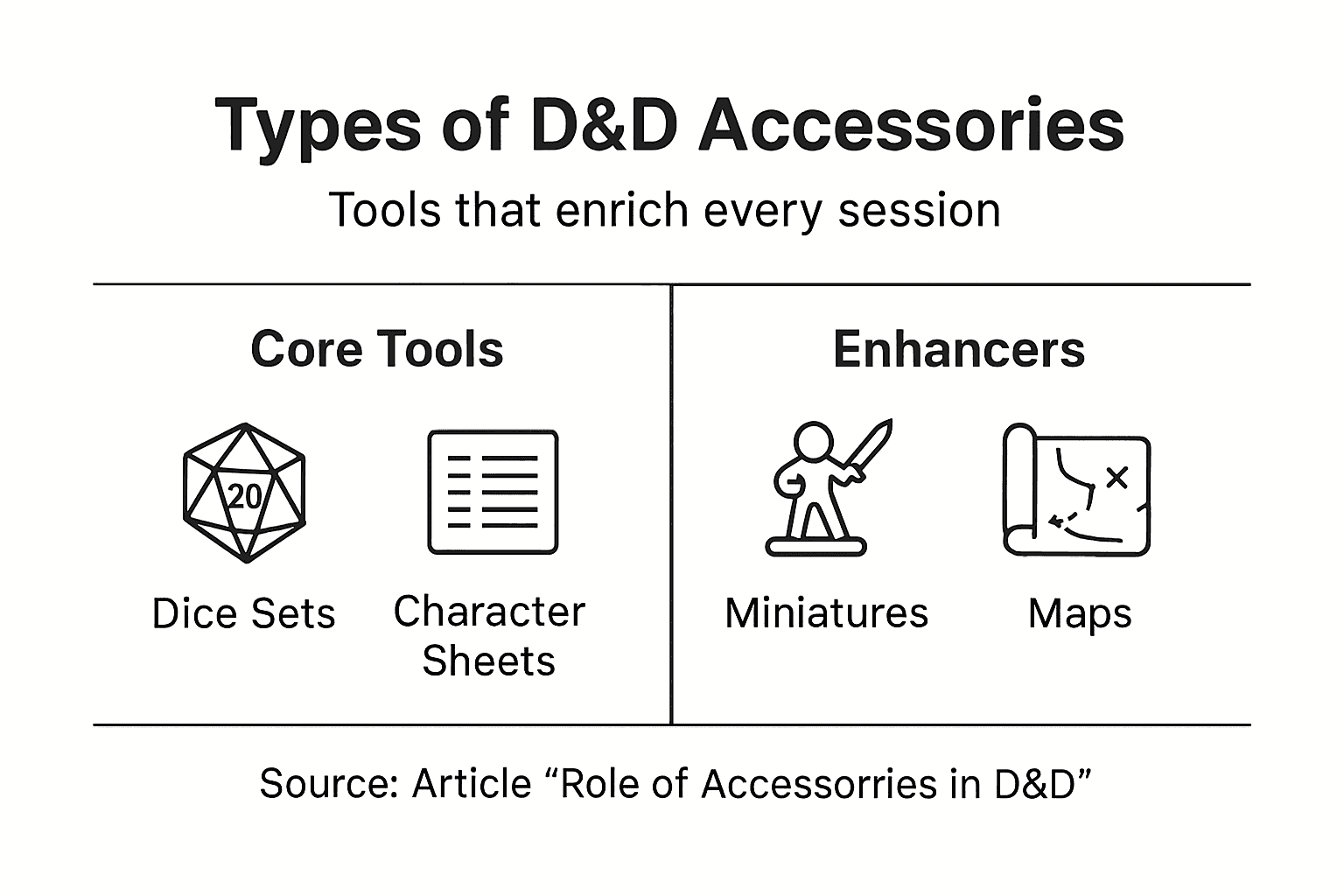
D&D accessories can be broadly categorized into several key types:
-
Core Gameplay Accessories
- Dice sets (standard and specialty)
- Character sheets
- Rulebooks and reference guides
- Digital companion apps
-
Narrative Enhancement Tools
- Miniature figurines
- Terrain and battle maps
- Campaign journals
- Dungeon Master screens
-
Immersive Environment Accessories
- Ambient sound devices
- Thematic lighting
- Background music playlists
- Costume pieces and props
Accessories aren’t just tools - they’re portals that transport players from their dining room table into fantastical realms of imagination.
Functional Categories
Each accessory type serves a specific purpose in enhancing the overall gaming experience. Functional accessories like dice and character sheets provide mechanical support, while narrative accessories like miniatures and terrain pieces help players visualize and interact with the game world more dynamically.
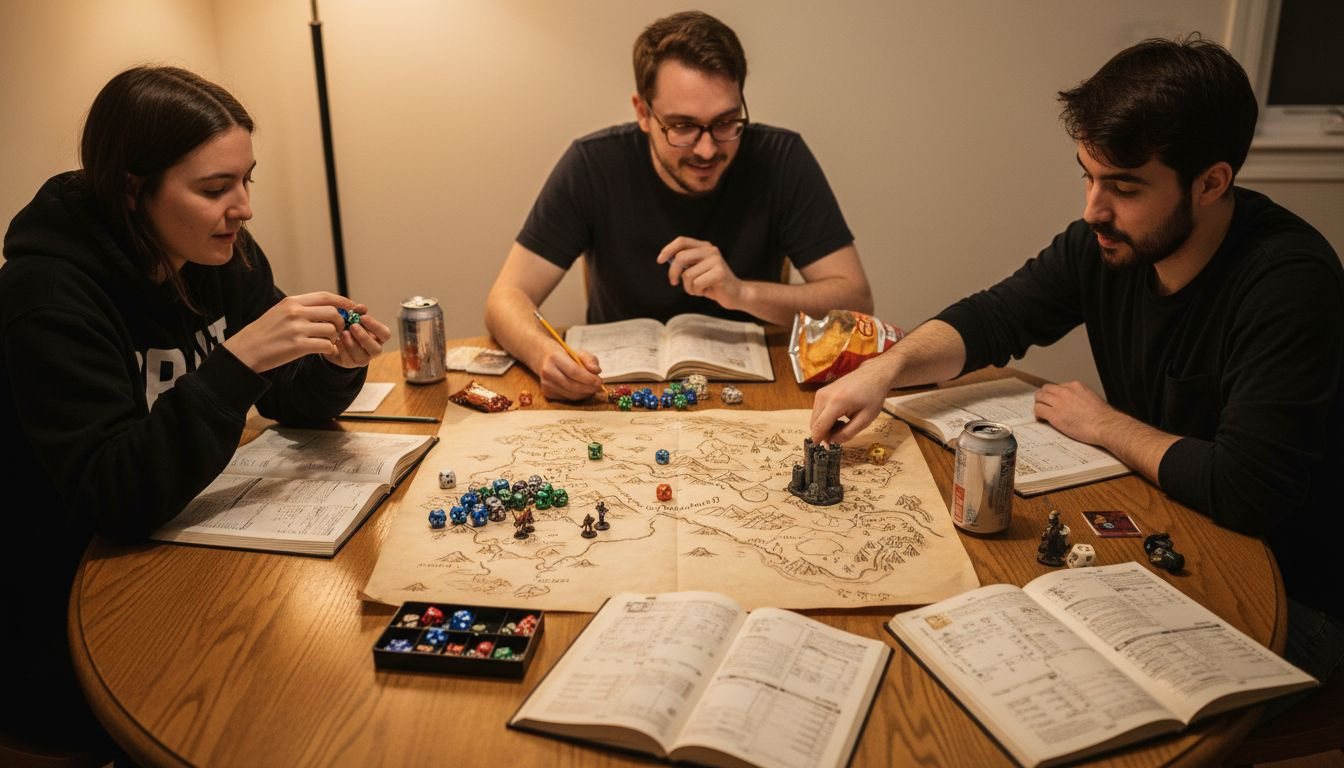
Strategic Accessory Selection
Choosing the right accessories depends on your campaign style, player preferences, and storytelling goals. Some groups prefer minimalist approaches, while others create elaborate setups with extensive terrain, intricate miniatures, and immersive soundscapes.
Pro tip: Start with core accessories and gradually expand your collection based on your group’s unique playing style and narrative preferences.
How Accessories Boost Immersion and Play
In the realm of Dungeons & Dragons, accessories are far more than simple game components - they are powerful conduits of storytelling and player engagement. World-building tools in role-playing transform the gaming experience from a mere mechanical interaction into a rich, immersive narrative landscape where imagination knows no bounds.
Immersion happens through multiple accessory-driven mechanisms:
-
Visual Storytelling
- Detailed miniatures that represent character identities
- Terrain maps that bring environments to life
- Costume elements reflecting character backgrounds
-
Sensory Engagement
- Ambient sound effects
- Thematic music playlists
- Strategic lighting setups
-
Narrative Depth
- Character journals for personal story tracking
- Themed dice sets that reflect character personalities
- Specialized GM screens with built-in world-building references
Accessories are the bridge between raw imagination and tangible storytelling, transforming abstract concepts into shared experiences.
Psychological Impact of Accessories
Accessories work on a profound psychological level, helping players transition from their everyday reality into the game’s fantastical world. By providing tactile and visual anchors, these tools reduce cognitive friction, allowing players to more easily suspend disbelief and fully inhabit their characters.
Collaborative World-Creation
These tools are not just passive objects but active participants in storytelling. Each miniature, map, and prop becomes a collaborative storytelling instrument, inviting players to contribute to the narrative’s texture and depth.
Pro tip: Invest in accessories that resonate with your group’s specific storytelling style, focusing on items that spark collective imagination and engagement.
Choosing Quality Accessories for Your Table
Selecting the right accessories can transform an ordinary Dungeons & Dragons session into an extraordinary adventure. Essential RPG accessories require careful consideration of your group’s unique playing style, budget, and storytelling goals.
When evaluating potential accessories, consider these critical categories:
Here’s a concise comparison of accessory types and the core benefits they bring to a D&D session:
| Accessory Type | Main Benefit | Ideal For |
|---|---|---|
| Core Gameplay | Streamlines rules & turns | Quick-paced campaigns |
| Narrative Enhancement | Deepens story immersion | Roleplay-focused groups |
| Immersive Environment | Engages player senses | Thematic one-shots |
| Ergonomic Accessories | Boosts comfort & focus | Long gaming sessions |
-
Core Functional Accessories
- Durable, readable rulebooks
- High-quality dice sets
- Accurate character sheets
- Reliable digital tracking tools
-
Immersion-Enhancing Accessories
- Detailed miniature figurines
- Realistic terrain maps
- Themed campaign journals
- Atmospheric lighting equipment
-
Ergonomic Gaming Considerations
- Comfortable seating arrangements
- Appropriate table height
- Adequate personal workspace
- Proper lighting and visibility
The right accessories aren’t just tools - they’re portals that transport players from reality into imaginative realms.
Budget and Quality Balance
Investing in quality doesn’t mean breaking the bank. Focus on accessories that provide genuine gameplay enhancement rather than purely aesthetic items. Prioritize durability, functionality, and items that genuinely contribute to your group’s storytelling experience.
Consider these trade-offs when building your D&D accessory collection:
| Factor | Prioritize If… | Consider When… |
|---|---|---|
| Quality | Durability and reliability matter | Accessories see heavy use |
| Variety | You prefer flexible storytelling | Your group has diverse tastes |
| Budget | You want to start simple | Investing over time |
| Personalization | Your group values unique experiences | Customizing for special events |
Personalization Matters
Each gaming group has unique preferences. Some enjoy minimalist setups, while others create elaborate tableaus with extensive terrain, intricate miniatures, and immersive soundscapes. The key is finding accessories that resonate with your specific play style and narrative approach.
Pro tip: Start with a few high-quality, versatile accessories and gradually expand your collection based on your group’s evolving preferences and storytelling needs.
Mistakes to Avoid When Using Accessories
Accessories can elevate a Dungeons & Dragons experience, but they can also derail gameplay when used incorrectly. Common D&D accessory mistakes can transform an immersive storytelling session into a frustrating exercise that diminishes player engagement and creative expression.
Critical mistakes players and Dungeon Masters often make include:
-
Storytelling Constraints
- Over-relying on visual props
- Limiting player imagination
- Creating overly scripted narratives
- Forcing linear plot progression
-
Preparation Pitfalls
- Under-preparing game materials
- Over-preparing to the point of rigidity
- Choosing impractical or low-quality accessories
- Neglecting player agency
-
Engagement Errors
- Overwhelming players with excessive information
- Prioritizing accessories over narrative flow
- Ignoring player preferences and comfort
- Disrupting game momentum with prop management
Accessories should enhance storytelling, not become a substitute for creative roleplaying.
Balancing Visual Aids and Narrative Freedom
The key to successful accessory usage is maintaining a delicate balance between providing helpful visual context and preserving player imagination. Accessories should serve as gentle guides, not rigid frameworks that constrain creative storytelling.
Strategic Accessory Integration
Effective accessory use requires thoughtful, intentional integration. Each prop, map, or miniature should serve a clear purpose - enhancing immersion, clarifying complex scenarios, or supporting player creativity without overwhelming the fundamental storytelling experience.
Pro tip: Regularly check in with your players about their comfort level with accessories, and be willing to adapt your approach based on group dynamics and storytelling preferences.
Elevate Your D&D Sessions with Handcrafted Accessories from 1985 Games
Struggling to fully immerse your players in the rich worlds you craft? This article highlights how purposeful accessories can transform your Dungeons & Dragons sessions by bridging imagination and tangible storytelling. Whether you seek to enhance narrative depth, improve visual engagement, or streamline gameplay mechanics, choosing the right tools is essential. Items like detailed campaign journals, thematic dice sets, and versatile terrain maps not only support your storytelling but also keep your group focused and invested.

Explore the curated collections at Dungeon Notes | 1985 Games to find journals and tools tailored for narrative tracking. For a broader selection of immersive accents including premium dice and battle maps, visit Shop All | 1985 Games. Finally, discover customer-favorite best sellers that bring storytelling to life at 1985 Games | Legendary Best Sellers. Start enhancing your campaigns today and let your players truly live the adventure by shopping now at 1985games.com. Take action now to craft unforgettable tabletop experiences that captivate every session!
Frequently Asked Questions
What types of accessories are essential for a Dungeons & Dragons session?
Core gameplay accessories include dice sets, character sheets, rulebooks, and digital companion apps. Narrative enhancement tools consist of miniatures, terrain maps, campaign journals, and Dungeon Master screens. Immersive environment accessories like ambient sound devices and thematic lighting further enhance the experience.
How do accessories enhance storytelling in D&D?
Accessories enhance storytelling by providing visual and tactile elements that deepen immersion and engagement. They help to represent characters and environments, create mood through sound and lighting, and increase player investment in the narrative.
What should I consider when selecting accessories for my D&D game?
Consider your campaign style, player preferences, and storytelling goals. Start with core accessories and gradually expand your collection based on what truly enhances gameplay. Balance quality and budget to ensure durability and functionality.
What are common mistakes to avoid when using accessories in D&D?
Common mistakes include over-relying on visual props, limiting player creativity, and neglecting player comfort and preferences. It’s important to maintain a balance between helpful visual aids and the freedom of narrative expression.