

Every DM knows the feeling: you’ve spent hours building a world, and ten minutes into the session, someone’s scrolling their phone while another player asks what their character is supposed to be doing. Immersion collapses fast when the right cues, tools, and preparation aren’t in place. The good news is that fixing this isn’t about running harder sessions. It’s about running smarter ones. This guide walks you through evidence-backed techniques, the best physical accessories, and proven storytelling frameworks that turn distracted players into fully invested adventurers.
Table of Contents
- Why tabletop gameplay immersion matters
- Essential tools and accessories for enhanced sessions
- Smart preparation: Techniques to save time and maximize impact
- Running the session: Storytelling and player engagement techniques
- Keeping gameplay safe, inclusive, and fun for all
- Level up your adventure with the right accessories
- Frequently asked questions
Key Takeaways
| Point | Details |
|---|---|
| Focus on immersion | Sensory prompts, physical accessories, and player engagement transform gameplay. |
| Prep smart, not hard | Best prep balances flexibility and structure and saves time using proven DM frameworks. |
| Use proven accessories | Themed dice, modular maps, and journals consistently improve play quality. |
| Prioritize group safety | Session Zero and trusted safety tools ensure everyone can enjoy and participate fully. |
Why tabletop gameplay immersion matters
Immersion is the invisible engine behind every great session. When players feel genuinely present in the world, they make bolder choices, invest in their characters, and remember those moments for years. Without it, even a well-written story falls flat.
The obstacles are real. Distracted players, stilted pacing, and vague environmental descriptions all chip away at the experience. A dungeon that exists only in the DM’s head is harder to navigate than one anchored by a map, a handout, or a physical prop. Narrative cues alone can only do so much.
Physical and sensory tools close that gap fast. RPG accessories enhance gameplay immersion by 25 to 40%, according to research on themed dice sets, modular maps, player journals, and props. That’s a significant lift from relatively simple investments.
Here’s what breaks immersion most often at the table:
- Unclear environments: Players can’t visualize where they are or what’s at stake
- Uneven pacing: Too much combat with no breathing room, or too much talk with no tension
- Weak sensory anchors: No sound, no visual cue, no tactile element to ground the scene
- Ignored player agency: Choices that feel meaningless kill investment fast
- Poor prep: Improvising everything leads to inconsistency and confusion
Understanding these failure points is the first step. A solid tabletop role-playing guide can help you map out exactly where your sessions are losing momentum. With the stakes of engagement clear, we can outline the core elements needed to transform gameplay.
Essential tools and accessories for enhanced sessions
Once you recognize the importance of immersion, the first practical step is choosing the tools that best serve your group. Not every table needs the same setup, but certain accessories consistently deliver results across all play styles.
Themed dice, modular battle maps, player journals, and props each serve a distinct function. Themed dice benefits go beyond aesthetics. Rolling a set of dice that matches your character’s theme creates a tactile ritual that reinforces identity at the table. Maps reduce combat confusion and give players a shared visual reference. Journals push character development forward between sessions.
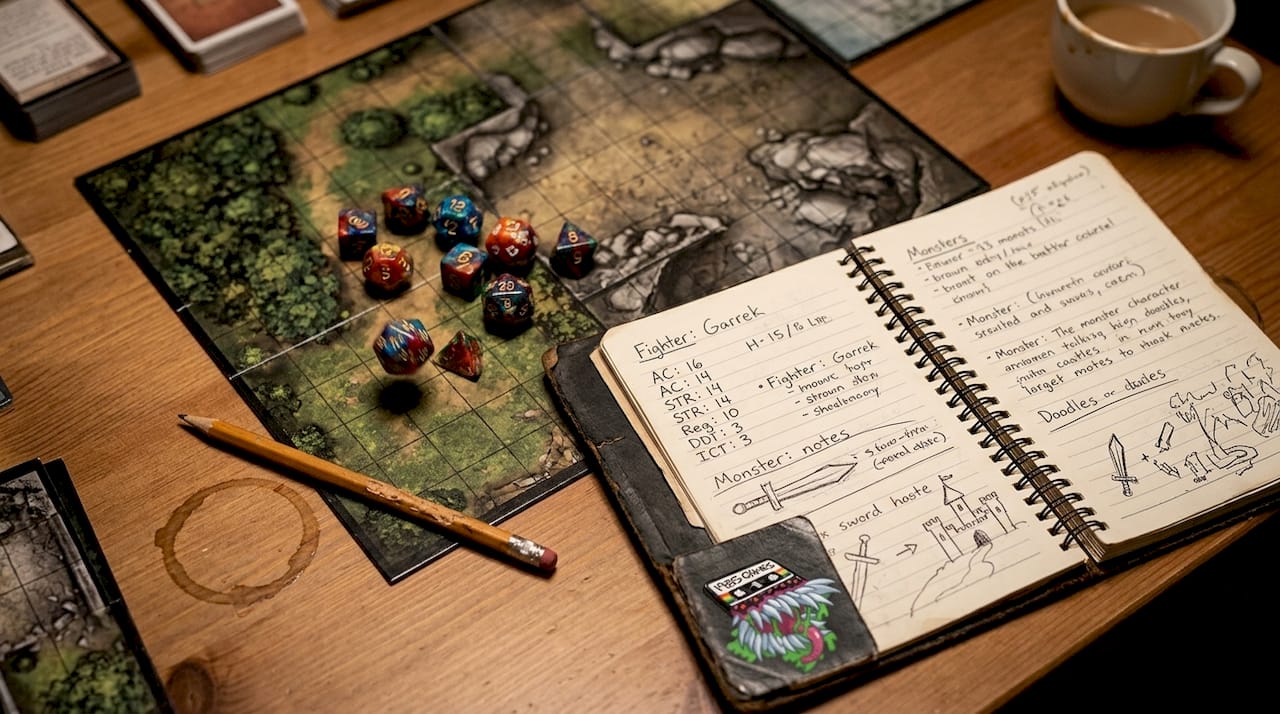
The data backs this up clearly. RPG accessories enhance gameplay immersion shows that themed dice improve immersion by 30%, maps reduce combat confusion by 40%, and journals boost character development by 25%. These aren’t marginal gains.
| Accessory | Primary benefit | Immersion impact |
|---|---|---|
| Themed dice sets | Tactile engagement, character identity | +30% immersion |
| Modular battle maps | Combat clarity, spatial awareness | 40% less confusion |
| Player journals | Character development, session continuity | +25% development |
| Props and handouts | Narrative anchoring, physical engagement | High sensory impact |
| DM campaign journals | Prep organization, consistency | Reduces DM burnout |
The smartest approach combines physical and digital tools. A printed map with digital ambient sound creates a layered sensory experience that neither alone can match. Props and handouts add a tactile dimension that pulls players out of passive listening and into active participation.
For a deeper breakdown of what works at different table sizes and campaign types, the essential accessories guide covers the full spectrum. You can also explore accessories in D&D specifically if your group runs fifth edition.
Pro Tip: Invest in one high-impact accessory per campaign rather than buying everything at once. A great set of themed dice or a detailed battle map will do more for your table than a dozen mediocre add-ons.
Smart preparation: Techniques to save time and maximize impact
With your toolkit assembled, the next step is streamlined preparation that empowers flexible and engaging play. Over-prep is just as dangerous as under-prep. Both lead to bad sessions, just for different reasons.
Node-based preparation and Lazy Dungeon Master techniques reduce prep time while enabling improvisation. The Lazy DM’s 8-step process focuses on prepping situations rather than scripting outcomes. You build a skeleton, not a novel.
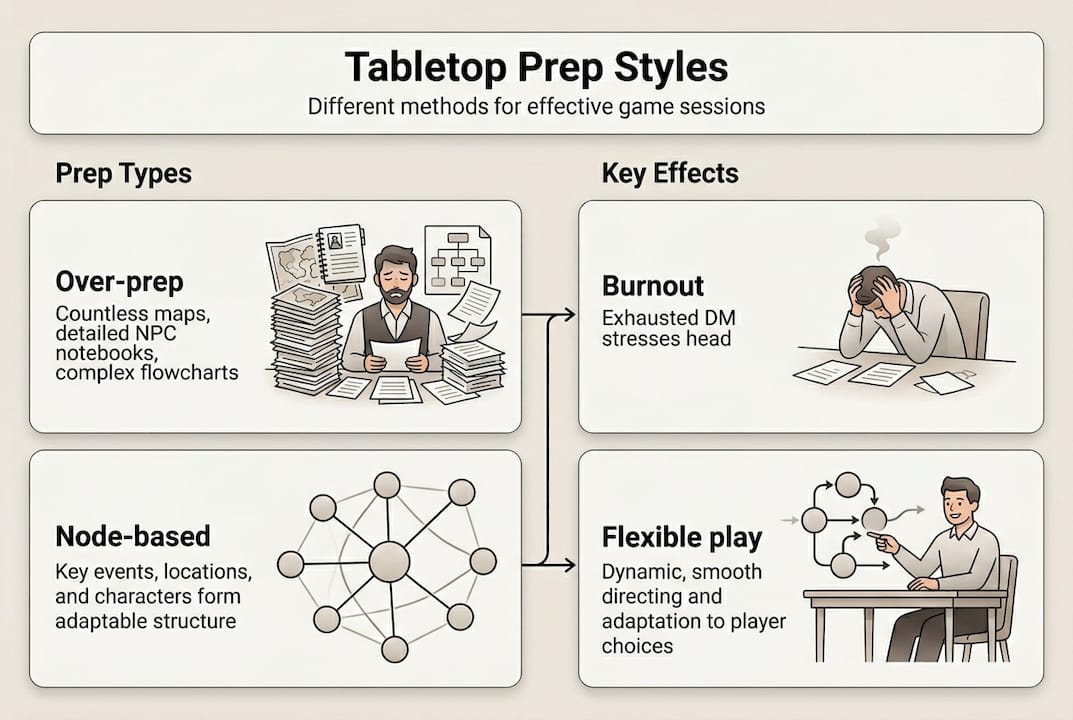
Here’s how over-prep, under-prep, and balanced prep compare:
| Prep style | Time investment | Risk | Outcome |
|---|---|---|---|
| Over-prep | 6+ hours | DM burnout, railroading | Rigid sessions, frustrated players |
| Under-prep | Under 30 min | Story stalls, inconsistency | Confused players, lost momentum |
| Balanced prep | 1 to 3 hours | Minimal | Flexible, engaging, sustainable |
The DM prep techniques that consistently work focus on hooks and secrets rather than full scene scripts. The Lazy DM process breaks this into eight manageable steps: review the previous session, identify what the players might do, define a strong start, outline potential scenes, define secrets and clues, develop NPCs, pick relevant monsters, and select magic items.
Here’s a practical prep sequence for a 1 to 3 hour window:
- Review last session notes (10 minutes): What threads are live? What did players care about?
- Write 3 flexible scene hooks (20 minutes): Not scripts, just entry points with stakes
- Prep 5 secrets or clues (15 minutes): Things players might discover, not things they must
- Sketch 2 to 3 NPCs (15 minutes): Name, motivation, one memorable quirk
- Set a strong opening (10 minutes): Drop players into action or tension immediately
- Review your game setup guide (10 minutes): Confirm your physical table is ready
“Prep situations, not stories. The story belongs to your players.”
Pro Tip: Pre-plan only flexible scene hooks and secrets. If you know what’s at stake and what the players might want, you can improvise the rest confidently.
Running the session: Storytelling and player engagement techniques
Meticulous preparation pays off at the table, but only if DM techniques draw players in and keep energy high. The best-prepped session can still fall flat if the DM reads the room poorly or lets pacing drag.
Immersive storytelling uses sensory details, player agency, pacing variety across combat, exploration, and roleplay, descriptive language, and advanced prompting to keep players locked in. Start every scene by naming what the players see, hear, and smell. Three sensory details are enough to anchor a location.
Here’s a step-by-step approach to running high-engagement sessions:
- Open with tension: Never start a session with housekeeping. Drop players into a moment that demands attention.
- Use character flags: Note what each player’s character cares about and reference it during play. This makes choices feel personal.
- Rotate the spotlight: Every 20 to 30 minutes, shift focus to a different player. No one should feel invisible.
- Escalate events: Aim for at least 3 meaningful escalations per hour. A new threat, a revelation, a complication.
- Switch modes deliberately: Move between combat, exploration, and roleplay to control pacing and energy.
- Give meaningful choices: Every fork in the road should have real consequences. Players feel agency when their decisions matter.
Common mistakes to avoid:
- Static pacing: Running the same mode for too long drains energy from the table
- Ignoring player signals: If someone’s disengaged, shift the spotlight or change the scene
- Describing outcomes, not actions: Let players narrate their own successes when possible
- Overloading with lore: Deliver world-building through action and dialogue, not monologue
For specific accessory examples for immersion that support these techniques in play, there are curated options matched to different session types. The DMG storytelling tips from the 2024 Dungeon Master’s Guide also offer a strong reference point for advanced narrative structure.
Keeping gameplay safe, inclusive, and fun for all
Immersion should never come at the expense of player well-being. The most memorable sessions happen when everyone at the table feels safe enough to take creative risks. That requires intentional structure, not just good intentions.
Safety tools like X-Card, Lines/Veils, and Script Change prevent edge cases like content discomfort or disengagement before they derail a session. These aren’t signs of a fragile group. They’re signs of a mature one.
Here’s a quick overview of the core tools:
- X-Card: A physical or verbal signal any player can use to skip or edit content, no explanation required
- Lines and Veils: Lines are content that never appears in the game. Veils are content that happens off-screen. Both are set collaboratively.
- Script Change: A traffic-light system (fast forward, pause, rewind) that gives players real-time control over scene pacing and content
Session Zero is where all of this gets established. Before the first dice roll, gather your group to align on expectations, campaign tone, character creation rules, and safety boundaries. This single conversation prevents more problems than any in-session fix. The full RPG safety tools guide covers implementation across different group dynamics.
“Collaboration over competition. The best stories come from groups that trust each other.”
After each session, run a quick debrief. Ask what worked, what felt off, and what players want more of. Simple prompts like “What was your favorite moment?” and “Was there anything that made you uncomfortable?” build trust over time. The tabletop role-playing safety framework reinforces this as an ongoing practice, not a one-time checklist.
Level up your adventure with the right accessories
Everything covered in this guide, from prep frameworks to storytelling techniques, works better when your physical table supports it. The right accessories don’t just look good. They do real work.
At 1985 Games, we’ve built our RPG accessories collection around exactly what DMs and players need to bring sessions to life. Our modular battle maps give your combat scenes the spatial clarity that keeps players engaged and reduces confusion at the table. Our player journals help characters grow between sessions with structured prompts that deepen roleplay. Whether you’re running your first campaign or your fiftieth, the right tools make every session more memorable. Explore the full collection and find the accessories that fit your table.
Frequently asked questions
What are the most effective accessories to enhance tabletop gameplay?
Themed dice improve immersion by 30%, maps reduce combat confusion by 40%, and journals boost character development by 25%, making these three the highest-impact starting points for any table.
How much time should a Dungeon Master spend on session prep?
1 to 3 hours is the ideal range to balance structure with improvisation, using the Lazy DM technique to focus on hooks and secrets rather than scripted scenes.
What is Session Zero and why is it important?
Session Zero is a pre-campaign conversation where the group sets expectations, safety boundaries, and tone. Safety tools and Session Zero together prevent content discomfort and disengagement before they become problems.
How do I make my storytelling more immersive?
Use three sensory details to open every scene, rotate the player spotlight every 20 to 30 minutes, and give choices with real consequences. Sensory details and player agency are the two highest-leverage levers for deeper engagement.
Are safety tools necessary at every table?
Yes. Tools like X-Card, Lines/Veils, and Script Change protect every player and create the trust needed for bold, creative storytelling. Safety tools prevent discomfort and disengagement at tables of all experience levels.