

Think tabletop role-playing games are just about fantasy dice battles? That misconception limits what these games truly offer. TTRPGs blend diverse genres, deep storytelling, and meaningful social interaction into one experience. This guide will explain what TTRPGs are, trace their history, break down core mechanics, debunk common myths, explore modern trends, and show how quality accessories enhance gameplay immersion for both new and experienced players.
Table of Contents
- Definition And Core Mechanics
- Historical Roots And Evolution
- Gameplay Mechanics And Tools
- Common Misconceptions About Tabletop Role-Playing Games
- Modern Trends And Digital Integration In Tabletop Role-Playing Games
- Social And Creative Benefits Of Tabletop Role-Playing Games
- Enhance Your Tabletop Role-Playing Experience With 1985 Games
- Frequently Asked Questions About Tabletop Role-Playing
Key takeaways
| Point | Details |
|---|---|
| Core gameplay | TTRPGs combine structured rules, dice randomness, and collaborative storytelling where players shape narratives together. |
| Game Master role | The GM guides the narrative while players influence direction through character choices and actions. |
| Historical evolution | TTRPGs evolved from 19th-century wargames, with Dungeons & Dragons (1974) popularizing fantasy role-playing worldwide. |
| Breaking myths | Common misconceptions limit appreciation of TTRPG diversity, accessibility, and genre variety beyond fantasy settings. |
| Modern enhancements | Digital tools and physical accessories work together to deepen immersion and strengthen social connections. |
Definition and core mechanics
A tabletop role-playing game (TTRPG) is a role-playing game where participants describe their characters’ actions through speech and sometimes movements, with outcomes determined by formal rules including randomization such as dice rolls. Unlike video games, TTRPGs thrive on verbal interaction and imagination.
The Game Master leads the story, enforces rules, and controls non-player characters. Players create characters using detailed sheets that track abilities, skills, equipment, and progress. Dice results determine success, failure, or varying degrees of outcome for declared actions.
This gameplay balance involves three critical elements. Rules provide structure and fairness. GM facilitation adapts the narrative to player choices. Player creativity drives unexpected story directions that no predetermined script could anticipate.
Pro Tip: New players should focus on describing what their character does rather than worrying about perfect rule knowledge. The GM will guide you through mechanics as you play.
Character sheets serve as your character’s blueprint. They organize attributes like strength and intelligence, list special abilities earned through experience, and track resources like health points. Understanding how to start D&D helps beginners grasp these fundamentals quickly.
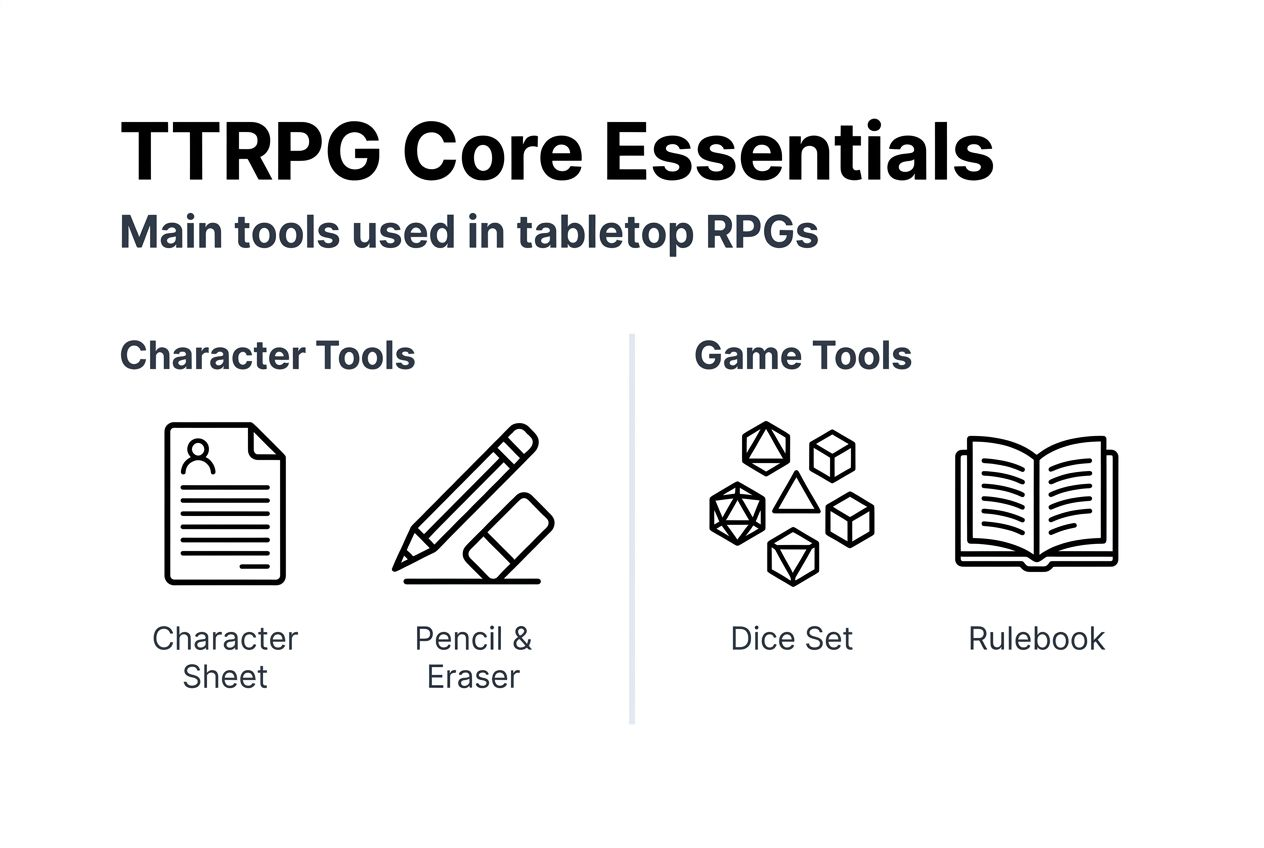
Dice introduce randomness that keeps outcomes unpredictable and exciting. Using dice sets properly ensures fair resolution of actions. This combination of structure and chance creates tension and triumph in equal measure.
Historical roots and evolution
TTRPGs evolved from 19th-century military wargames and hobbyist games in the mid-20th century, with Dungeons & Dragons (1974) seminal in shaping modern TTRPGs. These roots explain why many games still use tactical maps and miniatures today.
Here’s how TTRPGs developed over time:
- Military strategists used wargames to simulate battles and train officers in the 1800s.
- Hobby gamers in the 1960s added narrative elements to recreational battle simulations.
- Gary Gygax and Dave Arneson created Dungeons & Dragons, shifting focus from armies to individual heroes.
- The 1980s and 1990s saw explosive growth in fantasy, science fiction, and horror TTRPGs.
- The 2000s introduced indie games emphasizing storytelling mechanics over combat simulation.
- Modern TTRPGs in 2026 blend traditional dice mechanics with innovative narrative systems.
This evolution demonstrates how TTRPGs continuously adapt. Early games prioritized tactical combat. Later designs emphasized character development and emotional storytelling. Today’s types of tabletop RPGs reflect this incredible diversity in approach and theme.
The industry’s growth mirrors broader gaming culture shifts. What began as niche hobby entertainment now represents mainstream creative expression. Streaming shows and podcasts have introduced millions to TTRPG gameplay, driving renewed interest across generations.
Gameplay mechanics and tools
Polyhedral dice sets (d4 to d20) introduce chance and excitement in resolving actions. Each die shape serves specific purposes. The d20 determines success for major actions. The d6 might calculate weapon damage. The d4 measures minor effects.
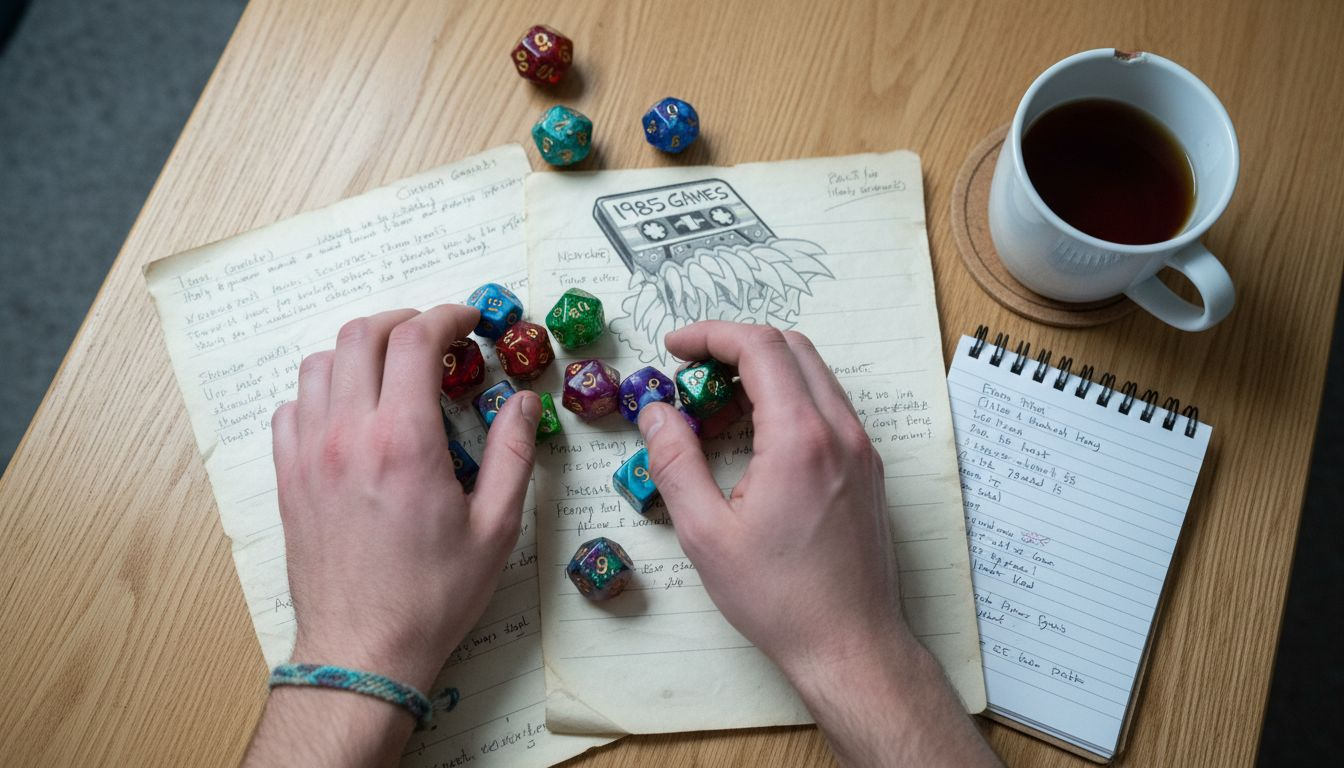
Character sheets translate narrative concepts into quantifiable mechanics. They track experience points, inventory, relationships, and personal goals. As characters grow, sheets document their journey from novice to legend.
Gameplay sessions can range from a few hours to campaigns spanning years with episodic or continuous arcs shaped by player decisions and GM guidance. One-shot adventures provide complete stories in single sessions. Long campaigns develop rich character histories and world-changing consequences.
| Die Type | Typical Use | Example |
|---|---|---|
| d20 | Action success rolls | Attack rolls, skill checks |
| d12 | Heavy weapon damage | Greataxe strikes |
| d10 | Percentile rolls | Random encounter tables |
| d8 | Medium weapon damage | Longsword attacks |
| d6 | Light weapon damage | Dagger strikes |
| d4 | Minor effects | Healing spell bonus |
Player roles divide into two main categories. Most participants play individual characters, making choices that shape the story. One person serves as Game Master, facilitating the world and its inhabitants.
Structured randomness creates the magic of TTRPGs. You declare your character’s intended action. The GM determines difficulty and required roll. Dice introduce unpredictability. The result combines with character abilities to produce an outcome.
Pro Tip: Invest in quality dice that roll true and feel substantial in your hand. D&D dice with good balance make every roll more satisfying.
Premium dice sets enhance the tactile experience beyond basic functionality. Metal dice add weight and presence. Sharp-edge designs improve rolling accuracy. Themed sets match campaign aesthetics, deepening immersion through visual cohesion.
Mastering dice sets usage takes practice but becomes second nature. Soon you’ll instinctively reach for the right die without thinking. That fluency keeps gameplay flowing smoothly.
Common misconceptions about tabletop role-playing games
TTRPGs are not limited to fantasy themes. Genres span science fiction, horror, cyberpunk, historical fiction, superhero adventures, and countless hybrid combinations. Assuming all TTRPGs resemble medieval fantasy ignores vast creative possibilities.
Not all TTRPGs require heavy preparation or complex rules. Many systems prioritize improvisation and streamlined play. Some fit on a single page. Others eliminate the Game Master role entirely, distributing narrative authority among all players.
Key myths that need correction:
- TTRPGs don’t all use Dungeons & Dragons mechanics; hundreds of diverse systems exist with unique rules.
- You don’t need acting talent or dramatic voices; simple description works perfectly well.
- Sessions don’t require expensive materials; basic dice and paper suffice for many games.
- TTRPGs aren’t just for young people; players span all ages and backgrounds.
- You don’t need to know fantasy lore; many games create entirely original settings.
Players enjoy remarkable flexibility in style, rules, and storytelling approaches. Some groups emphasize tactical combat. Others focus on political intrigue or emotional character development. Understanding the role of accessories in D&D shows how tools adapt to different play styles.
Clearing these myths broadens access and enjoyment. New players often hesitate because they believe false prerequisites. The truth is simpler: if you can imagine and communicate, you can play TTRPGs.
Modern trends and digital integration in tabletop role-playing games
Virtual tabletops facilitate online or hybrid play, expanding accessibility beyond geographic limitations. Platforms like Roll20 and Foundry VTT provide digital maps, automated dice rolling, and character sheet management. Players worldwide can join the same table.
Companion apps manage dice rolling, character sheets, and campaigns digitally. D&D Beyond stores official content and streamlines character creation. Digital tools handle complex calculations instantly, letting players focus on storytelling rather than arithmetic.
Inclusivity in characters and settings receives increasing emphasis in 2026. Modern game designs actively promote diverse representation in races, cultures, gender identities, and abilities. This shift makes TTRPGs welcoming spaces for everyone.
Current trends reshaping gameplay:
- Streamed actual-play shows like Critical Role inspire new players and normalize emotional investment.
- Safety tools like X-Cards help groups navigate sensitive content respectfully.
- Asynchronous play via text allows participation across time zones and schedules.
- Crowdfunding enables independent creators to publish innovative game systems.
| Aspect | Traditional Tabletop | Online/Hybrid Play |
|---|---|---|
| Location | Same physical space | Anywhere with internet |
| Dice | Physical polyhedrals | Digital rollers or apps |
| Maps | Printed or hand-drawn | Digital with dynamic lighting |
| Character sheets | Paper handwritten | Digital auto-calculating |
| Social feel | Face-to-face interaction | Video/voice communication |
Exploring types of tabletop RPGs in 2026 reveals how digital integration complements traditional play rather than replacing it. Many groups blend approaches, using apps for mechanics while enjoying physical dice and maps.
The d20’s cultural influence extends beyond gaming into everyday language and internet culture. This mainstream recognition drives continued innovation in both analog and digital tools.
Digital tools coexist with physical accessories to enrich player immersion. Rolling physical dice satisfies in ways apps cannot replicate. Yet digital maps enable visual complexity impossible with paper. The best experiences often combine both approaches thoughtfully.
Social and creative benefits of tabletop role-playing games
TTRPGs enhance creativity by letting players invent characters and stories collaboratively. You design a personality, make consequential choices, and watch your character evolve through experiences. This creative exercise strengthens imagination and problem-solving skills.
They foster teamwork through shared challenges requiring cooperation. Combat encounters need coordinated tactics. Social situations benefit from complementary character strengths. Investigation scenarios reward pooling information and theories.
Social bonding arises from regular sessions and cooperative storytelling. You share victories, mourn losses, and celebrate character growth together. These experiences create lasting friendships built on trust and shared creativity.
Key benefits of TTRPG participation:
- Develops empathy by exploring perspectives different from your own.
- Builds confidence through public speaking and decision making.
- Encourages mathematical thinking via probability and resource management.
- Provides structured social time in an increasingly isolated world.
- Offers therapeutic escape and stress relief through imaginative play.
Players co-create emergent narratives shaped by collective choices. No one person controls the entire story. The GM proposes situations. Players respond with unexpected actions. The resulting narrative surprises everyone at the table, creating genuine shared discovery.
Pro Tip: Keep a simple journal of memorable moments and character thoughts between sessions. This practice deepens investment and provides material for future role-playing opportunities.
RPG accessories boost immersion by engaging multiple senses. Quality dice feel satisfying to roll. Detailed maps spark imagination. Well-organized notes keep complex stories manageable. Setting up immersive play sessions transforms ordinary game nights into memorable experiences.
Positive mental health benefits include engagement, belonging, and imaginative escape. Regular gaming provides structure and social connection. The creative outlet helps process emotions safely. Many therapists now recognize TTRPGs as valuable tools for building social skills and emotional intelligence.
Enhance your tabletop role-playing experience with 1985 Games
Quality accessories transform good gaming sessions into unforgettable experiences. 1985 Games specializes in products designed by enthusiasts who understand what truly matters at the table.

Our DM’s Journals 3-pack helps Game Masters organize epic stories across multiple campaigns. Structured pages guide world-building, track NPCs, and plan sessions efficiently. Never lose track of plot threads again.
Unique dice sets enhance the tactile excitement of each roll. Buy 2 Get 1 dice sets let you build collections matching different characters or moods. Premium materials and balanced manufacturing ensure fair, satisfying rolls.
Dungeon Notes campaign journals assist players in tracking adventures for seamless gameplay. Record character development, quest details, and party treasure. Return to sessions fully prepared to continue your story.
Combining these quality accessories improves the overall social and creative experience. They show respect for your hobby and fellow players. Visit 1985 Games to explore products crafted specifically for dedicated role-players who value both function and aesthetic appeal.
Frequently asked questions about tabletop role-playing
What makes tabletop role-playing different from video game RPGs?
Tabletop role-playing offers unlimited creative freedom constrained only by imagination and group consensus, not programmed options. You can attempt any action you describe, and the GM determines how the world responds dynamically. Video games provide visual spectacle but operate within predetermined possibilities.
Do I need to be creative to play TTRPGs?
No special creative talent is required to enjoy TTRPGs successfully. Many players simply react to situations the GM presents rather than inventing elaborate backstories. The collaborative nature means the group collectively generates creativity, so individual contributions can remain simple and still prove valuable.
How long does a typical TTRPG session last?
Most sessions run two to four hours, though this varies by group preference and schedule. Some groups play marathon eight-hour sessions monthly. Others meet weekly for shorter two-hour games. One-shot adventures conclude in a single session, while campaigns continue for months or years.
Can beginners join without prior experience?
Absolutely, and most groups welcome newcomers enthusiastically. Experienced players and Game Masters enjoy teaching new participants. Many game stores and online communities specifically organize beginner-friendly sessions. You’ll learn rules gradually through actual play rather than needing to memorize rulebooks beforehand.
What accessories truly enhance tabletop RPG sessions?
Quality dice sets improve the physical satisfaction of rolling and ensure balanced randomness. Campaign journals help organize complex storylines and character details. Battle maps and miniatures add visual clarity to tactical situations. Player reference sheets speed up gameplay by putting important rules at your fingertips. These tools complement rather than replace imagination and social interaction.