

TL;DR:
- A standard seven-dice polyhedral set is essential for starting D&D confidently.
- Plastic dice are recommended for beginners due to affordability, readability, and durability.
- Proper care, such as storage and rolling on soft surfaces, ensures dice longevity and fair gameplay.
Picture this: it’s your very first D&D session, the dungeon master describes a terrifying goblin ambush, and you reach for a random die from a bargain bin bag. You roll. Nobody can read the number. The die is lopsided. The mood? Shattered. Sound familiar? Choosing the right dice is one of those small decisions that makes a HUGE difference in how much fun you actually have at the table. This guide covers everything a new dice goblin needs to know, from the essential polyhedral set and material choices to where to buy, what to avoid, and how to keep your dice rolling true for years to come.
Table of Contents
- Understand the essential dice for D&D
- How to choose the right dice materials and styles
- Where to buy quality dice (and what to avoid)
- Getting the most from your dice: tips, care, and upgrades
- Our take: what most beginners get wrong about dice selection
- Level up your game with quality dice and resources
- Frequently asked questions
Key Takeaways
| Point | Details |
|---|---|
| Start with standard sets | A full set of polyhedral dice covers every basic D&D need for new players. |
| Prioritize readability and quality | Easy-to-read numbers and balanced dice improve learning and fair play. |
| Choose affordable materials first | Plastic dice offer great value for beginners and are easy to use. |
| Buy from trusted sources | Reliable shops and game stores ensure you get fair, well-made dice. |
| Care keeps dice rolling true | Proper storage and gentle cleaning prolong your dice’s lifespan and fairness. |
Understand the essential dice for D&D
Let’s talk about the real stars of every D&D session: the dice themselves. Each polyhedral die plays a unique role in D&D mechanics, and knowing what each one does makes you a more confident player from session one.
A standard seven-dice set is your foundation. That’s the magic number. Every beginner should start here, and honestly, most veterans keep coming back to this classic lineup too. Here’s what’s in the box and why each die earns its place at the table:
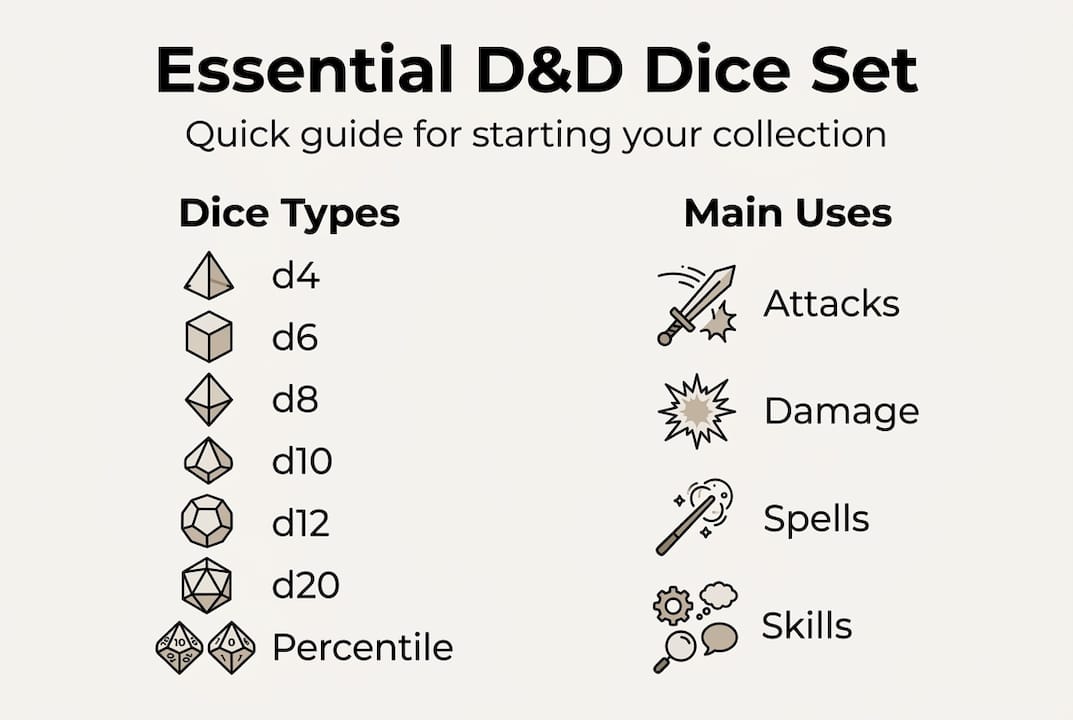
| Dice type | Sides | Common rolls | Main uses |
|---|---|---|---|
| d4 | 4 | Damage | Dagger attacks, magic missile |
| d6 | 6 | Damage, healing | Shortsword, healing potions, fireball |
| d8 | 8 | Damage, hit points | Longsword, cleric hit dice |
| d10 | 10 | Damage, percentile | Heavy crossbow, percentage chances |
| d12 | 12 | Damage | Greataxe, barbarian hit dice |
| d20 | 20 | Attack rolls, saving throws, skill checks | The most-used die in the game |
| Percentile d10 | 10 (tens) | Percentile rolls | Wild magic surges, random tables |
The d20 is the celebrity of the group. It shows up for almost every dramatic moment: attacking a dragon, persuading a king, sneaking past a guard. Rolling a natural 20 on that bad boy? Pure serotonin. The role of dice in TTRPGs goes way beyond just generating numbers. They create tension, tell stories, and yes, occasionally betray you at the worst possible moment (we’ve all been there).
Must-have dice for starting D&D:
- d4: Small but mighty for rogues and wizards
- d6: The workhorse of damage and healing rolls
- d8: Essential for mid-tier weapons and cleric spells
- d10: Doubles as your percentile die partner
- d12: Barbarian’s best friend
- d20: The king. Non-negotiable.
- Percentile d10: Pairs with your regular d10 for wild tables
“Starting with a full seven-dice polyhedral set means you’ll never be caught scrambling mid-session. Every class, every spell, every dramatic moment is covered.”
Once you’ve got the basics locked down, themed and specialty dice sets become a fun optional upgrade. Think galaxy-swirled resin sets, metal dice with dragon engravings, or glow-in-the-dark beauties that make your dungeon master nervous. Totally optional for beginners, but absolutely delightful when you’re ready.
How to choose the right dice materials and styles
Once you know the kinds of dice you’ll need, it’s time to pick the right materials and designs for your play style and budget. And yes, this matters more than you’d think.
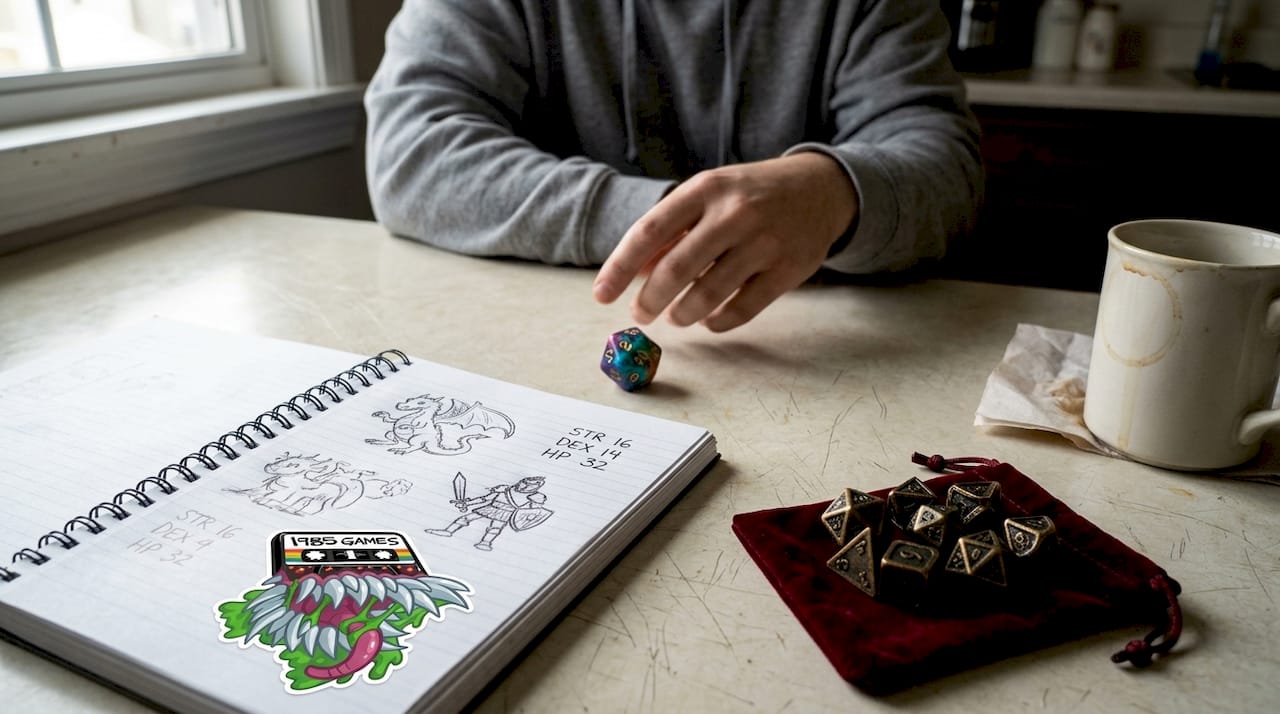
Plastic dice are the most common and affordable option for beginners, and there’s zero shame in that. They’re lightweight, easy to read, and come in every color imaginable. Metal dice feel incredible in your hand (very “I am a serious adventurer” energy), but they’re heavier, louder, and pricier. Resin dice are the artsy middle ground, often featuring swirls, glitter, and inclusions that look like tiny galaxies trapped inside.
| Material | Appearance | Weight | Cost | Durability | Pros | Cons |
|---|---|---|---|---|---|---|
| Plastic | Bright, varied | Light | Low | Good | Affordable, readable | Less premium feel |
| Metal | Sleek, bold | Heavy | High | Excellent | Durable, impressive | Loud, can damage tables |
| Resin | Artistic, unique | Medium | Medium | Good | Beautiful, varied | May have bubbles if low quality |
Pro Tip: Start with a solid plastic set. Get comfortable with the game mechanics first. Once you know your favorite class and play style, THEN treat yourself to a metal or resin set that matches your character’s personality. Your future self will thank you.
Beyond material, style is where things get really fun. Popular beginner styles include:
- Clear/transparent: Easy to read, classic look
- Opaque solid colors: No distractions, great readability
- Swirled or marbled: Eye-catching without sacrificing legibility
- Themed sets: Match your character class or campaign setting
One thing beginners often overlook? Readability. A gorgeous set of dark purple dice with black numbers looks stunning in a photo and absolutely terrible at a dimly lit game table. Always check that the numbers contrast well with the die color. Tactile feedback matters too. Dice with sharp, well-inked numbers feel satisfying and roll with authority. Check out RPG dice styles for inspiration, and explore themed dice benefits when you’re ready to level up your aesthetic game.
Where to buy quality dice (and what to avoid)
With your ideal style and material in mind, you need to know where to buy and what to check for before making your first dice purchase. Not all dice are created equal, and the difference between a great set and a frustrating one often comes down to where you shop.
Specialty gaming stores provide quality assurance that online marketplaces sometimes lack. Your local game store (LGS) is a fantastic first stop. You can physically handle the dice, check the weight and finish, and get recommendations from staff who actually play. Gaming conventions are another goldmine. Vendors there are often passionate creators who stand behind their products.
Online shopping works great too, IF you know what to look for. Here’s your quality checklist:
Signs of quality dice:
- Balanced weighting (no side lands face-up more than others)
- Clear, sharp numbering with strong contrast
- No visible bubbles, cracks, or surface defects
- Consistent font and color across all dice in the set
- Strong positive reviews from verified gamers
- Responsive seller or brand with clear return policies
Here’s a stat worth knowing: surveys within the TTRPG community suggest that a significant portion of budget dice sets sold on generic marketplaces show visible defects or inconsistent numbering right out of the package. That’s a lot of disappointment for what’s supposed to be a fun purchase.
Red flags to watch for: suspiciously deep discounts with no reviews, inconsistent fonts across the set, blurry or partially filled number engravings, and sellers with no community presence. If it seems too cheap to be real, it probably is.
Mystery dice bundles and curated sets from trusted shops are a fantastic option when you want variety without the research overload. You get the thrill of surprise AND the confidence of knowing a reputable brand vetted the quality. Check out quality dice tips before you click “add to cart” anywhere.
Getting the most from your dice: tips, care, and upgrades
Finally, you’ll want to keep your new dice rolling well and discover options for upgrading or personalizing your collection as your gaming evolves. Because yes, dice care is a real thing, and your future dice goblin self will be grateful you started good habits early.
Caring for your dice ensures they roll fairly and last for years. Here’s how to treat them right:
- Store them properly. Use a dedicated dice pouch, box, or tray. Loose dice rattling around in a backpack get scratched, chipped, and sad.
- Roll on soft surfaces. Hard tables can chip corners, especially on resin and plastic sets. A dice tray or padded mat is your dice’s best friend.
- Clean gently. A soft cloth and mild soap work perfectly. Avoid harsh chemicals that can fade ink or cloud clear dice.
- Handle with intention. Dropping dice from a height repeatedly wears down edges and affects balance over time.
- Keep them away from extreme heat. Resin and plastic dice can warp if left in a hot car. Your dice don’t want a sauna experience.
Pro Tip: A dice tray or dice tower does double duty. It protects your dice AND keeps rolls contained and fair. No more dice flying off the table and landing suspiciously on a natural 20 (we see you). Check out dice rolling tips for proper rolling etiquette that’ll earn you respect at any table.
As for upgrades, the sky is the limit. Once you know your character, your class, and your play style, custom dice ideas open up a whole new world. Engraved sets, class-specific symbols, campaign-themed colors. Your dice can become an extension of your character’s story. That’s not just cool. That’s immersive.
Our take: what most beginners get wrong about dice selection
Here’s the real talk, dice goblins. We see it ALL the time: new players spend ages hunting for the most gorgeous, most dramatic, most “wow” set they can find. And then they sit at the table and can’t read their own dice under the lamp light. Aesthetics are wonderful. We LOVE a beautiful set. But function has to come first, especially when you’re still learning the game.
The other big mistake? Overspending or underspending based on anxiety. Some beginners drop serious cash on metal dice before they’ve even played their second session. Others grab the cheapest possible set and end up frustrated by unbalanced rolls. Neither extreme serves you well early on.
Start simple. Start readable. Borrow dice from your dungeon master or fellow players if you can. Shared dice are part of the magic of early D&D, honestly. Once you’ve played a few sessions and know what you love, THEN go find the set that makes your heart sing. Master dice usage before you obsess over collecting. The game rewards players who understand the tools, not just the ones with the prettiest bag.
Level up your game with quality dice and resources
Ready to bring your dice journey full circle? Here’s where beginners can make their first purchase count.

At 1985 Games, we’ve got your back whether you’re grabbing your very first set or hunting for something truly special. Our mystery dice sets are the perfect starting adventure: curated, quality-checked, and full of delightful surprises. Want to go deeper into immersive gameplay? Dungeon Craft Volume 2 pairs beautifully with any dice collection, giving your sessions that cinematic, story-rich feel every adventurer craves. Browse our full range of dice guides, accessories, and campaign tools at 1985games.com. Your next great roll is waiting.
Frequently asked questions
What are the must-have dice for starting D&D?
A standard seven-dice polyhedral set covers all your basic needs for D&D, including d4, d6, d8, d10, d12, d20, and a percentile d10. This set handles every class, spell, and skill check the game throws at you.
Are metal dice better than plastic dice for beginners?
Plastic dice are the most beginner-friendly option since they’re affordable and lightweight, while metal dice offer durability and serious style points but can feel heavy and loud for new players.
How can I tell if a set of dice is high quality?
Look for balanced weighting and sharp numbers as your first quality indicators, along with no visible bubbles or defects and strong reviews from other gamers.
How do I care for my new dice sets?
Caring for your dice is simple: store them in a pouch or box, roll on soft surfaces, and clean with mild soap and water when needed to extend their lifespan and fairness.
Where should beginners purchase their first dice set?
Reputable game stores, trusted online shops, and convention booths offer the best quality assurance, and specialized retailers are your safest bet for avoiding unbalanced or poorly finished sets.