

Running a successful Dungeons & Dragons session feels overwhelming when you’re juggling player expectations, story preparation, and keeping everyone engaged at the table. Many Dungeon Masters struggle to balance giving players freedom while maintaining narrative momentum, often spending hours preparing content that players might completely bypass. This guide provides practical techniques to prepare efficiently, execute sessions that respect player agency, and continuously improve your DMing skills. You’ll learn how to reduce prep time by 40% while increasing player satisfaction, manage different player types effectively, and create memorable sessions that keep your group coming back for more adventures.
Table of Contents
- Preparing To Run Your D&D Session
- Executing Your D&D Session Effectively
- Enhancing Gameplay With Character Management And Combat Simplicity
- Verifying Session Success And Continuous Improvement
- Enhance Your D&D Sessions With 1985 Games
- How To Run D&D Session FAQ
Key takeaways
| Point | Details |
|---|---|
| Balance control and player agency | High player autonomy increases satisfaction by 20% compared to restrictive approaches |
| Use pre-written adventures strategically | Pre-written modules reduce preparation time by 40% while maintaining flexibility |
| Run session zero every campaign | Setting expectations and rules upfront prevents conflicts and builds group cohesion |
| Adapt to player archetypes | Tailoring your style to different player types improves session success by 15% |
| Evaluate and iterate continuously | Flexible DMing based on feedback creates better experiences for everyone |
Preparing to run your D&D session
Effective preparation sets the foundation for engaging sessions without consuming your entire week. The key lies in understanding what truly matters to your players and focusing your energy there.
Player agency represents your players’ ability to make meaningful choices that shape the story and world. When players feel their decisions matter, they invest more emotionally in the campaign. Research shows that sessions with high player autonomy yield 20% higher satisfaction than restrictive approaches. You want to create situations where multiple solutions exist, not funnel players down predetermined paths.
Choosing between pre-written adventures and homebrew campaigns significantly impacts your workload. Pre-written adventures reduce prep time by 40% compared to homebrew campaigns, giving you professionally designed encounters, NPCs, and plot hooks. However, homebrew offers complete creative control and perfect customization for your group’s preferences. Many successful DMs blend both approaches, using published adventures as frameworks while adding personalized touches. If you’re starting D&D for the first time, pre-written modules provide excellent training wheels.
Session zero deserves dedicated time before your campaign begins. This crucial meeting establishes table rules, discusses player expectations, creates character backstories, and aligns everyone on tone and content boundaries. Cover these essential topics during session zero:
- House rules and variant systems you’ll use
- Content warnings and safety tools
- Expected play frequency and session length
- Character creation guidelines and party composition
- Campaign themes and initial plot hooks
Your pre-game preparation checklist should include reviewing relevant rules, preparing NPC stat blocks, sketching encounter maps, and listing potential plot developments based on last session’s events. Keep notes organized so you can reference them quickly during play.
Pro Tip: Start with a published adventure module for your first campaign, then gradually introduce homebrew elements as you gain confidence. This approach lets you learn encounter design and pacing from professional writers while developing your unique style.
Understanding how to run a D&D campaign for immersive gameplay builds on these preparation fundamentals, helping you create cohesive long-term stories.
Executing your D&D session effectively
Session execution separates adequate DMs from great ones. Your preparation matters little if you can’t adapt and respond to player choices in real time.
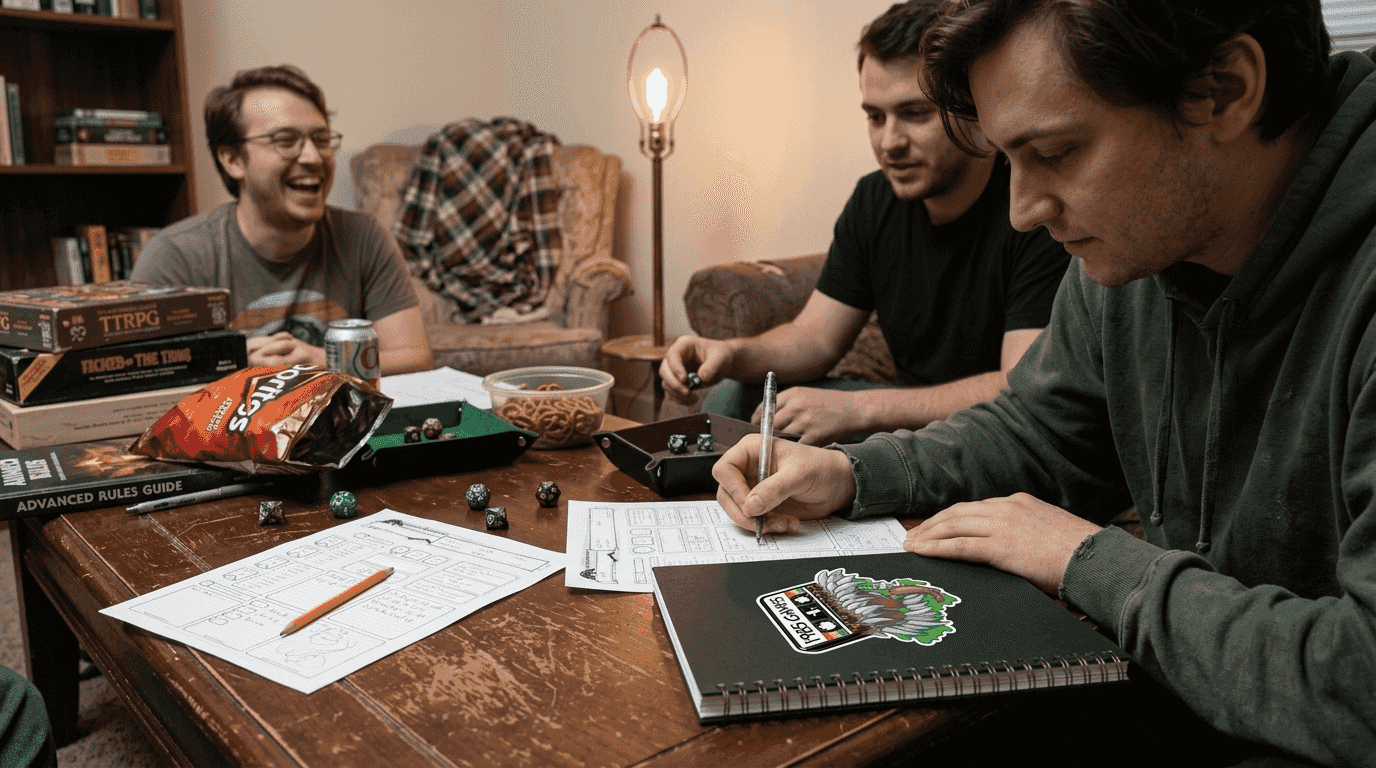
Railroading occurs when you force players down a predetermined path regardless of their choices, essentially making their decisions meaningless. Sandbox play offers the opposite extreme, providing complete freedom without guidance or structure. Neither extreme works well. Players need clear goals and consequences, but multiple paths to achieve those goals. When you present a problem, brainstorm three different solution approaches players might take, then prepare loose frameworks for each rather than detailed scripts.
Facilitating player-driven stories requires this step-by-step approach:
- Present situations and challenges, not solutions
- Ask players what their characters want to accomplish
- Let players propose their approach first
- Apply logical consequences based on their choices
- Build future sessions around decisions they made
Different players engage with D&D in distinct ways. Recognizing these archetypes helps you provide something for everyone:
- Actors love roleplay and character development; give them NPC interactions and moral dilemmas
- Explorers want to discover secrets and lore; hide clues and reward investigation
- Tacticians enjoy combat optimization and strategy; design varied tactical encounters
- Storytellers care about narrative arcs; connect their backstories to campaign events
Research indicates that flexible DMing styles tailored to mix of player archetypes improve session success by 15%. You don’t need separate content for each type, just ensure your sessions include elements appealing to different preferences.
| DM Approach | Player Response | Session Outcome |
|---|---|---|
| Restrictive (predetermined outcomes) | Disengagement, frustration | Players stop proposing creative solutions |
| Flexible (multiple valid paths) | Investment, creativity | Players drive story forward enthusiastically |
| Overly permissive (no consequences) | Confusion, boredom | Players lose sense of stakes and challenge |
The rule of cool lets you bend rules for awesome moments that enhance the story. When a player proposes something technically impossible but incredibly cinematic, consider allowing it with appropriate difficulty checks. However, apply this principle consistently. If you let the fighter perform an impossible acrobatic maneuver once, don’t arbitrarily deny similar creativity later.
Warning: Consistently overriding player choices or ignoring their input causes rapid disengagement. Players notice when their decisions don’t matter, and they’ll stop investing emotional energy in your campaign.
Pro Tip: After each session, jot down one creative solution a player proposed that you didn’t anticipate. This habit trains you to expect the unexpected and improves your improvisational skills over time.
Mastering these execution techniques complements your preparation work, creating sessions where players feel heard and excited about returning. The methods described in guides about running D&D campaigns align with these core principles.
Enhancing gameplay with character management and combat simplicity
Specific gameplay techniques dramatically improve session flow and player enjoyment without adding preparation burden.
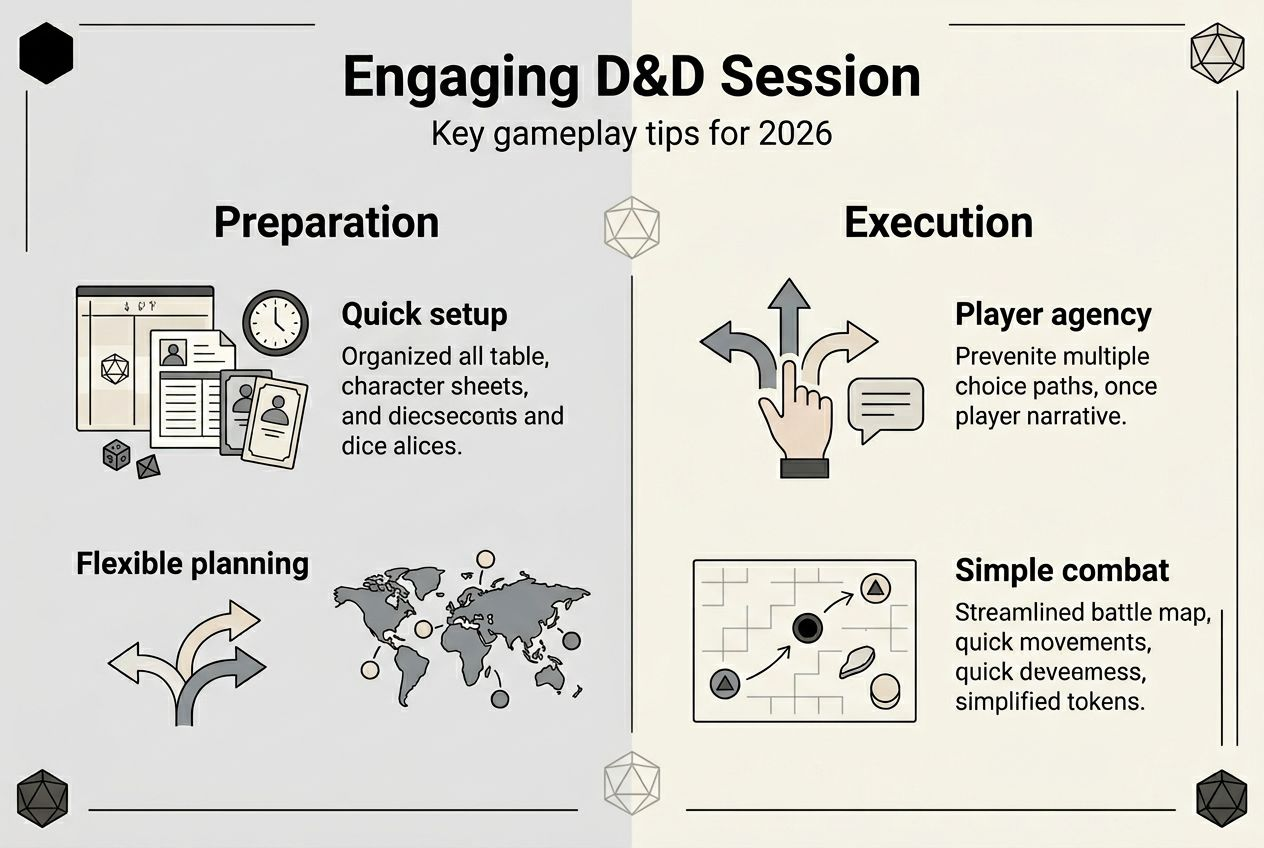
Allowing multiple characters per player reduces the sting of character death while increasing tactical flexibility. When players run two or three characters simultaneously, losing one becomes a setback rather than a campaign-ending tragedy. This approach works especially well in deadly campaigns or when your group has fewer than four players. Multiple characters let players experiment with different playstyles and contribute to party balance more easily. One player might run both the party’s healer and a damage dealer, ensuring crucial roles stay filled.
B/X D&D’s streamlined combat rules offer valuable lessons for modern games. The system’s simplicity enables players to start quickly and resolve large battles rapidly, keeping momentum high during tactical encounters. Even if you play fifth edition, borrowing B/X principles speeds up your sessions.
| System Element | B/X D&D Approach | Time Saved Per Session |
|---|---|---|
| Initiative | Group initiative (players vs monsters) | 10-15 minutes |
| Character creation | Roll stats, pick class, start playing | 30-45 minutes |
| Combat resolution | Simple attack rolls, minimal status effects | 20-30 minutes |
| Monster stat blocks | 3-5 key numbers only | 5-10 minutes |
Simplifying combat doesn’t mean removing tactical depth. Focus on interesting terrain, varied monster abilities, and clear objectives beyond “kill everything.” A fight on a crumbling bridge over lava presents more engaging decisions than a flat room, regardless of rules complexity.
Managing character death gracefully maintains campaign momentum. Consider these approaches:
- Introduce replacement characters quickly through existing NPCs
- Let dead characters return as different creature types (undead, constructs)
- Create meaningful funeral scenes that honor the character’s legacy
- Offer resurrection quests as side adventures
- Keep backup characters ready for deadly campaigns
NPC allies provide another tool for party support without stealing spotlight. Helpful NPCs should fill gaps in party capabilities but let players make final decisions. A friendly wizard might provide crucial information or transportation, but shouldn’t solve every problem for the party.
Pro Tip: Introduce the multiple character option during session zero, especially for new players learning D&D. This sets expectations early and lets players build complementary character pairs from the start, enhancing their creative investment in the campaign world.
These gameplay techniques reduce friction points that slow sessions down, letting you spend more time on the exciting parts: exploration, roleplay, and memorable combat encounters.
Verifying session success and continuous improvement
Evaluating your sessions honestly and adapting based on feedback creates steady improvement over time. Great DMs never stop learning.
Assess each session using this checklist:
- Did players actively participate and propose solutions?
- Were there moments of genuine laughter or tension?
- Did the session end with players excited for next time?
- Did you respect player choices and let them shape outcomes?
- Were combat encounters challenging but fair?
- Did everyone at the table get spotlight moments?
Gather player feedback through brief post-session check-ins or anonymous surveys. Ask specific questions like “What was your favorite moment?” and “What would you like to see more of?” rather than vague “How was it?” prompts. Players often provide valuable insights you missed while managing the game.
Common pitfalls undermine even well-prepared sessions. Pushing players too forcefully toward predetermined outcomes frustrates them and wastes your preparation when they resist. Ignoring player feedback signals that their input doesn’t matter. Overcomplicating rules or adding too many house systems bogs down gameplay. Failing to adjust difficulty appropriately either bores experienced players or overwhelms newcomers.
Adaptive strategies keep your campaign responsive to player interests:
- Adjust encounter difficulty based on how easily players handle challenges
- Add plot hooks related to character backstories players seem excited about
- Tweak or remove house rules that slow down play
- Shift tone or pacing if players seem disengaged with current approach
- Incorporate player theories and ideas into future story developments
Data shows that sessions with flexible, adaptive DMing show a 15% higher success rate in player enjoyment compared to rigid approaches.
The most valuable tool for long-term campaign success is honest communication established during session zero and maintained throughout the campaign. Regular check-ins prevent small issues from becoming major problems.
Campaign journals help track player preferences, important NPCs, ongoing plot threads, and lessons learned from each session. Review your notes before each game to maintain continuity and recall details players mentioned weeks ago. When you remember a character’s dead mentor or reference an offhand comment about their hometown, players notice and appreciate the attention. Crafting the ultimate player’s journal provides structure for tracking these crucial details.
Continuous improvement comes from honest self-assessment combined with player feedback. After each session, identify one thing that worked well and one thing to improve next time. This simple practice compounds over months into dramatically better DMing skills.
Enhance your D&D sessions with 1985 Games
Running engaging D&D sessions becomes easier with the right tools supporting your preparation and gameplay. Quality accessories enhance immersion and reduce friction during play.

1985 Games offers dice sets that let you customize your gameplay experience and add personality to every roll. From mystery sets perfect for trying new styles to premium sharp-edge dice that feel substantial in hand, the right dice make every moment at the table more memorable. Explore the full range of dice sets available to find options matching your campaign’s theme.
Detailed battle maps transform abstract combat into tactical, visual encounters that help players visualize the battlefield and make strategic decisions. Quality maps reduce confusion about positioning and distances while making fights more engaging for tactically minded players.
Keeping organized notes proves crucial for campaign continuity. DM journals provide structured space to track NPCs, plot threads, and session notes, ensuring you never lose important details. Visit 1985 Games to discover tools that elevate your DMing and create unforgettable adventures for your players.
How to run d&d session faq
What is player agency and why is it important?
Player agency means your players’ choices genuinely affect the story and world, creating meaningful consequences. It’s important because players invest more emotionally when their decisions matter, leading to higher engagement and satisfaction. Without agency, players become passive observers rather than active participants.
How do I balance prep time with session quality?
Use pre-written adventures as frameworks, then add personalized touches rather than creating everything from scratch. Focus preparation on flexible scenarios with multiple solutions instead of detailed scripts. Spend time on elements players will definitely encounter, like opening scenes and key NPCs, while keeping later content loose and adaptable.
What is session zero and should I use it?
Session zero is a dedicated meeting before your campaign starts where you establish table rules, discuss expectations, create characters together, and align on campaign tone. You should absolutely use it because preventing problems through clear communication is far easier than fixing them mid-campaign. Session zero builds group cohesion and ensures everyone wants to play the same type of game.
How can I cater to different player types in one group?
Include varied content in each session: social encounters for actors, mysteries for explorers, tactical combat for strategists, and story connections for narrative-focused players. You don’t need separate scenes for each type, just ensure your adventures contain multiple elements. Ask players what they enjoy most and adjust the ratio of content types accordingly.
What are effective ways to handle character death?
Introduce replacement characters quickly through existing NPCs or have players keep backup characters ready. Create meaningful moments honoring the dead character’s legacy rather than glossing over the loss. Consider resurrection quests as side adventures if death feels premature. Allow multiple characters per player in deadly campaigns to reduce the impact of individual deaths.