

TL;DR:
- In 2026, the tabletop RPG hobby is shifting toward simpler rules, faster setup, and more table-friendly tools. Mainstream publishers focus on seasonal content and accessibility, while indie creators drive innovation with experimental mechanics and community funding. The key to success is choosing the trends that suit your group’s style, emphasizing effortless play and creative flexibility.
Here’s something that might just break your brain like a Nat 20 on an Insight check: the biggest story in TTRPGs for 2026 isn’t about flashier digital tech or more complex rule systems. Nope. The hobby is swinging hard in the opposite direction. Dice goblins everywhere are falling in love with simpler rules, faster setup, and table-first tools that actually make your sessions sing. Meanwhile, indie creators are absolutely exploding through crowdfunding, and mechanical innovation is happening in the wildest, most unexpected corners of the design world. Let’s break down what’s really happening and how you can ride these waves at your own table.
Table of Contents
- Back to basics: The rise of rules-light and old-school play
- Mainstream games innovate: D&D’s seasonal releases and table-first tools
- Digital support with a purpose: Next-gen virtual tabletops
- Game mechanics get experimental: Diceless play and progressive resolution
- Indie powerhouses and crowdfunding: Financing the next wave
- Why these trends matter more than you think
- Enhance your table with 2026’s top gameplay tools
- Frequently asked questions
Key Takeaways
| Point | Details |
|---|---|
| Rules-light leads | TTRPGs with streamlined rules and fast play are the most popular in 2026. |
| Season-based releases | Major brands use seasonal content and event-driven tools to engage players. |
| Next-gen virtual tools | Virtual tabletops now offer faster performance and user-friendly features for smoother sessions. |
| Indie and crowdfunding surge | Crowdfunding supports more diverse and experimental TTRPG projects than ever. |
| Innovation in mechanics | New systems experiment with diceless play and progressive resolution for richer storytelling. |
Back to basics: The rise of rules-light and old-school play
While many expect complex digital evolution, most players are voting with their dice for a simpler experience. And honestly? We’re here for it.
Major TTRPG expectations in 2026 skew heavily toward rules-light and old-school design sensibilities, right alongside mainstream fantasy, sci-fi, and horror settings. That’s a HUGE signal, dear reader. Players aren’t just tolerating simplicity. They’re actively requesting it.
Why is this happening? Simple. Life is busy. Nobody wants to spend three hours reading errata before a Friday night session. Rules-light systems strip out fiddly modifiers and lengthy subsystems, replacing them with narrative-driven resolution and quick, decisive outcomes. That means your session gets to the good stuff faster. The drama. The roleplay. The moments your group will still be talking about five years from now.
Here’s a quick comparison so you can see what we mean:
| Feature | Rules-heavy systems | Rules-light systems |
|---|---|---|
| Setup time | 1-3+ hours of prep | 30 minutes or less |
| Player onboarding | Weeks of learning | 1-2 sessions |
| Focus | Tactical mechanics | Story and character |
| Flexibility | Rigid, structured | Improvisation-friendly |
| Ideal for | Long, planned campaigns | One-shots and new groups |
Both styles have their champions, and neither is “wrong.” But the momentum in 2026 clearly favors the lighter lane.
Here’s what draws players to rules-light games specifically:
- Faster session starts with minimal rulebook consulting
- Lower barrier to entry for friends who’ve never played a TTRPG
- More time at the table spent on actual storytelling
- Easier for DMs to improvise and adapt on the fly
- Portable and flexible enough to play almost anywhere
“The best RPG rule is the one your whole table understands in under a minute.”
As a DM, you can lean into this trend without completely overhauling your game. Try trimming rarely-used mechanics from your sessions, or experiment with a rules-light one-shot before committing to a full campaign. Check out RPG accessory trends in 2026 to see how physical tools are keeping pace with this shift. And if you want more hands-on guidance, the best practices for tabletop gaming are a great place to start building leaner, meaner sessions.
Mainstream games innovate: D&D’s seasonal releases and table-first tools
Emerging from indie roots, mainstream publishers are evolving their approach to meet new player priorities. And the biggest player in the room, Wizards of the Coast, is making some genuinely interesting moves.
Wizards of the Coast is structuring its D&D 2026 releases into distinct “seasons,” connecting major book launches to themed events and organized play initiatives. Think of it like a video game battle pass, except your loot is lore and your grind is a heroic saga at the dinner table. Each season brings fresh content, themed events, and new ways for groups to engage with the game together.
Here’s how the seasonal structure roughly breaks down:
| Season | Theme focus | Key feature |
|---|---|---|
| Winter/Spring | Dungeon exploration | New monster compendiums |
| Summer | Outdoor and wilderness | Revised travel rules |
| Fall | Faction intrigue | Event-driven adventures |
| Year-end | Epic tier play | Campaign-closing modules |
Alongside seasonal content, WotC is pushing table-first tools hard. Reference cards, quick-lookup accessories, and streamlined DM screens are all part of the new push to keep rules visible at the table without requiring a trip to the index every five minutes. That’s a win for every group that’s ever lost 20 minutes hunting for a specific ruling mid-combat.
Here’s what’s resonating most with groups right now:
- Quick reference cards that put essential rules in front of players without pausing the game
- Themed terrain and map accessories tied to seasonal content releases
- Event-driven adventure modules with built-in hooks for both new and veteran groups
- Streamlined DM screens with curated info rather than walls of small text
Pro Tip: When a new season drops, pick ONE new mechanic or accessory to introduce to your group rather than overhauling everything at once. Your players will engage more deeply with a single exciting addition than feel overwhelmed by a dozen changes. If you’re gearing up for a new seasonal arc, this guide to running a D&D session in 2026 has some seriously good advice. And for the prep side of things, a solid Dungeon Master checklist will keep your sessions running like a well-oiled dungeon machine.
Digital support with a purpose: Next-gen virtual tabletops
Just as the table is getting simpler, digital tools are finding their groove too. And in 2026, virtual tabletops (VTTs) are no longer just “an online substitute” for physical play. They’re a genuinely powerful option in their own right.
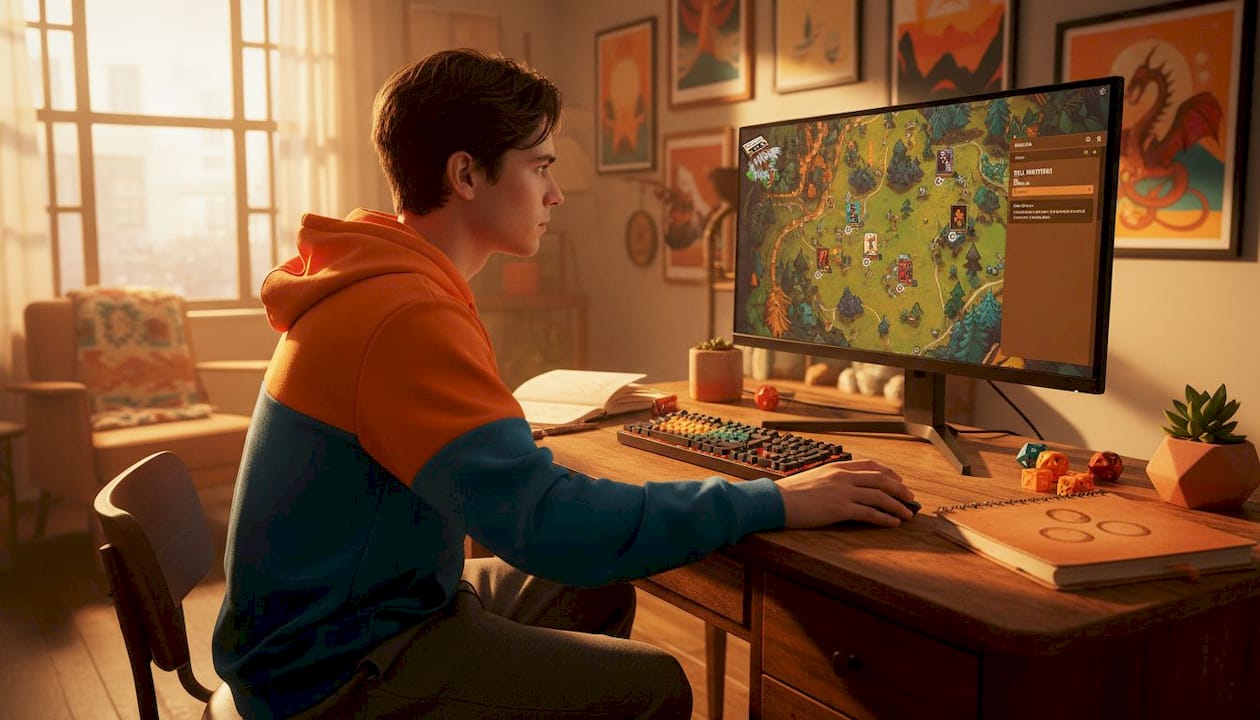
VTTs in 2026 are emphasizing performance and smoother session handling, including significant rendering improvements for large maps and dynamic lighting systems. That means less time staring at a loading spinner and more time watching your party argue about which corridor to take. Roll20’s 2026 updates specifically target panning and zooming lag on larger maps, improving responsiveness by double-digit percentages. For DMs running big battles or sprawling dungeon environments, that’s a genuinely meaningful quality-of-life bump.
New VTT features reducing friction in 2026 include:
- Faster map loading even for complex, multi-layer environments
- Improved dynamic lighting that doesn’t tank performance mid-session
- Streamlined character sheet access with fewer clicks to reach key info
- Better mobile support so players can engage from more devices
- Integrated audio tools for ambient soundscapes without third-party apps
Stat callout: Roll20’s April 2026 performance update specifically addresses double-digit percentage improvements in panning and zooming lag for large maps. For a group running a massive battle map, that’s the difference between immersion and frustration.
Pro Tip: You don’t have to choose between physical and digital! Use a VTT for map display and fog-of-war while keeping physical dice and miniatures at the table. You get the best of both worlds: the tactile joy of rolling and the visual clarity of a digital map. Want to see how physical tools elevate the experience even further? This breakdown of TTRPG accessories for immersive play will give you some serious inspiration. And if you’ve ever wondered whether battle mats are worth the investment, explore the role of battle mats in your setup.
Game mechanics get experimental: Diceless play and progressive resolution
Performance isn’t just digital. Storytelling mechanics are leveling up, too. And 2026 is proving to be a genuinely wild year for mechanical innovation.
Mechanics innovation in 2026 continues to include non-traditional resolution approaches and diceless narrative combat concepts. Games exploring these approaches are challenging the assumption that randomness is mandatory for drama. Spoiler: it isn’t. Well-designed progressive resolution systems create tension through player choices rather than dice luck. That’s a genuinely different (and surprisingly exciting) experience.
Key features that define these new-wave systems:
- Progressive resolution lets outcomes escalate based on accumulated choices rather than single rolls
- Contested phrases create verbal or strategic duels between characters without traditional dice
- Diceless frameworks rely on resource management and narrative momentum for tension
- Risk/reward ladders let players decide how deep to go before committing to a resolution
- Collaborative storytelling beats that reward group creativity over individual stats
“The progressive resolution system is about giving players genuine risk/reward decisions that feel earned, not random. Every choice escalates the stakes, and the outcome belongs to the story, not the dice.”
This doesn’t mean dice are going anywhere, dice goblins. Fear not. But for DMs curious about experimenting, adding even one diceless scene into a session (a tense negotiation, a montage sequence) can add incredible texture. Curious about how dice still shape the core of most games? The deep dive into the role of dice in gameplay is genuinely fascinating reading. And if you’re just getting started with the wider world of TTRPGs, the guide to immersive TTRPG gameplay lays the whole foundation beautifully.
Indie powerhouses and crowdfunding: Financing the next wave
The spirit of experimentation is supercharged by indie and creator-driven funding. And the numbers in 2026 are genuinely jaw-dropping.
Q1 2026 shows a strong increase in $100k-successful TTRPG crowdfunding campaigns and total raised in that bracket, with 21 campaigns crossing the $100k mark, up 35% year-over-year. That’s not a fluke. That’s a movement.
Stat callout: TTRPG crowdfunding in Q1 2026 generated a staggering $8.06 million from campaigns that raised over $100k individually. That’s indie creators, funded directly by players, building the future of the hobby.
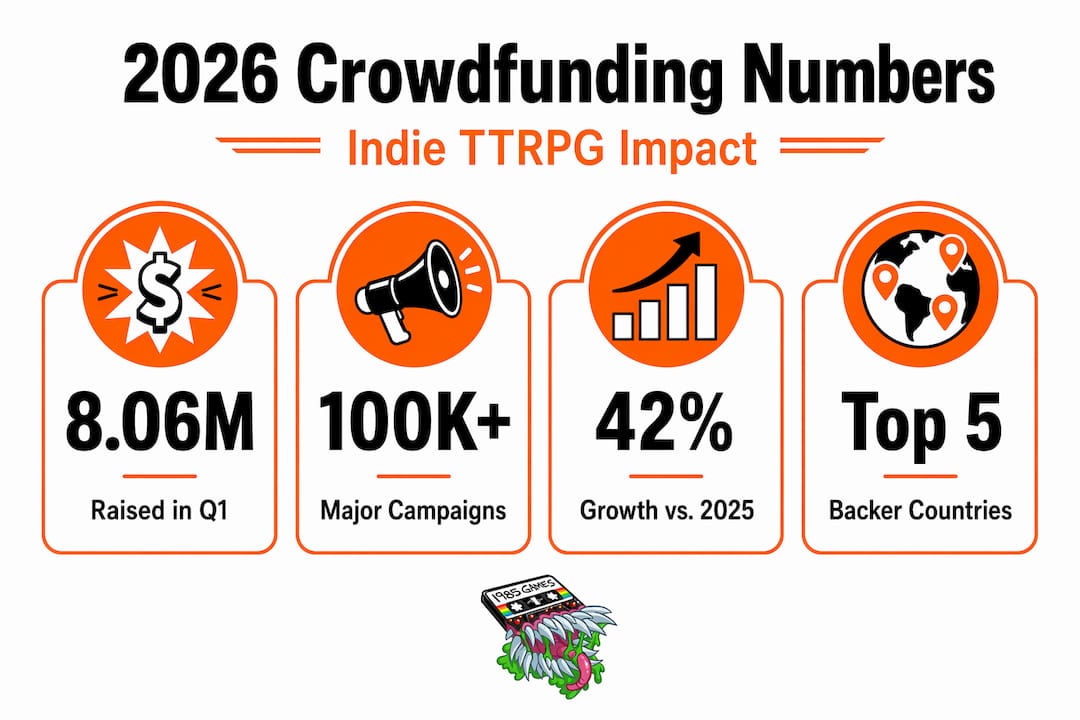
| Metric | Q1 2025 | Q1 2026 | Change |
|---|---|---|---|
| $100k+ campaigns | ~15 | 21 | +35% |
| Total raised ($100k+ bracket) | ~$5.9M | $8.06M | +36% |
| Avg. raise per qualifying campaign | ~$393k | ~$384k | Stable |
Notable indie campaigns and their unique hooks in 2026:
- Rules-light fantasy heartbreakers with beautiful handcrafted art and zine-style presentation
- Horror one-shots designed for three-hour sessions, perfect for convention play
- Diceless narrative games built around collaborative world-building over combat
- Accessible family TTRPGs with simplified rules for younger players and newcomers
- Themed campaign settings tied to underrepresented genres like solarpunk and mythic Asia
Why are creators leaping into crowdfunding now more than ever? Because the community will back a genuinely good idea without the gatekeeping of traditional publishing. You don’t need a major deal. You need a vision and a passionate audience. The result is more creative diversity in the hobby than we’ve ever seen before. Explore accessories that boost immersion to pair your indie game of choice with tools that match its vibe perfectly.
Why these trends matter more than you think
Here’s our honest, slightly opinionated hot take, and we’re sticking to it: the TTRPG hobby in 2026 has split into two very distinct tracks, and understanding that split will make you a smarter player and a better DM.
Track one is the mainstream lane. Big publishers like Wizards of the Coast are doubling down on accessibility, table-friendly tools, and seasonal content that keeps established groups engaged. They’re not trying to reinvent the wheel. They’re making the wheel smoother, lighter, and easier to roll across any terrain.
Track two is the indie lane. Here, designers are throwing out the rulebook entirely and building something new from scratch. Progressive resolution, diceless mechanics, radically experimental settings, funded directly by communities that want more than what the big names offer. This track is where the genre-defining ideas of the next decade are being born right now.
The mistake most DMs make? Chasing whichever trend is getting the loudest buzz online and forcing it onto their table. We’ve seen it happen. A DM gets excited about a diceless system, brings it to a group that loves the crunch of tactical combat, and wonders why the energy died. Or a player obsesses over a seasonal D&D event when their group only meets once a month and can’t keep pace.
The real breakthrough of 2026 isn’t any single trend. It’s the permission to choose what fits your table. The trend insights for accessories we track confirm this: the tools that actually improve sessions are the ones that reduce friction for your specific group, not the ones generating the most hype.
Pro Tip: At the start of a new campaign or season, do a quick five-minute survey of your group. Ask what they love, what slows the game down, and what they’ve been curious to try. The answers will tell you more about which 2026 trends to adopt than any “hottest games” list ever could.
Enhance your table with 2026’s top gameplay tools
Ready to put these trends into practice? We’ve got you covered, dice goblins.

The biggest shift in 2026 is about reducing friction and maximizing fun, and the right physical tools do exactly that. Whether you’re embracing a rules-light indie game, running a seasonal D&D arc, or mixing physical and digital play, your accessories should work with your style, not against it. Our Dungeon Craft: Volume 2 modular terrain maps are built for fast setup and maximum visual impact, making them the perfect companion for the streamlined play sessions that define 2026 trends. And if you’re looking to add a little chaos and joy to your rolling ritual, our Mystery Dice sets deliver that hit of pure tactile delight that no VTT can replicate. Your table deserves both beauty and function. Let’s make it happen.
Frequently asked questions
What makes rules-light TTRPGs so popular in 2026?
Rules-light games dramatically reduce prep time and are far easier for new players to learn, making them accessible to a wider audience. EN World’s poll confirms a strong and growing player preference for fast-play, narrative-focused systems in 2026.
How do D&D’s seasonal releases impact casual and regular players?
Seasonal releases give groups regular, structured content refreshes with themed events to look forward to, helping both new and veteran players stay engaged throughout the year. Wizards of the Coast’s 2026 release calendar ties each book launch to specific themed play initiatives.
Are virtual tabletops faster and more reliable now?
Yes, significantly so. Roll20’s 2026 performance improvements address panning, zooming, and dynamic lighting efficiency, making large-map sessions noticeably smoother for both DMs and players.
Can I still find innovative new mechanics outside mainstream games?
Absolutely. Indie designers are exploring progressive resolution systems and diceless narrative frameworks that offer genuinely fresh ways to build tension and drama at the table.
How successful is TTRPG crowdfunding in 2026?
It’s record-breaking. TTRPG crowdfunding in Q1 2026 saw 21 campaigns exceed the $100k mark, a 35% increase year-over-year, with total funding in that bracket reaching over $8 million.