

Selecting the right TTRPG accessories transforms chaotic sessions into smooth, immersive adventures. Many players struggle to identify which tools genuinely enhance gameplay versus those that simply add clutter. This guide breaks down essential criteria and examples, helping you choose accessories that boost clarity, organization, and storytelling in your 2026 campaigns.
Table of Contents
- Selection Criteria For Choosing TTRPG Accessories
- Dice Sets: Enhancing Gameplay Accuracy And Speed
- Player Journals And Campaign Planners: Organizing Your Adventure
- Terrain And Battle Maps: Immersive Visual Gameplay
- Summary Comparison And Situational Recommendations
- Explore Top TTRPG Accessories At 1985 Games
Key takeaways
| Point | Details |
|---|---|
| Selection criteria | Focus on functionality, material quality, compatibility, aesthetic alignment, and budget constraints. |
| Core accessories | Dice sets, journals, battle maps, and storage solutions form the foundation of enhanced gameplay. |
| Material impact | Different dice materials affect durability, tactile feel, and roll accuracy during sessions. |
| Thematic tools | Matching accessories deepen immersion and maintain narrative cohesion throughout campaigns. |
| Budget strategy | Experience level and gameplay style guide smart accessory investments for maximum value. |
Selection criteria for choosing TTRPG accessories
Functionality during gameplay sits at the top of your priority list. Accessories must solve real problems, whether that’s speeding up combat, tracking complex narratives, or organizing character details. A dice tower that slows rolls defeats its purpose, while a journal with unclear sections creates more confusion than clarity.
Material quality directly impacts how long your accessories last. Resin dice chip easily compared to metal or gemstone options. Battle maps made from vinyl withstand spills better than paper alternatives. Selecting accessories requires evaluating functional utility, material quality, style fit, and budget to enhance performance and immersion.
Compatibility with your game system matters more than you might think. A hex-grid battle map won’t work for systems using square grids. Check whether accessories support your specific ruleset before purchasing. This saves money and frustration later.
Aesthetic and thematic alignment improve immersion dramatically. A horror campaign benefits from dark, weathered journals and ominous dice. Fantasy adventures call for vibrant colors and mythical designs. Matching your tools to your story keeps players engaged.
Budget and customization options guide your final decisions. Consider these factors:
- Entry-level accessories offer solid functionality at $15-30 per item
- Mid-tier options balance quality and cost at $30-75
- Premium tools provide superior materials and customization at $75+
- Bulk purchases often reduce per-item costs significantly
Pro Tip: Invest in one premium core accessory rather than multiple budget items. A quality dice set or durable battle map serves you better across years of campaigns.
Dice sets: enhancing gameplay accuracy and speed
A complete set includes D20, D12, D10, D8, D6, and D4, essential for games like Dungeons & Dragons. Each die serves specific mechanics, from damage rolls to ability checks. Having a full set prevents gameplay interruptions when you need to borrow dice from other players.
Materials dramatically affect both durability and feel. Resin dice cost $10-20 per set and work well for beginners. Metal dice run $30-60 and provide satisfying weight and longevity. Gemstone dice reach $80-200 but offer unmatched aesthetic appeal and heirloom quality. Each material creates different rolling experiences and sound profiles.
Sharp edges and high-contrast numbers speed up rolls and reduce errors. Clear number reading prevents disputes over results. Sharp-edged dice provide more random distribution compared to tumbled alternatives, making them popular among players who value statistical accuracy. How to create custom dice offers additional personalization options for experienced players.
Premium dice deliver better durability and tactile satisfaction. They resist chipping, maintain their finish through hundreds of sessions, and feel substantial in hand. Budget dice serve well for testing new games or lending to guests. Many players keep both types for different situations.
Popular styles include thematic and customizable options. Consider these varieties:
- Elemental themed sets matching character classes or abilities
- Translucent designs with suspended glitter or objects inside
- Metallic finishes in copper, bronze, or silver tones
- Engraved symbols replacing standard numbers for unique flair
- Color combinations reflecting specific campaigns or characters
Pro Tip: Buy two identical sets of your primary dice. This eliminates waiting during simultaneous rolls and provides a backup if dice go missing during travel to game nights.
Player journals and campaign planners: organizing your adventure
Physical journals offer tactile satisfaction and work without batteries or screens. Digital planners provide searchability and easy editing. Subscription boxes combine both formats with monthly curated accessories. Each option supports different organizational styles and preferences.
They improve session prep efficiency and narrative cohesion dramatically. Recording NPC names, plot threads, and treasure prevents continuity errors that break immersion. Game masters benefit from tracking enemy stats and encounter details. Players use journals to develop character backstories and track personal goals.
Customization allows use across multiple game systems. Generic templates adapt to any ruleset, while system-specific designs optimize for particular mechanics. Craft the ultimate players journal guides you through personalization techniques that match your gameplay style.
Popular products enhance note-taking and campaign tracking effectively. DMs journals provide structured sections for world-building, encounter planning, and session summaries. Dungeon notes offer quick-reference formats for combat and exploration tracking. These tools reduce prep time while improving session quality.
Good journals aid both players and game masters by:
- Providing dedicated spaces for character development and backstory
- Organizing quest logs and campaign timelines chronologically
- Tracking inventory, currency, and magical items systematically
- Recording NPC relationships and faction standings clearly
- Archiving memorable moments and quotes for future reference
Terrain and battle maps: immersive visual gameplay
Modular, reconfigurable maps fit diverse combat scenarios without requiring separate purchases for each encounter. Interchangeable tiles let you build taverns, dungeons, forests, or cities from the same components. This flexibility maximizes value while supporting spontaneous gameplay adjustments.
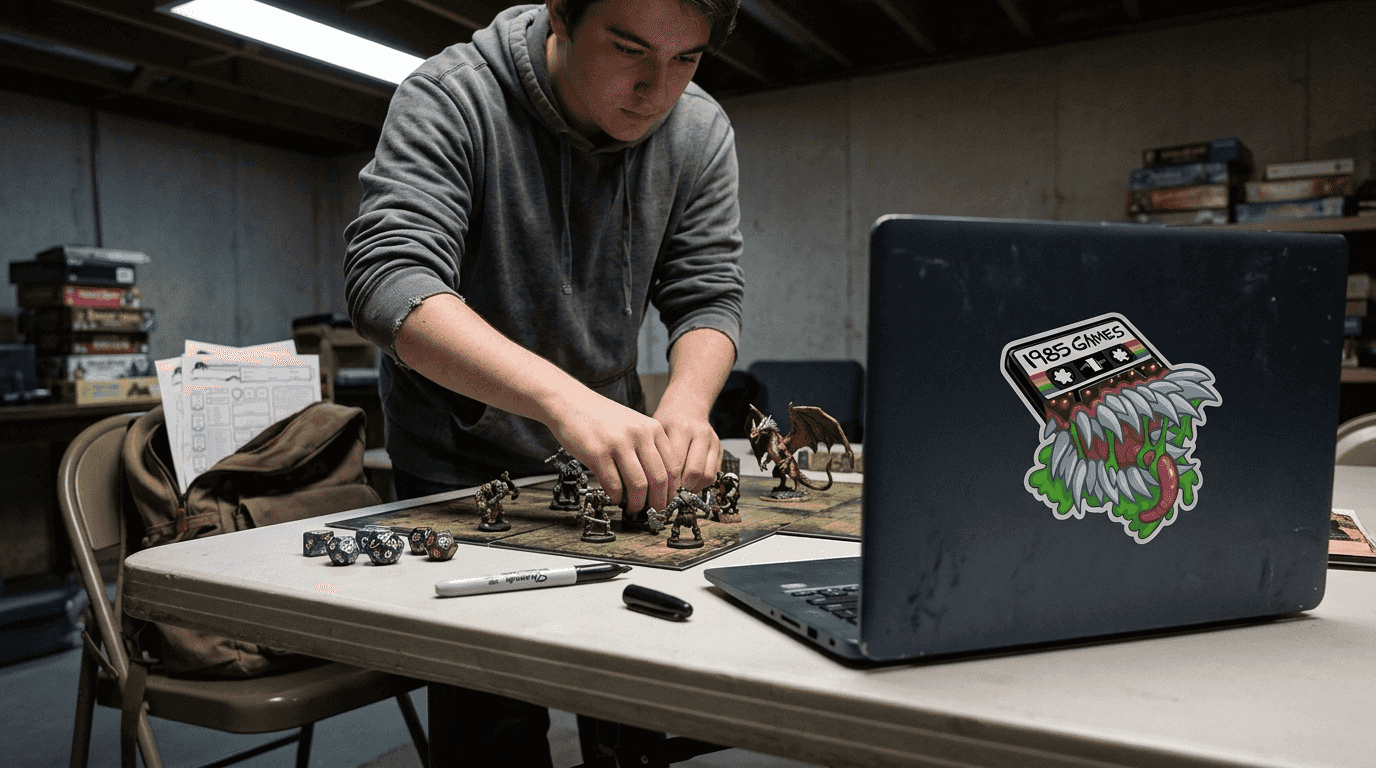
Compatibility with grid or hex systems matters for mechanical accuracy. Most D&D campaigns use one-inch square grids, while some systems prefer hexagonal layouts. Verify your game’s requirements before investing. Terrain in dnd explained covers spatial mechanics and measurement systems across different rulesets.
Materials balance durability and portability considerations. Vinyl maps fold compactly but resist wear better than paper. Neoprene provides cushioning and lies flat without creases. Rigid tiles offer premium presentation but require more storage space. Choose based on how often you transport your gaming supplies.
Visual terrain improves player engagement and strategic decisions. Three-dimensional obstacles create tactical depth that flat maps cannot match. Players naturally think more creatively when they see physical representations of cover, elevation, and environmental hazards.
| Material | Price Range | Durability | Portability |
|---|---|---|---|
| Paper | $5-15 | Low | Excellent |
| Vinyl | $20-40 | High | Good |
| Neoprene | $30-60 | Very High | Good |
| Rigid Tiles | $50-150 | Excellent | Fair |
Consider these terrain options:
- Foldable vinyl maps for budget-conscious groups
- Magnetic modular tiles for quick reconfiguration
- 3D printed obstacles and buildings for maximum immersion
- Dry-erase surfaces allowing custom additions each session
Summary comparison and situational recommendations
This comparison helps you evaluate core accessories across key factors affecting your purchase decisions. Understanding how each category performs guides smarter investments aligned with your gameplay priorities and budget constraints.
| Accessory Type | Material Options | Price Range | Durability | Primary Function |
|---|---|---|---|---|
| Dice Sets | Resin, Metal, Gemstone | $10-200 | Medium-High | Random number generation |
| Journals | Paper, Leather, Digital | $15-60 | Medium | Campaign tracking |
| Battle Maps | Vinyl, Neoprene, Tiles | $20-150 | High | Visual combat aid |
| Storage | Wood, Leather, Plastic | $10-80 | High | Organization |
Beginners should prioritize one quality dice set and a basic battle map. These tools immediately improve gameplay clarity without overwhelming new players. How to start dnd beginners guide outlines additional starter recommendations for complete setup.
Immersion-focused players benefit most from thematic dice and detailed terrain. Matching accessories to campaign settings maintains atmospheric consistency. Invest in customizable options that adapt across different story arcs and character concepts.
Dungeon masters need reliable journals and versatile maps more than specialty dice. Organizational tools prevent session delays and plot inconsistencies. Digital planners work well for DMs managing complex worlds with numerous NPCs and locations.
Budget-friendly kits offer good starter accessories but lack premium quality and customization found in higher-end products. Evaluate your commitment level before choosing between entry and mid-tier options. Long-term players save money by buying quality upfront.
Luxury collectors appreciate handcrafted dice and artisan maps as display pieces and functional tools. These items hold value and often become conversation starters. Consider limited editions and signed pieces for collections intended to grow over years.
Balance cost with quality using these strategies:
- Start with essential core tools before expanding to specialty items
- Compare material quality against price to identify best value
- Read user reviews focusing on durability over multiple sessions
- Watch for seasonal sales and bundle deals reducing per-item costs
- Prioritize versatile accessories working across different game systems
Pro Tip: Upgrade accessories gradually as you identify specific pain points in your sessions. This targeted approach prevents wasting money on items you rarely use while ensuring your most-used tools perform optimally.
Explore top TTRPG accessories at 1985 Games
Ready to elevate your gaming sessions with quality accessories that deliver real gameplay improvements? 1985 Games offers carefully curated dice sets, from themed mystery collections to premium sharp-edge options designed for discerning players.

Explore durable, modular battle maps that transform tactical combat while fitting any campaign setting. Take advantage of special buy 2 get 1 dice sets promotions that maximize your budget without compromising quality. Whether you need journals for tracking complex narratives or storage solutions keeping your gaming space organized, 1985 Games supports your journey toward more immersive, memorable adventures.
FAQ
What types of dice sets are best for beginners?
Starter sets with high-contrast resin dice work best for ease of use and budget constraints. Look for clear number markings that read quickly during fast-paced gameplay. Basic foldable battle maps complement these sets well, providing visual combat support without significant investment. How to start dnd beginners guide covers additional starter recommendations.
How do themed accessories improve gameplay immersion?
Matching dice and journals to character and story themes keeps players mentally engaged with the narrative. Physical handouts and thematic props boost player recall and immersion by about 30%, creating stronger emotional connections to campaigns. When accessories reflect your world aesthetically, they reinforce story elements without requiring explicit reminders. RPG accessories enhance gameplay immersion explores additional techniques for maximizing thematic impact.
What are good storage solutions for dice and accessories?
Dice trays and towers help prevent lost dice while speeding gameplay through contained rolling areas. Materials vary from wood and leather to plastic depending on your budget and aesthetic preferences. Built-in mirrored sliding storage systems keep gaming spaces neat and accessible between sessions. Integrated storage solutions reduce setup time and protect accessories from damage during transport.
How to balance budget with quality when buying TTRPG accessories?
Invest in core accessories first, prioritizing quality dice and reliable journals over specialty items. Consider mid-tier gear offering durability without premium pricing for optimal value. Starter kits under $25 offer functional basics but lack customization and premium materials found in higher price ranges. Customization options and manufacturer warranties add significant value for long-term players planning years of regular sessions.
Recommended
- Top RPG accessories that boost gameplay immersion by 30% – 1985 Games
- Role of Accessories in D&D: Enhancing Every Session – 1985 Games
- Tabletop Game Setup Guide for Immersive Play Sessions – 1985 Games
- How to create custom dice for tabletop RPGs in 2026 – 1985 Games
- Eminem Hitman Game: Rapper Becomes Latest Elusive Target in Gaming Crossover – Stevie The Manager aka Stangr The Man