

TL;DR:
- Focus on essentials like a rulebook, dice, and character sheets before buying extras.
- Start with one game that excites you and expand gradually based on experience.
- Organize your gear with designated storage and maintain it to enhance gameplay enjoyment.
So you’ve decided to dive into tabletop gaming. Welcome, friend! Maybe a friend rolled dice in front of you and your brain lit up like a Nat 20. Maybe you binged a certain fantasy show and thought, “I need THIS in my life.” Either way, the hobby is calling your name, and the sheer number of options out there can feel like staring into a dragon’s hoard with no map. Rulebooks, dice sets, miniatures, mats, journals… where do you even start? Deep breath. We’ve got you. This guide walks you through every step, from knowing your goals to organizing your gear, so you can build a first collection that feels exciting, not overwhelming.
Table of Contents
- Understanding your tabletop gaming goals
- Essential components for your first collection
- Enhancing play: Accessories and upgrades on a budget
- Organizing and maintaining your growing collection
- Lessons learned: What builds lasting tabletop joy (and what doesn’t)
- Equip your tabletop adventure with quality gear
- Frequently asked questions
Key Takeaways
| Point | Details |
|---|---|
| Start with essentials | A basic set, dice, and free rules are enough to begin enjoying tabletop gaming. |
| Prioritize play over gear | Focus on play style and actual needs before buying accessories or upgrading your kit. |
| Smart upgrades enhance fun | Add battle mats, dice trays, or miniatures only when you’re ready to deepen gameplay immersion. |
| Stay organized | Simple storage solutions can keep your collection accessible and in good condition. |
Understanding your tabletop gaming goals
Before you spend a single dollar, ask yourself one simple question: what kind of fun do you actually want to have? Tabletop gaming is a huge world. We’re talking everything from dungeon-crawling adventures in Dungeons & Dragons to cozy narrative storytelling games for two players. Not all of it needs to live on your shelf right away.
Here’s a quick way to figure out your starting point. Think about these questions honestly:
- Do you want to play with a group or mostly solo? Group RPGs like D&D are a blast but need at least a few friends. Solo-friendly games exist too, and they’re wonderful.
- Are you drawn to fantasy, sci-fi, horror, or something else? Genre shapes which rulebook and setting you’ll want first.
- How much time can you commit? Some systems need lots of prep. Others are pick-up-and-play.
- What’s your budget right now? Honest answer only, no pressure.
If Dungeons & Dragons is calling your name (and it probably is, since you’re here), check out these beginner D&D tips before you buy anything. They’ll save you from common first-timer mistakes.
One thing we see a lot: newcomers buying WAY too much at once. Fancy dice trays, ten sets of dice, three sourcebooks. Then they realize they haven’t played a single session yet. Playable essentials over accessories should always come first, and digital tools can keep early costs low while you figure out what you love.
Start with ONE game you’re genuinely excited about. Get comfortable. Then grow.
Pro Tip: Resist the urge to buy everything in week one. A focused $30 start beats a scattered $200 haul every time. You can always add more once you know what genuinely enhances your sessions.
Essential components for your first collection
Once you know what kind of games and play style suit you, it’s time to gather the core items for your collection. The good news? You really don’t need much to get started.
Here’s your must-have starter list:
- A polyhedral dice set (d4, d6, d8, d10, d12, d20, d00): the heartbeat of almost every TTRPG
- A core rulebook or starter adventure
- Character sheets (free printable versions work great)
- Pencils (yes, actual pencils, erasers are your friends)
- An adventure module to guide your first sessions
Not sure whether to grab the D&D Starter Set or the Essentials Kit? Here’s a quick comparison:
| Feature | D&D Starter Set | D&D Essentials Kit |
|---|---|---|
| Price | ~$15 | ~$20 |
| Dice included | Yes | Yes |
| Rulebook | Basic rules | Expanded rules |
| Character sheets | Pre-made | Blank + fillable |
| Best for | Classic group adventures | DMs and smaller groups |
| Solo-friendly | Not really | More flexible |
Both options are solid entry points. A D&D starter set or Essentials Kit runs just $15 to $20 and includes your rulebook, dice, character sheets, and a full adventure. That’s a remarkable deal for everything you need in one box.
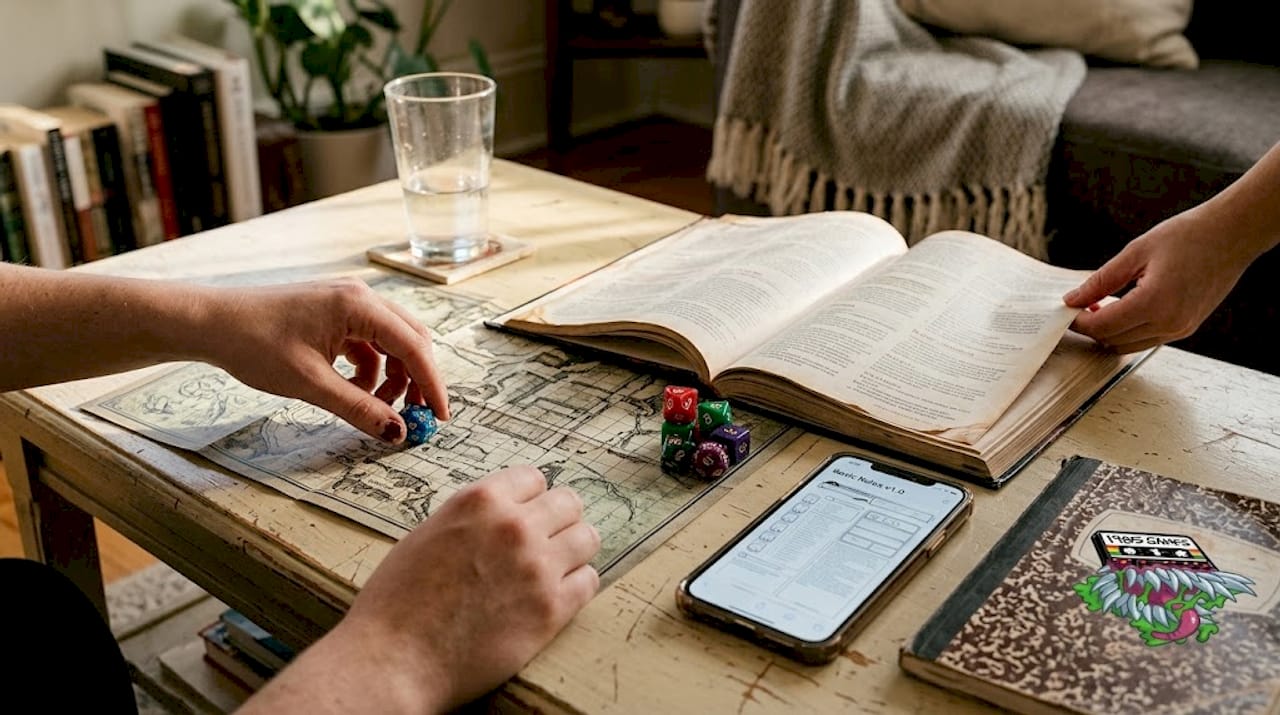
For the full picture of what goes into a solid starting kit, the RPG essentials gear list from our blog breaks it down beautifully. And if D&D specifically is your jam, our DnD beginner’s guide is a fantastic next read.
Physical vs. digital? Core essentials like polyhedral dice and rulebooks are important, but PDFs and free rules from publishers like Wizards of the Coast can stretch your budget beautifully. Apps like D&D Beyond even offer free character builders.
Pro Tip: Download free printable character sheets and use a free digital rules reference before committing to physical books. Physical copies feel amazing, but they’re a “treat yourself later” purchase.
Enhancing play: Accessories and upgrades on a budget
With your foundational kit in place, you might be wondering what accessories will help you get the most out of every session. Great news: the upgrade path is fun, and you don’t have to spend a fortune to feel like your table looks epic.
Here are the most impactful affordable upgrades, roughly in order of usefulness:
- Battle mat: A vinyl mat with a grid makes combat so much clearer. Highly recommended for D&D.
- Dry-erase markers: Pair these with your mat. Draw, erase, repeat. Chef’s kiss.
- Dice tray: Keeps dice from rolling off the table and onto the floor (we’ve all lost a d4 this way).
- DM screen: Lets the Dungeon Master keep notes hidden and looks incredibly cool.
- Miniatures or tokens: Small physical representations of characters and monsters.
Here’s a quick price reference to help you plan:
| Accessory | Estimated cost | Impact level |
|---|---|---|
| Battle mat (24x36in vinyl) | $20 to $30 | Very high |
| Dry-erase markers | $5 to $10 | High |
| Dice tray | $10 to $20 | Medium |
| DM screen | $10 to $25 | High for DMs |
| Miniatures (starter pack) | $15 to $40 | Medium to high |
According to CNET’s D&D accessories guide, a vinyl battle mat runs $20 to $30 and makes a genuinely noticeable difference in how engaging combat feels. That’s one of the best bang-for-buck upgrades you can make after your starter set.
For even more ideas on leveling up immersion, our roundup of TTRPG accessories for immersion is packed with fun picks. And if you’re curious why dice themselves matter so much, our piece on custom dice benefits will speak to your inner dice goblin.
For tools to enhance gameplay, even small additions make a big difference in how immersed everyone feels.
Pro Tip: Use coins, cardboard cutouts, or even LEGO minifigures as stand-ins for miniatures. Seriously. Players remember the adventure, not whether the orc was a painted resin figure or a quarter.
Organizing and maintaining your growing collection
After choosing your accessories, it’s smart to set up easy systems that keep everything in order between games. Nothing kills the pre-game excitement like spending 20 minutes searching for a missing d12.
Here’s a simple numbered setup routine that works great:
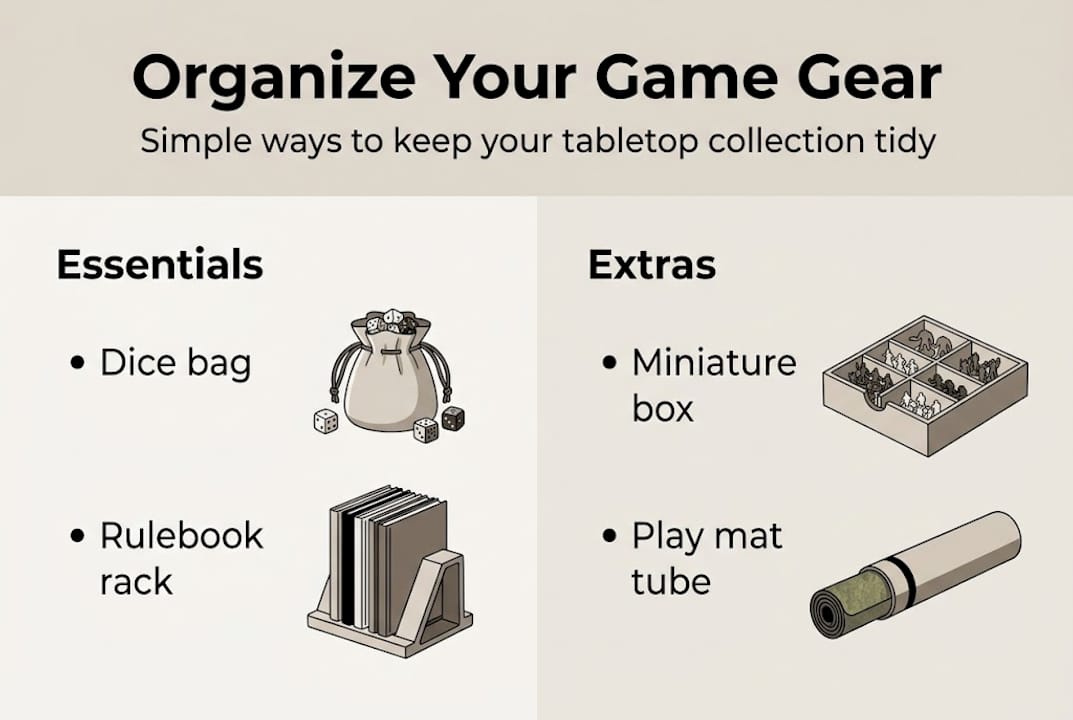
- Designate one bag or box per game. Keep all materials for D&D in one place, separate from any other games.
- Use a small tackle box for dice. Compartments keep sets separated, and the satisfying click of the lid is its own reward.
- File character sheets in a folder or binder. Label by player name or character. Add a few blank spares.
- Roll up your battle mat and store in a tube or sleeve. Flat storage can cause creasing over time.
- Return everything after each session. Make it a ritual. Thirty seconds of cleanup saves hours of future frustration.
For day-to-day maintenance, keep these habits in mind:
- Wipe vinyl mats with a damp cloth after use
- Store dice away from direct sunlight (UV can fade colors)
- Keep rulebooks away from spills (obvious but worth saying)
- Replace lost dice promptly so no set is incomplete
“The tactile feel of physical dice is one of the genuine joys of tabletop gaming. Treat them with a little care, and they’ll roll with you for years.”
For even smarter ways to keep your table running smoothly, our list of game aids for organization is full of clever finds that seasoned players swear by.
Proper storage isn’t just about neatness. It actually protects your investment and means you spend more time playing and less time untangling chaos.
Lessons learned: What builds lasting tabletop joy (and what doesn’t)
Here’s the honest take from us, as people who’ve watched hundreds of new gamers start their journey: the most legendary sessions we’ve ever heard about didn’t happen because someone had a $200 custom dice set or a hand-painted miniature army.
They happened because the storytelling was electric, someone made an absolutely unhinged character decision, and the whole table erupted.
FOMO (fear of missing out) is REAL in this hobby. New dice drops, limited edition mats, shiny sourcebooks. It’s tempting to collect first and play second. We’ve seen it. Don’t fall for it.
Instead, invest deeply in a few items you genuinely love. One great dice set that makes your heart happy every time you pick it up beats ten mediocre sets rattling around a bag. Check out the accessories’ role in fun to understand when gear actually adds to the experience versus when it’s just noise.
Our biggest piece of advice? Borrow gear from your group before you buy. Test what you actually use. Then spend intentionally.
Pro Tip: Ask your group if anyone has spare dice sets, mats, or screens before purchasing. Most veteran players have multiples of everything and love sharing.
Equip your tabletop adventure with quality gear
Ready to assemble a collection that’ll have your whole group buzzing? We’ve got you covered, dice goblins.

At 1985 Games, we stock everything a new adventurer needs to hit the ground running. Grab a set of our wildly popular mystery dice sets for a fun surprise unboxing experience (your brain will light up, guaranteed). Keep your campaign notes legendary with our Dungeon Notes journals, built for both players and Dungeon Masters. And if you’re the DM in your crew, our beautifully crafted DM’s Journals will become your most-used accessory, session after session. Quality gear, global shipping, and a community that gets it. That’s us.
Frequently asked questions
How much does it cost to start a tabletop gaming collection?
You can start with a D&D starter set for $15 to $20, with basic accessories and dice adding roughly $10 to $30 more depending on your choices.
What’s the difference between the D&D Starter Set and the Essentials Kit?
The Starter Set suits classic group adventures, while the Essentials Kit includes extra tools, expanded rules, and works better for smaller groups or new Dungeon Masters.
Do I need to buy miniatures and battle mats on day one?
Not at all. Playable essentials come first; miniatures and mats are great upgrades once you know you love the game.
Is it better to buy physical rulebooks or use digital versions?
Digital PDFs and free rules save money and are easy to access anywhere, but physical books offer a tactile joy that many players find worth the extra cost eventually.