

Planning your first Dungeons & Dragons session can feel as thrilling as it is overwhelming, especially when your goal is to create a memorable adventure for friends. The right tools at your table do more than organize the chaos—they set the tone for immersive storytelling that players will recall fondly. By gathering must-have board game accessories and preparing your materials with intent, you lay the groundwork for seamless and engaging gameplay, no matter where your journey begins.
Table of Contents
- Step 1: Gather Essential Game Accessories and Materials
- Step 2: Arrange Terrain, Maps, and Player Stations
- Step 3: Set Up Character Sheets and Journals
- Step 4: Verify Game Flow and Accessory Readiness
Quick Summary
| Main Insight | Explanation |
|---|---|
| 1. Gather essential accessories for better gameplay | Collect play mats, dice sets, and storage solutions to enhance the gaming experience and keep players engaged throughout the session. |
| 2. Arrange terrain and player stations strategically | Set up your table layout to help players immerse themselves in the game, ensuring all materials are easily accessible and visible. |
| 3. Organize character sheets for smooth gameplay | Provide clear and comprehensive character sheets with essential stats and space for notes, helping players stay focused and engaged in the story. |
| 4. Perform a thorough setup check before the game | Walk through your game layout and verify all materials function properly, ensuring a seamless experience when players arrive for the session. |
Step 1: Gather Essential Game Accessories and Materials
Before your first dice roll lands on the table, you need to assemble the right gear. Think of this like packing for an adventure—you wouldn’t trek into the wilderness without proper equipment, and tabletop gaming is no different. The accessories you gather now will transform a basic game night into an immersive experience that keeps players talking long after the session ends.
Start by identifying the core items that protect and enhance your gaming experience. Play mats protect your table surface while organizing the playing area beautifully. Card sleeves preserve your decks from wear and tear during countless shuffles. Your dice sets bring personality to every roll, and quality ones feel fantastic in your hands. Storage solutions keep scattered tokens and miniatures organized between sessions, while customized tokens add thematic depth that makes the world feel alive.
The essential accessories every D&D table needs include:
- Play mats or terrain battle maps for visual organization
- Card sleeves for protecting character sheets and spell cards
- Multiple dice sets in different colors and styles
- Dice trays or towers to contain those chaotic rolls
- Miniatures or tokens to represent characters and creatures
- A score tracker or initiative tracker
- Character record sheets and campaign journals
When setting up your game space, remember that essential board game accessories like play mats and storage solutions aren’t just practical—they signal to your players that you’ve put thought into the experience. Your setup communicates respect for their time and investment in the story. Quality dice sets feel premium when players grip them, and organized materials keep the momentum flowing without annoying searches for a missing token.
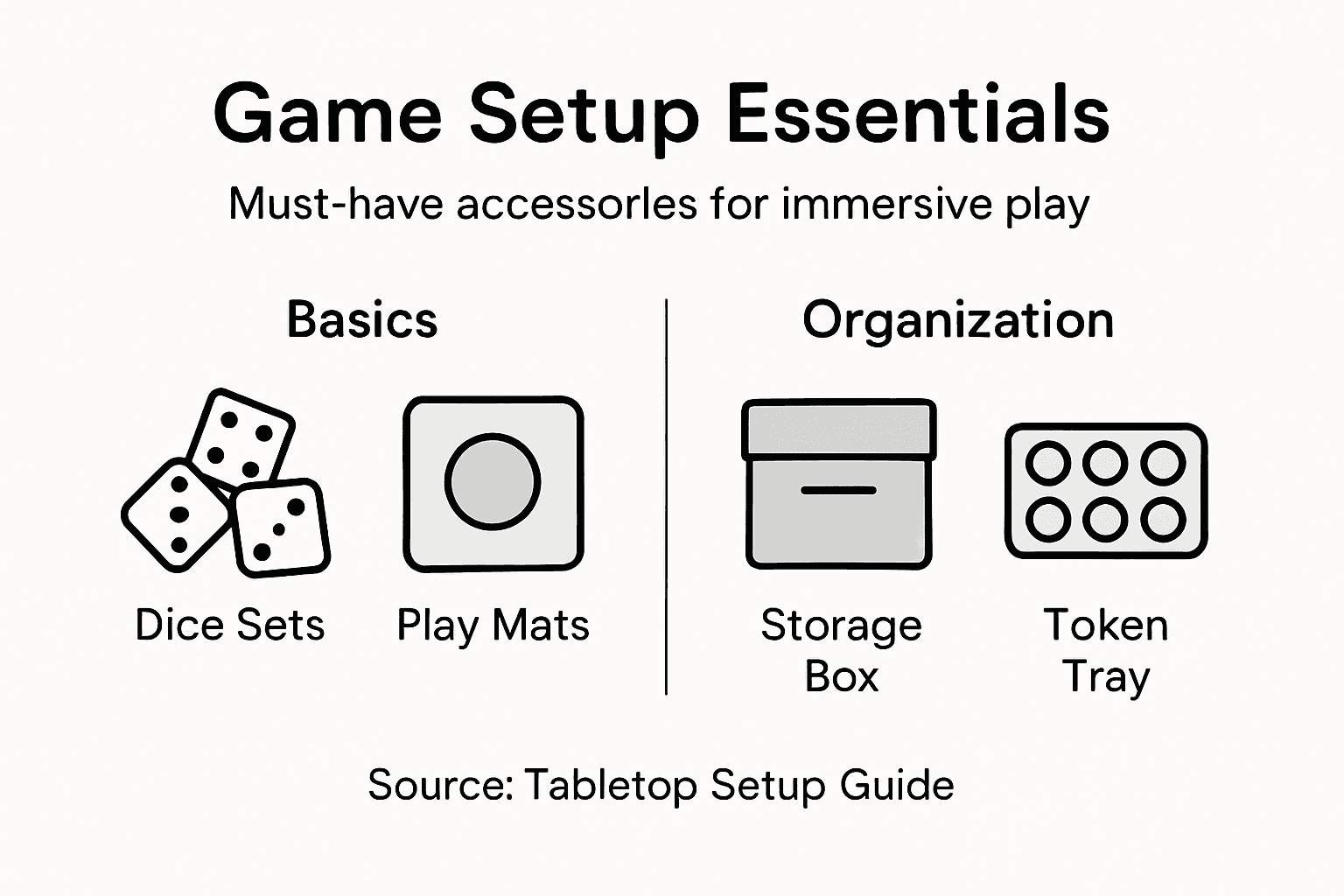
Consider what type of campaign you’re running. A gothic horror session benefits from darker, moodier dice and grim tokens, while a whimsical adventure might feature colorful, playful pieces. You don’t need everything immediately—start with the essentials and build from there as your budget and collection grow.
Here’s a quick comparison of starter and advanced D&D accessories for optimizing game nights:
| Accessory Type | Starter Level Benefits | Advanced Level Advantages |
|---|---|---|
| Dice Sets | Basic functionality and rolls | Unique designs, enhanced feel |
| Play Mats/Maps | Table protection, easy setup | Detailed artwork, themed terrain |
| Storage Solutions | Keeps pieces organized | Custom trays, quick-access cases |
| Tokens/Miniatures | Representation of characters | High detail, thematic immersion |
| Journals/Sheets | Simple note-taking | Laminated, reusable, rich layouts |
The difference between a forgettable session and an unforgettable one often comes down to how prepared your table looks and feels.
Pro tip: Buy dice in bulk or mystery sets to build your collection affordably, then organize them by color or theme in small pouches or cases—your dice goblins will appreciate having quick access to exactly the right set for the mood you’re creating.
Step 2: Arrange Terrain, Maps, and Player Stations
Now that you’ve assembled your accessories, it’s time to transform your table into a world worth exploring. Your physical layout makes the difference between a flat, forgettable session and one that pulls players into an immersive adventure. A thoughtfully arranged game space tells your story before anyone rolls a single die.
Start by placing your battle map or terrain at the center of the table where everyone can see it clearly. This becomes the focal point of combat and exploration. Make sure the map sits at an angle that allows all players to view it comfortably without craning their necks or leaning awkwardly. If you’re using a paper map, secure it with painter’s tape or small weights so it doesn’t shift during gameplay.
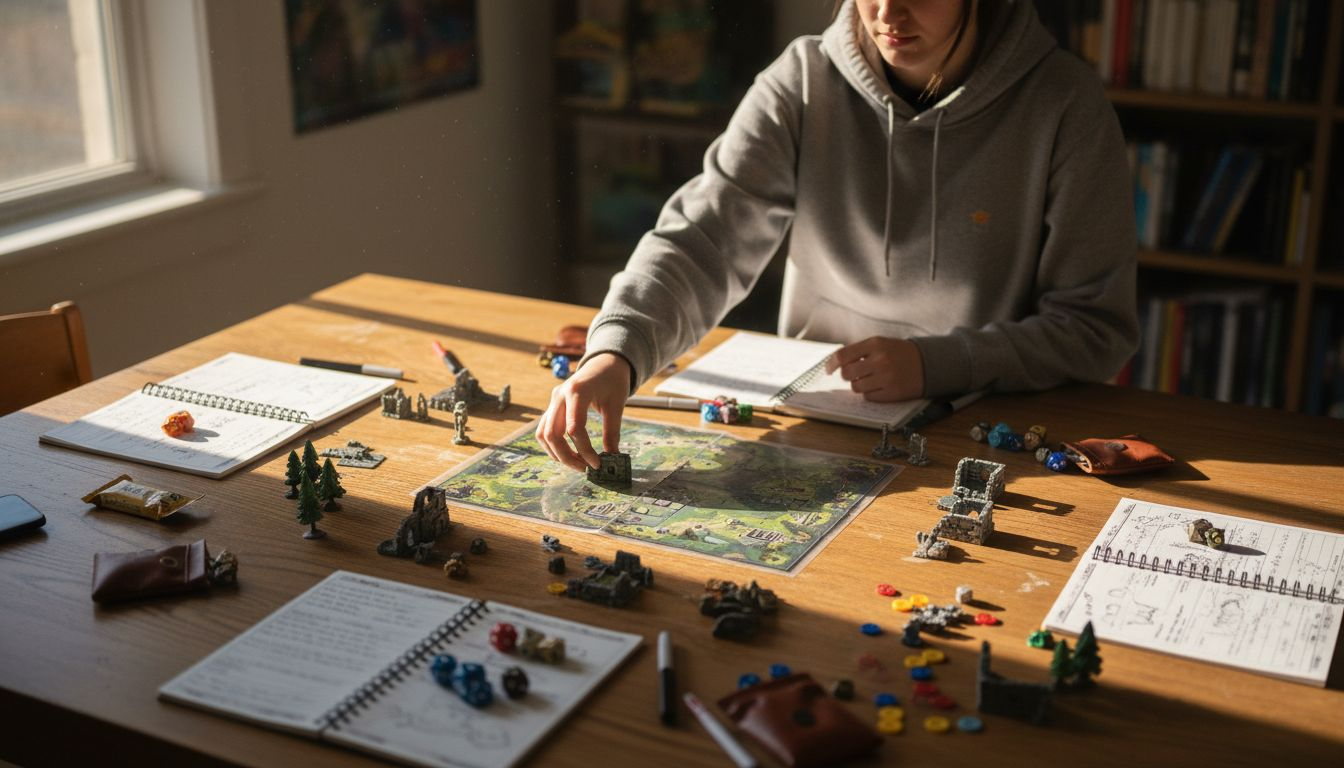
Effective terrain placement strategies balance visual appeal with gameplay functionality, giving players meaningful cover while keeping movement interesting and tactical. Your terrain shouldn’t just look cool—it should encourage interesting decisions and create natural chokepoints that make encounters memorable.
Arrange your terrain placement following these principles:
- Place terrain pieces to frame the map’s edges and draw the eye toward the action
- Leave open spaces for player movement and combat positioning
- Create visual variety by mixing heights and textures of terrain pieces
- Position structures in ways that offer strategic cover and hiding spots
- Ensure nothing blocks player sightlines to the central action area
Set up individual player stations around the table perimeter where each character keeper sits comfortably. Each station needs space for character sheets, dice, notebooks, and drinks without crowding the battle map. Players should have easy access to their materials while keeping elbows off the central gameplay area.
Position the Dungeon Master’s area slightly elevated or off to the side where you can see all player stations and the map simultaneously. Your position as the storyteller matters—you’re conducting the orchestra, not sitting in the audience.
Great table arrangement feels invisible to players because they’re too engaged in the story to notice the thought you put into spacing and sight lines.
Pro tip: Set up your table 20 minutes before players arrive so you can make adjustments—move a player station closer if someone’s too far away, reposition terrain if it blocks anyone’s view, and check that the lighting hits your map without creating harsh shadows that make reading difficult.
Step 3: Set Up Character Sheets and Journals
Character sheets are the bridge between your players’ imaginations and the mechanical systems that make D&D work. A well-organized sheet keeps gameplay flowing smoothly while helping players stay immersed in their characters’ stories. This step transforms scattered papers into a cohesive reference system.
Start by printing or preparing character sheets for each player before they arrive. Make sure every sheet includes the essential information they’ll reference constantly during play. Your character sheet should contain core attributes like ability scores, armor class, and hit points in easily accessible spots. Players shouldn’t have to hunt through pages to find information they need in the middle of combat.
Effective character sheets blend gameplay essentials with immersive storytelling, including personality details, physical descriptions, and narrative traits alongside mechanical elements. This design philosophy keeps mechanics visible while reminding players of their character’s personality and motivations.
Arrange your character sheet setup with these components:
- Core attributes (Strength, Dexterity, Constitution, Intelligence, Wisdom, Charisma) in clear view
- Combat statistics (AC, hit points, attack bonuses) positioned for quick reference
- Skills and proficiencies organized by category
- Spells or class abilities listed with descriptions
- Character background and personality notes at the bottom
- Space for writing notes during gameplay
Next, provide each player with a player journal where they can track campaign notes, character development, and memorable moments. These journals become treasured keepsakes long after the campaign ends. Players use them to jot down plot hooks, NPC names, and personal character arcs that matter to them.
Below is a summary of essential character sheet elements and their purpose:
| Sheet Component | Purpose | Gameplay Impact |
|---|---|---|
| Core Attributes | Define character stats | Affect skill checks |
| Combat Stats | Track HP, AC, bonuses | Influences combat turns |
| Skills/Proficiencies | List abilities | Determines task results |
| Spells/Abilities | Track options/descriptions | Enables special actions |
| Background Notes | Keep story details | Guides role-playing |
| Note Space | Record events | Supports memory and recap |
Position character sheets in front of each player and journals within arm’s reach. Players should be able to reference and write in their materials without reaching across the table or blocking the battle map.
Character sheets and journals transform scattered thoughts into an organized record that players can reference, helping them stay engaged and remembering important details.
Pro tip: Laminate character sheet sections or use sheet protectors with dry-erase markers so players can update temporary values like hit points and spell slots without erasing permanent information, keeping sheets clean and reusable across multiple sessions.
Step 4: Verify Game Flow and Accessory Readiness
Before players arrive, take time to walk through your setup as if you’re playing the session. This final verification catches problems that could disrupt gameplay and ensures every accessory functions as intended. A smooth session starts with a thorough pre-game check.
Start by testing your dice rolls. Grab several dice sets and roll them across the table, making sure they land clearly and aren’t favoring one side. Check that your dice trays or towers work properly if you’re using them. Roll initiative a few times to confirm your setup allows for easy tracking and visibility.
Verify that game procedures and automations function correctly by doing a practice run through combat. Confirm that your initiative tracker displays clearly, that terrain pieces don’t obstruct sightlines, and that players can easily see and reach their materials. Walk around the table from each player’s perspective to catch any visibility issues.
Check these critical readiness items:
- All dice roll smoothly and land clearly on the table
- Character sheets are readable and positioned for easy reference
- Battle map terrain pieces sit flat and securely
- Player journals and note-taking materials are accessible
- Lighting illuminates the map without creating harsh shadows
- All player stations have adequate space without crowding
- Your Dungeon Master area provides clear sightlines to all action
- Storage containers for tokens and pieces are within easy reach
Test your music or ambient sound setup if you’re using one. Make sure the volume allows conversation while creating atmosphere. Check that any digital tools or apps you’re using launch without problems and don’t distract from tabletop gameplay.
Walk through a sample turn of combat mentally, calling out actions and checking that everything flows smoothly. This rehearsal reveals timing issues or missing pieces before they interrupt your actual game.
A setup that’s been tested and verified feels polished and intentional, signaling to players that this session will be special.
Pro tip: Create a checklist of your pre-game verification tasks and snap photos of your ideal table setup, then compare your actual setup against those photos each session—this visual reference catches inconsistencies and keeps your table organized across multiple game nights.
Elevate Your Tabletop Experience with Premium Accessories
The journey to immersive and memorable tabletop sessions begins with the perfect setup. This guide highlights the importance of detailed preparation—from selecting the right dice sets to arranging terrain and organizing character sheets. If you want to overcome common setup challenges like cluttered player stations or uninspired battle maps, the key lies in quality accessories that inspire creativity and streamline gameplay.
Discover how carefully crafted pieces can transform your game nights. Our Dungeon Craft and Battlemap Bundles provide thematic terrain and maps designed for vivid storytelling. Meanwhile, the Dungeon Craft collection offers handcrafted tokens, dice trays, and unique dice sets that deliver a tactile sense of adventure. Each accessory encourages smooth game flow and invites players deeper into your narrative.

Ready to transform your sessions into unforgettable adventures? Visit 1985 Games today to browse our full range of tabletop accessories ideal for beginners and veteran Dungeon Masters alike. Elevate your table setup now and watch your players become fully immersed in every thrilling roll and story twist.
Frequently Asked Questions
What are the essential accessories for an immersive tabletop game setup?
To create an engaging tabletop gaming experience, the essential accessories include play mats, card sleeves, multiple dice sets, dice trays, miniatures or tokens, and character record sheets. Gather these items to protect your materials and enhance the visual appeal of your gaming sessions.
How do I arrange terrain and player stations for optimal gameplay?
Position your battle map or terrain at the center of the table, allowing all players a clear view. Ensure player stations have enough space for character sheets, dice, and personal items while maintaining access to the central gameplay area for smooth interaction.
What key elements should be included on character sheets?
Character sheets should feature core attributes, combat statistics, skills and proficiencies, spells or abilities, and space for background notes. Organize this information for easy reference during gameplay to help players stay immersed in their characters’ stories.
How can I verify that my game setup is ready before players arrive?
Conduct a walkthrough of your setup to check if all dice roll smoothly, character sheets are legible, and terrain is properly arranged. Performing this final check will help you identify any issues that could disrupt game flow during the session.
What is a good way to organize my tabletop gaming materials for multiple sessions?
Use storage solutions like trays or small pouches to organize tokens, miniatures, and dice by color or theme. Establish a systematic storage strategy to make setup and cleanup quicker, allowing for a more seamless gaming experience each time.