

You’ve spent hours crafting an epic encounter, but when combat starts, confusion reigns. Players squint at vague descriptions, argue over distances, and lose track of positioning. Without visual clarity, even the most exciting battles can bog down into tedious back-and-forth questions. Battle maps solve this problem by providing tactical precision and immersive context that transforms chaotic combat into strategic, engaging gameplay. This guide shows you exactly how to prepare, design, and use battle maps to elevate your D&D sessions from confusing to captivating.
Table of Contents
- Key takeaways
- Preparing your battle maps: scales, tools, and styles
- Designing interactive and explorative maps for engaging gameplay
- Best practices for using battle maps during gameplay
- Troubleshooting common challenges and verifying success with battle maps
- Explore battle maps and campaign journals at 1985 Games
- FAQ
Key Takeaways
| Point | Details |
|---|---|
| Visual clarity boosts combat | Battle maps provide immediate visual cues that reduce distance disputes and keep encounters moving. |
| Standard grid scale | The five foot per square standard aligns with movement and prevents mid combat confusion. |
| Interactive terrain boosts engagement | Encounter features like pillars rivers and elevation transform fights into dynamic puzzles that reward placement and creativity. |
| Table ready maps | Maps should be readable and ready to table with clear grid lines designated token zones and lighting indicators. |
Preparing your battle maps: scales, tools, and styles
Proper preparation ensures your battle maps enhance rather than hinder gameplay. The foundation starts with choosing the right scale and gathering appropriate tools for your preferred creation method.
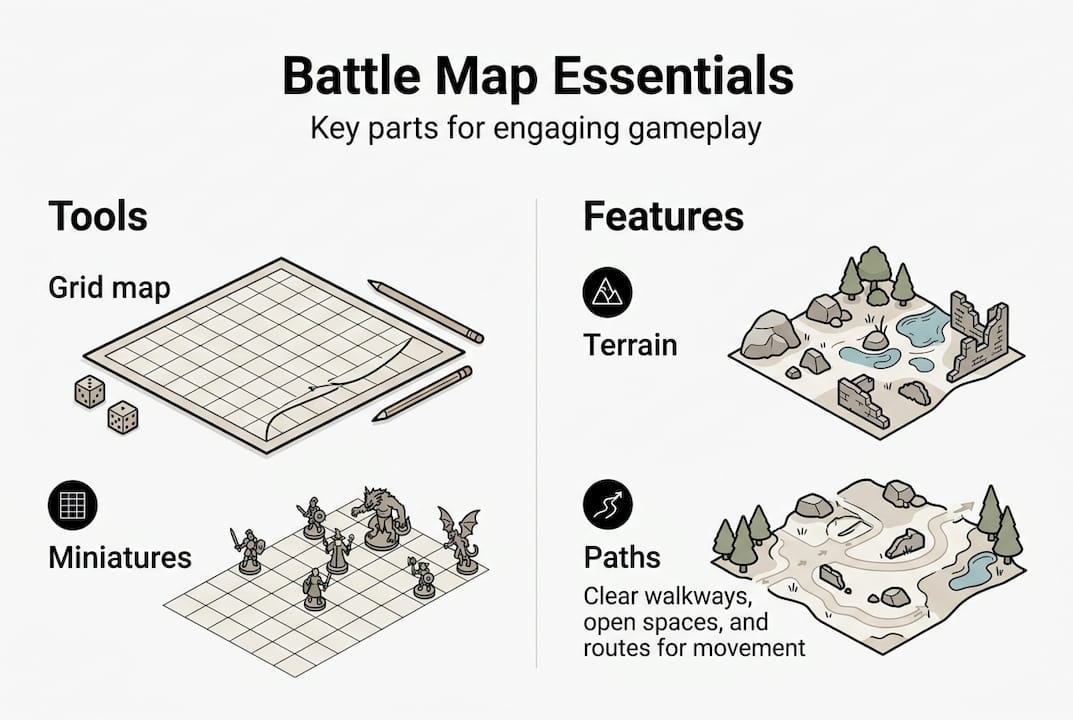
The standard 5 feet equals 1 inch grid remains essential for D&D battle maps because it directly matches the game’s movement mechanics. A character with 30 feet of movement can traverse six squares, making tactical decisions intuitive. This consistency prevents mid-combat confusion about ranges and distances.
You’ll need to decide between hand-drawn and digital approaches. Hand-drawn maps offer tactile creativity using pencil sketches, permanent ink with Micron markers, and colored pencils for terrain details. Digital tools provide flexibility for editing and printing, with virtual tabletop platforms requiring 140 pixels per square for clarity. Print maps should be exported at 300 DPI to ensure crisp grid lines and readable details.
Pro Tip: Test print a small section of your digital map before committing to full-size printing. This catches scaling issues and ensures your grid aligns properly with physical miniatures.
Table-ready maps need specific features to function smoothly during play:
- Clear grid lines that remain visible under miniatures and lighting conditions
- Designated token placement zones showing starting positions
- Lighting indicators marking bright, dim, and dark areas
- Accessibility features like high-contrast colors for players with visual impairments
Your material choices impact durability and reusability. Laminated paper maps withstand repeated use and allow dry-erase modifications during play. Vinyl battle mats provide premium durability for frequently used locations. Disposable paper works perfectly for one-shot encounters where permanence isn’t necessary.
| Material | Best for | Durability | Cost |
|---|---|---|---|
| Laminated paper | Reusable locations | Medium | Low |
| Vinyl mat | High-traffic areas | High | Medium |
| Standard paper | One-shot encounters | Low | Very low |
| Digital display | Virtual tabletops | N/A | Variable |
Organize your maps by encounter type and difficulty level. Label each with estimated party size and level range. This system lets you quickly grab appropriate maps during prep without scrambling through disorganized folders. Understanding terrain in D&D helps you categorize maps by their tactical features and environmental challenges.
Designing interactive and explorative maps for engaging gameplay
Static, featureless rooms kill tactical interest and reduce combat to simple dice exchanges. Interactive terrain transforms battles into dynamic puzzles requiring creative thinking and strategic positioning.
Incorporating interactive terrain like pillars, rivers, trees, and elevation prevents dogpiling and rewards player creativity. Pillars provide cover while breaking line of sight for ranged attackers. Rivers create movement obstacles that force characters to plan crossing strategies. Elevation grants advantage on attacks and creates vertical tactical layers.
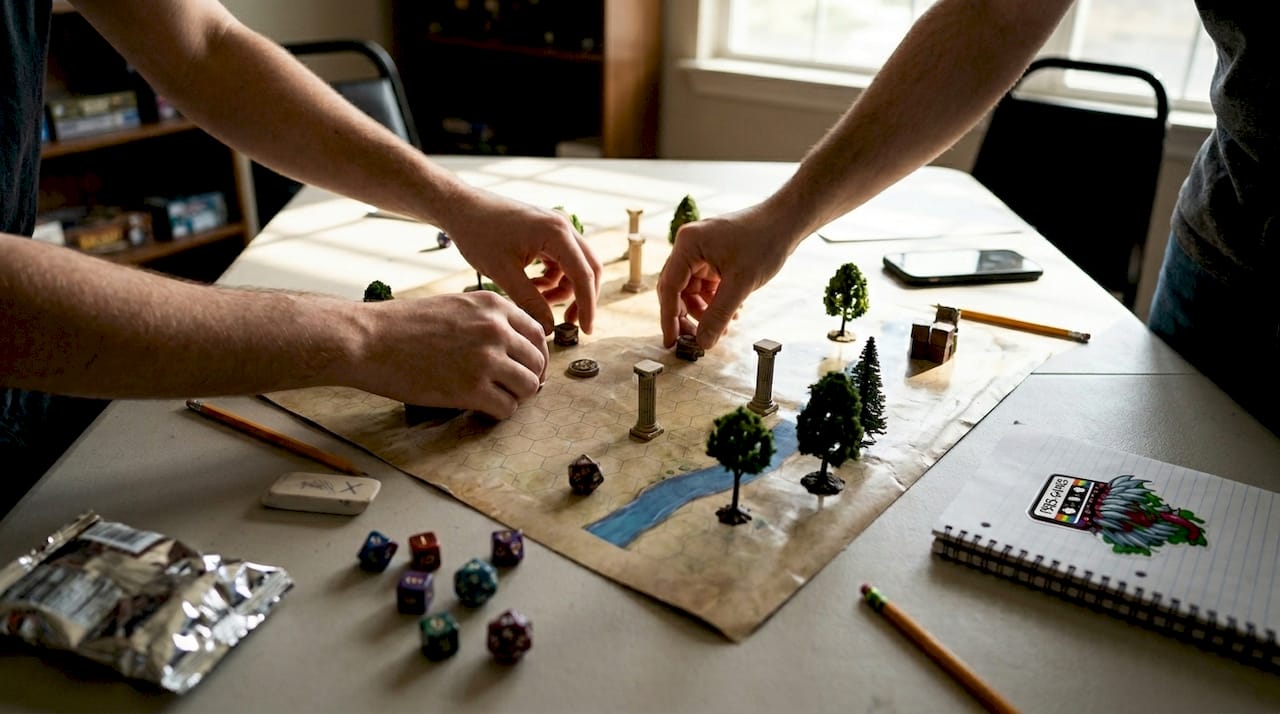
These features encourage spreading out rather than clustering. When every square offers identical tactical value, players default to surrounding enemies in tight formations. Varied terrain makes positioning meaningful. A ranger gains value from high ground, while a rogue benefits from cover-to-cover movement.
Pro Tip: Add at least three distinct terrain features per encounter map. This ensures multiple tactical options without overwhelming players with complexity.
Applying Jaquaysing methods with multiple paths and loops creates exploration and player choice. Named after legendary game designer Jennell Jaquays, this technique breaks linear dungeon layouts by offering alternative routes, interconnected rooms, and multiple entry points.
Linear maps railroad players through predetermined sequences. Jaquaysed maps let players choose their approach, creating emergent storytelling and tactical variety. A party might split to flank enemies, scout alternate routes, or retreat through back passages when overwhelmed.
| Map style | Player agency | Replayability | Tactical depth |
|---|---|---|---|
| Linear corridor | Low | Low | Minimal |
| Single large room | Medium | Low | Moderate |
| Jaquaysed multi-path | High | High | Maximum |
Consider these design elements for interactive maps:
- Multiple entrances and exits allowing flanking maneuvers
- Looping pathways that connect back to earlier areas
- Vertical connections like stairs, ladders, or climbable surfaces
- Environmental hazards such as lava pools or collapsing bridges
- Movable objects like barrels, crates, or furniture for improvised cover
The role of terrain in strategic gameplay extends beyond physical obstacles. Terrain tells environmental stories that enhance immersion. Scattered bones suggest previous battles. Claw marks on walls hint at monster types. These details transform generic combat spaces into memorable locations.
Balance complexity with clarity. A map with twenty terrain types overwhelms players and slows decision-making. Three to five distinct features provide sufficient tactical variety while maintaining comprehensible choices. Players should grasp available options within seconds of seeing the map.
Using 2D terrain advantages offers portability and storage benefits while maintaining tactical clarity. Flat terrain tokens and printed elevation markers convey height differences without requiring bulky 3D structures that obscure sightlines or dominate table space.
Best practices for using battle maps during gameplay
Even perfectly designed maps fail without proper facilitation techniques. How you present and manage battle maps during sessions determines whether they enhance or hinder gameplay flow.
Battle maps excel for precise tactics and positioning but can slow gameplay if overused. Reserve maps for encounters where positioning, ranges, and cover significantly impact outcomes. Complex multi-enemy battles, environmental hazards, and tactical set pieces benefit most from visual representation.
Complement maps with theater of the mind for narrative moments. Chase scenes through city streets, small skirmishes with single enemies, or social encounters rarely need grid precision. Switching between modes maintains pacing while applying each tool where it provides maximum value.
Follow this decision framework for when to deploy battle maps:
- Ask whether positioning affects tactical outcomes significantly
- Consider if multiple combatants need simultaneous tracking
- Evaluate whether environmental features create meaningful choices
- Determine if visual clarity would speed rather than slow resolution
Pro Tip: Prepare simplified sketch maps for unexpected combat. A quick 30-second drawing showing basic room shape and major features provides enough structure without derailing narrative momentum.
Mitigating slow combat from detailed maps requires focusing on player intent rather than perfect positioning. When players announce actions, ask what they’re trying to accomplish before worrying about exact square placement. This prevents analysis paralysis where players spend minutes optimizing movement paths.
“The map serves the story, not the other way around. When positioning questions arise, default to player intent and keep the action moving. Perfect tactical placement matters far less than maintaining engagement and narrative flow.”
Implement these facilitation techniques:
- Establish a 30-second decision timer for movement and basic actions
- Allow players to adjust positioning slightly after declaring actions if it serves their stated intent
- Use approximate ranges for most effects, reserving precise measurement for edge cases
- Encourage players to plan their turns while others act
- Treat map boundaries as guidelines rather than absolute barriers
Ask players about their tactical goals before they touch miniatures. “I want to get into melee with the orc” provides clear intent that you can facilitate quickly. Letting players silently measure and calculate before announcing actions invites overthinking.
Keep reference materials visible. Display movement speeds, common action ranges, and cover rules where everyone can see them. This reduces questions and empowers players to make informed decisions independently. A simple reference card showing that half cover grants +2 AC eliminates repeated rule lookups.
Your battlemap grasslands and similar terrain-specific maps should remain accessible tools rather than restrictive frameworks. If a player’s creative solution requires bending the depicted terrain slightly, prioritize the clever idea over map accuracy. The goal is enhanced gameplay, not rigid adherence to printed features.
Troubleshooting common challenges and verifying success with battle maps
Recognizing when maps aren’t working and knowing how to fix issues ensures your battle map investment pays ongoing dividends. Several warning signs indicate problems requiring adjustment.
Avoiding blank room syndrome prevents repetitive or stalled encounters. Empty rectangular rooms with no terrain features create identical tactical situations regardless of narrative context. Players quickly recognize these generic spaces and disengage from strategic thinking.
Introduce dynamic terrain changes mid-combat to revive flagging interest. Collapsing ceilings, rising water levels, or spreading fires force tactical adaptation and create memorable moments. These elements transform static maps into evolving challenges.
Use these troubleshooting strategies:
- If combat drags, simplify terrain and reduce enemy count rather than adding complexity
- When players ignore terrain features, explicitly describe tactical benefits during their turns
- For disengaged players, ask how their character uses environmental elements creatively
- If positioning disputes arise frequently, establish house rules for edge cases before next session
- When maps feel repetitive, rotate between different terrain types and encounter structures
Player feedback provides direct verification of map effectiveness. After sessions, ask which encounters felt most engaging and why. Players naturally gravitate toward battles where tactical choices mattered and positioning created interesting decisions. If they can’t recall specific terrain features from an encounter, your map likely lacked sufficient interactive elements.
Encounter pacing serves as another verification tool. Battles should resolve in 3-5 rounds for standard encounters, with boss fights extending to 6-8 rounds. If combat consistently exceeds these ranges, either your maps introduce too much complexity or you need better facilitation techniques.
Track these metrics across multiple sessions:
- Average combat duration in rounds
- Player questions about positioning per encounter
- Frequency of creative terrain use
- Post-session player enthusiasm about specific battles
Avoid designing sterile or overly complex maps. Sterile maps lack personality and tactical interest. Overly complex maps with ten different terrain types, multiple elevation levels, and intricate environmental mechanics overwhelm players and slow decisions to a crawl. The sweet spot offers 3-5 distinct features providing clear tactical options.
Resources like Dungeon Craft Vol 2 provide pre-designed maps balancing complexity with usability. These professionally crafted options save preparation time while demonstrating effective design principles you can apply to custom creations.
When maps consistently enhance rather than impede gameplay, you’ll notice players naturally discussing tactics, positioning themselves strategically without prompting, and referencing specific terrain features in their action descriptions. These behaviors confirm your battle maps successfully serve their purpose of elevating D&D combat into engaging, tactical storytelling.
Explore battle maps and campaign journals at 1985 Games
Now that you understand how to effectively prepare and use battle maps, having quality resources ready accelerates your game preparation and ensures consistent visual quality. 1985 Games offers curated collections designed specifically for dungeon masters seeking reliable, immersive battle map solutions.

Our battle maps collection features terrain-specific designs covering dungeons, wilderness, urban environments, and specialized encounter locations. Each map incorporates the interactive terrain principles and tactical variety discussed throughout this guide. Browse options matching your campaign’s current needs or stock up on versatile maps for unexpected encounters.
Track your sessions and campaign details with Dungeon Notes campaign journals designed for organized game management. These journals complement your battle map preparation by providing structured spaces for encounter notes, NPC tracking, and session planning. Proper documentation ensures you remember which maps worked well and why.
Enhance your collection with thematic additions like Dungeon Craft Vol 2, offering ready-to-use maps with built-in storytelling elements. These professionally designed resources demonstrate effective terrain integration while saving hours of preparation time.
FAQ
What grid scale should I use on battle maps for D&D?
The standard 5 feet equals 1 inch grid works best for D&D because it directly matches the game’s movement and range mechanics. This scale ensures a character with 30 feet of movement traverses exactly six squares, making tactical calculations intuitive. Using non-standard scales creates constant conversion confusion that slows combat.
How can I prevent battle maps from slowing down combat?
Focusing on player intent over perfect positioning keeps combat fast and engaging. Ask players what they’re trying to accomplish before they measure exact distances or optimize placement. Treat maps as reference tools rather than rigid boundaries, allowing minor positioning adjustments that serve stated tactical goals without requiring precise measurement.
What is Jaquaysing and why is it important in battle maps?
Jaquaysing creates multiple paths and loops to increase player agency and exploration in dungeon design. This technique breaks linear layouts by offering alternative routes, interconnected rooms, and multiple entry points. Players gain meaningful choices about their approach, creating dynamic encounters with higher replayability compared to single-path corridor designs.
Should I use hand-drawn or digital battle maps?
Your choice depends on available time, artistic skill, and whether you play in person or online. Hand-drawn maps offer tactile creativity and work perfectly for in-person games without requiring technology. Digital maps provide editing flexibility, easy duplication, and seamless integration with virtual tabletops. Many dungeon masters maintain both options, using digital tools for complex locations and quick sketches for improvised encounters.
How many terrain features should I include per battle map?
Three to five distinct terrain features provide optimal tactical variety without overwhelming players. This range offers sufficient positioning choices while keeping decision-making fast and intuitive. More features risk analysis paralysis, while fewer create bland encounters lacking strategic depth. Focus on features serving clear tactical purposes like cover, elevation, or movement obstacles rather than purely decorative elements.