

You’ve probably heard the argument a hundred times at your table: theater-of-the-mind keeps the story flowing, while battle maps bog everything down with grids and measurements. But here’s the twist: when used strategically, battle maps don’t slow your game. They actually deepen both tactical engagement and storytelling by giving players interactive elements to explore creatively. This guide will show you exactly how and why to use battle maps for the perfect mix of clarity, fun, and narrative punch.
Table of Contents
- What are battle maps and how do they work?
- Core benefits: Why battle maps elevate your game
- A balanced approach: When not to use battle maps
- Terrain and props: Unlocking creativity during play
- Tips for using battle maps to enhance storytelling
- Bring your sessions to life with premium battle maps and accessories
- Frequently asked questions
Key Takeaways
| Point | Details |
|---|---|
| Battle maps clarify action | Visual positioning reduces confusion about locations and tactics in combat scenes. |
| Boost creativity and roleplay | Interactive maps with terrain and props inspire player ingenuity and emergent storytelling. |
| Balance tactical depth and flow | Use battle maps for major encounters but keep things fast with theater-of-the-mind for simpler moments. |
| Terrain makes games dynamic | Strategic terrain features and scenery turn routine fights into memorable, cinematic moments. |
What are battle maps and how do they work?
Let’s start with the basics. A battle map is a visual grid or illustrated surface that shows positioning during RPG encounters. Think of it as your combat stage, where every square matters and every piece of terrain tells a story.
Battle maps come in several flavors. You’ve got printed maps (the classic poster-style sheets), hand-drawn grids on wet-erase mats, flat 2D terrain tiles, elaborate 3D setups with actual elevation, and digital battle maps for virtual tabletop play. Each type has its charm, and honestly? The best choice depends on your table’s vibe and your prep time.
Key components that make battle maps work
Every effective battle map shares a few essential elements:
- Grid system: Usually 1-inch squares or hexes that translate to 5-foot spaces in D&D
- Terrain features: Walls, doors, furniture, natural obstacles, elevation changes
- Miniatures or tokens: Physical or digital representations of characters and creatures
- Interactive elements: Props, scenery, and objects that encourage creative terrain use
These components work together to support spatial awareness. When your barbarian asks “Can I reach the goblin and still have movement left?”, the map answers instantly. No mental math gymnastics required.
| Map Type | Best For | Prep Time | Flexibility |
|---|---|---|---|
| Printed | Planned encounters | Low | Low |
| Wet-erase | Improvised scenes | Medium | High |
| 3D terrain | Showcase battles | High | Medium |
| Digital | Online play | Medium | Very High |
When to use battle maps versus narrative description
Here’s the secret: you don’t need a map for every single moment. Using battle maps works best for complex tactical situations where positioning matters. Save them for boss fights, environmental puzzles, or any scene where “I move closer” isn’t specific enough.
For simple encounters or purely narrative moments? Theater-of-the-mind keeps things zippy. The art is knowing which tool fits the moment.
Core benefits: Why battle maps elevate your game
Now that you understand what battle maps are, let’s talk about why they transform your sessions from good to unforgettable.
Clarity is king. Everyone at the table can see exactly where they stand, how far away that dragon is, and whether they’re in fireball range. No more “Wait, I thought I was behind the pillar!” debates that eat up precious game time. The map settles disputes before they start.
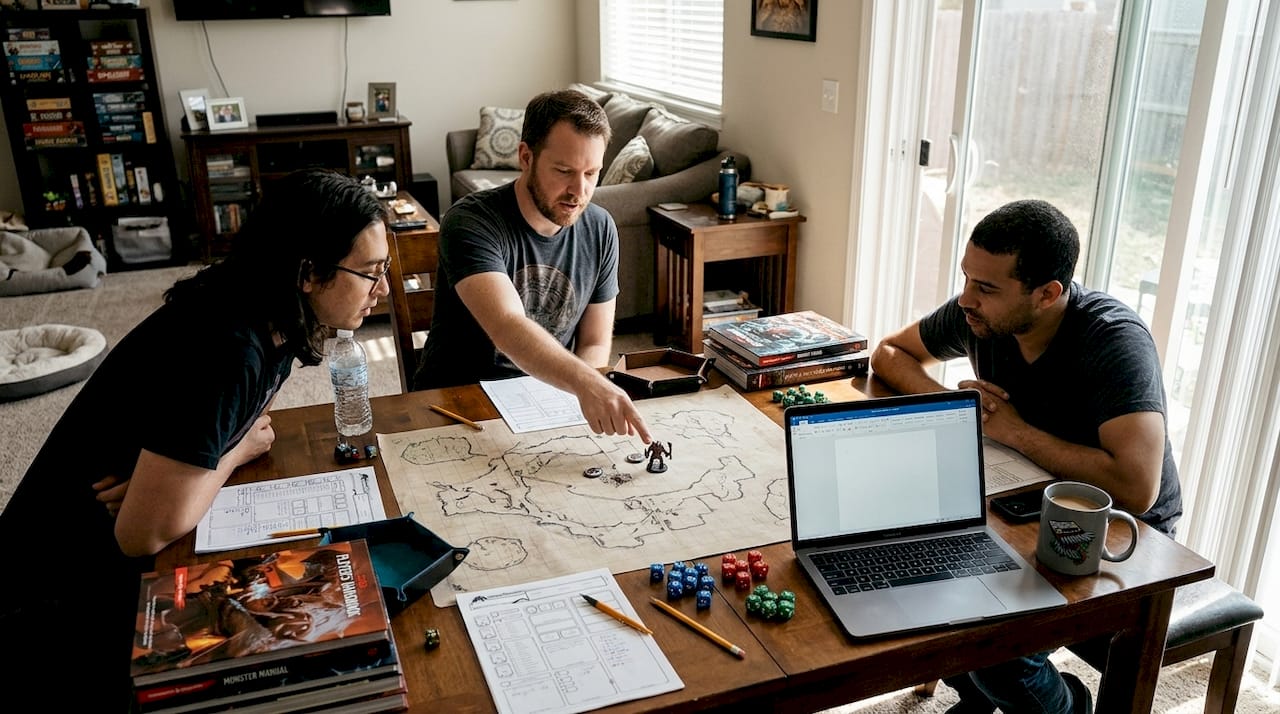
Immersion gets a serious upgrade. Visual props and detailed maps create atmosphere that pure description sometimes can’t match. When your players see a crumbling bridge over lava, their brains light up differently than when you just tell them about it. The tactical advantages of battle maps extend beyond mechanics into emotional engagement.
Strategic depth explodes. Decision-making becomes richer when players can see their options. Should the rogue flank using that alley? Can the wizard position for maximum spell coverage? These tactical choices feel more meaningful when spatial information is clear and accessible.
Storytelling opportunities multiply. This is where it gets really fun. Interactive scenery and props open up narrative possibilities that wouldn’t occur to players otherwise. That chandelier becomes a swinging weapon. The bookshelf becomes cover and a clue repository. The map itself becomes a storytelling partner.
“The best encounters happen when players spot something on the map you didn’t plan for and ask ‘Can I use that?’ The answer should almost always be yes.”
Pro Tip: Use maps selectively. Save them for your most tactical setpieces and boss battles. This keeps pacing tight while maximizing impact when you do break out the grid. Your players will know something big is about to go down the moment you unroll that map.
The magic happens when terrain drives strategy and strategy drives story. That’s the sweet spot every GM dreams about.
A balanced approach: When not to use battle maps
Let’s keep it real: battle maps aren’t always the answer. Even with all their benefits, there’s genuine art in knowing when to skip the grid.
Some tables experience analysis paralysis when you break out a map. Players who normally act decisively suddenly spend ten minutes measuring exact distances and calculating optimal positioning. Maps can hinder flow at tables prone to overthinking, so use them for pivotal scenes only to balance speed and tactics.
Situations where maps might slow you down
- Simple movement scenes: If the encounter is just “you fight three bandits on an empty road,” theater-of-the-mind probably works better
- Narrative-focused interactions: Social encounters, investigations, or exploration rarely need grids
- Random encounters during travel: Unless the terrain itself matters, keep it loose and fast
- Chase sequences: These often flow better with abstract distance tracking than precise positioning
The key question: does spatial positioning create interesting choices? If not, you probably don’t need a map.
“Not every dramatic moment needs a grid. Sometimes the most memorable encounters happen entirely in your players’ imaginations, with you painting the scene through words alone.”
Finding your table’s sweet spot
Apply maps to boss fights, major setpieces, or environments where tactical depth matters. Skip them for everything else. This approach keeps engagement high without sacrificing pacing.
Your players will develop a sixth sense for when maps appear. That anticipation becomes part of the experience. “Oh, she’s getting out the map. This is going to be epic.”
Terrain and props: Unlocking creativity during play
Want to take your battle maps from functional to phenomenal? Focus on the interactive elements you add. This is where the real magic happens.
Terrain features change everything. Cover lets your rogue actually feel roguish. Hazards create risk-reward decisions. Verticality adds a whole new dimension (literally) to combat. When you add dynamic terrain elements, players start thinking beyond attack-and-move.
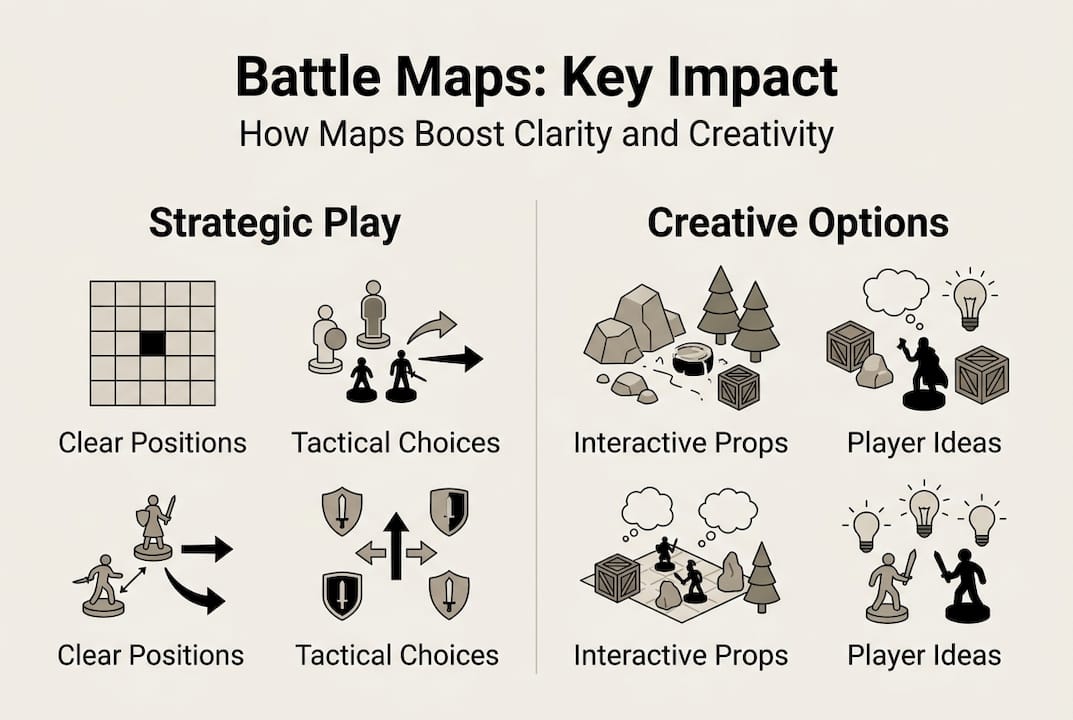
The difference interactive elements make
| Standard Map | Map with Dynamic Elements |
|---|---|
| Flat grid with enemy positions | Elevation changes, destructible objects, environmental hazards |
| Players focus on damage optimization | Players devise creative solutions using scenery |
| Combat feels mechanical | Combat feels cinematic and memorable |
| Limited tactical variety | Endless emergent possibilities |
Props and scenery invite players to think outside the stat block. That barrel isn’t just decoration. It’s an improvised weapon, a hiding spot, or maybe it’s full of oil and positioned very conveniently near that torch.
Pro Tip: Place one or two obviously interactive elements on every important map. A crumbling wall. A magical rune. A rope bridge. Then watch your players’ eyes light up as they spot the possibilities. The importance of terrain can’t be overstated for creating these moments.
Real impact on player creativity
When players have visual, interactive elements available, their creativity skyrockets. They stop asking “Can I attack?” and start asking “Can I swing from that chandelier and kick the enemy into the pit?” That’s the difference between combat and cinema.
Consider adding 2D terrain elements that are easy to set up but dramatically increase visual interest. You don’t need a full 3D setup to create that wow factor.
Tips for using battle maps to enhance storytelling
The best battle maps do double duty. They’re tactically sound AND they’re story playgrounds. Here’s how to make that happen at your table.
Reinforce story beats with terrain. Is your villain obsessed with fire? Fill the map with braziers, lava flows, and burning debris. Fighting in a wizard’s tower? Add magical runes, floating books, and unstable spell effects. The environment should echo and amplify your narrative themes.
Invite roleplay by leaving clues and objects on the map. That letter on the desk. The family portrait with one face scratched out. The ceremonial dagger that’s definitely not just decoration. These elements give players something to discover and discuss even during combat.
Foster teamwork through visual layouts. When everyone can see the battlefield, coordinating becomes natural. “I’ll draw them toward the choke point while you flank from the balcony” happens organically when the map makes those options visible.
Making maps interactive and player-driven
- Let players suggest changes to scenery for deeper engagement
- Ask “What do you notice on the map?” to prompt creative thinking
- Reward clever environmental use with mechanical benefits
- Use thematic maps like grasslands or snow and wood settings to match your campaign’s current location
Pro Tip: Before combat starts, give players thirty seconds to study the map and ask questions. This investment pays off with more creative, engaged play once initiative rolls. They’ll spot opportunities you didn’t even plan for.
The goal is making the map feel alive. It’s not just a measurement tool. It’s a character in the scene, full of possibilities waiting to be discovered.
Bring your sessions to life with premium battle maps and accessories
Ready to take these ideas to your own table? The right tools make everything easier and more fun.
We’ve spent years crafting premium battle maps that do exactly what we’ve been talking about. Maps with built-in story hooks, interactive terrain, and that perfect blend of tactical clarity and visual wow factor. Whether you’re running a dungeon crawl or an outdoor ambush, having the right map transforms preparation from chore to joy.
And let’s be honest, rolling gorgeous dice on a stunning map just hits different. Our discounted dice sets and unique mystery dice add that extra sparkle to every session. Because upgrading your accessories makes every encounter more memorable, and your players will feel the difference the moment they sit down at your table.
Frequently asked questions
Are battle maps necessary for every RPG session?
No, battle maps work best for complex or pivotal encounters. Simple scenes flow better without them, so save maps for moments where positioning creates interesting tactical choices.
What games work best with battle maps?
Games with tactical combat like D&D and Pathfinder benefit most, but maps can enhance almost any TTRPG. The key is whether interactive terrain elements add value to your specific system and play style.
Do digital battle maps offer the same benefits as physical ones?
Yes, digital maps provide similar clarity and interactivity, especially with online tools. They excel at dynamic environmental features like lighting effects and easily movable props.
How can I make my battle maps more engaging?
Add interactive terrain, props, or clues that players can discover creatively. Focus on elements that invite questions like “Can I use that?” rather than just decorative details.
How often should I use battle maps in my campaign?
Use them for major encounters, boss fights, and tactically complex scenes. Skip them for simple combats and narrative moments to maintain pacing and keep maps feeling special when they appear.