

TL;DR:
- Running a successful tabletop RPG session requires proper preparation, including assembling essential tools, setting clear expectations through Session 0, and following a repeatable workflow to maintain pacing. Visual aids like maps and player handouts are crucial storytelling assets that enhance engagement and reduce cognitive load. Efficient pre-session planning allows DMs to foster creativity and keep the adventure captivating for players.
Picture this: it’s game night, your players are staring at you expectantly, and your brain feels like a glitching loading screen. Sound familiar? Running a tabletop RPG session as a Dungeon Master can feel like juggling flaming torches while reciting lore and doing mental math. But here is the thing — it does not have to feel that way. A solid, repeatable framework turns that chaos into a feel-good factory of adventure. This guide breaks down every step, from gathering your tools to troubleshooting mid-session snags, so you can run smoother, more epic games starting right now.
Table of Contents
- What you need to get started as a Dungeon Master
- Running Session 0: Setting up your party for success
- Step-by-step: Dungeon Master workflow for running a session
- Troubleshooting: Common Dungeon Master hurdles and fixes
- Perspective: Why efficiency can be more powerful than improvisation
- Make your sessions legendary with premium DM tools
- Frequently asked questions
Key Takeaways
| Point | Details |
|---|---|
| Start with essentials | A core checklist and basic tools help new DMs build confidence and avoid overwhelm. |
| Use Session 0 | A structured Session 0 creates strong player connections for a cohesive game. |
| Follow the workflow | A repeatable scene framing, resolution, and pacing loop makes sessions run smoothly. |
| Anticipate common mistakes | Limiting NPCs and reviewing your prep checklist can prevent many session snags. |
| Balance structure and creativity | Efficiency and prep empower creative play without sacrificing fun or storytelling. |
What you need to get started as a Dungeon Master
Before you roll a single die or describe a single shadowy tavern, you need the right gear in your corner. Think of this as building your DM utility belt. Once you know what the common pain points are (overwhelm, forgotten rules, disorganized notes), building foundational confidence is all about gathering the right tools and setting expectations for yourself and your crew.
Here is your essential starting lineup:
- Core rulebook (the Player’s Handbook and Dungeon Master’s Guide are your bread and butter)
- Dice set (at minimum: d4, d6, d8, d10, d12, d20, and percentile dice)
- Adventure module or session outline (pre-built adventures are a new DM’s best friend)
- Player handouts and maps for visual storytelling (your players will love you for this)
- Index cards or a notebook for quick NPC and encounter notes
- A DM session checklist to stay organized before and during play
Maps and player handouts are NOT optional extras. They are storytelling tools. When you slide a hand-drawn dungeon map across the table, players lean in. Their brains light up like a Nat 20. Visual aids anchor them in the world and reduce the cognitive load on you as the narrator.
Now, let us talk prep scope. A beginner-friendly session checklist includes five or fewer named NPCs, two combat encounters, and one non-combat challenge. That is it. Resist the urge to worldbuild a 47-lore-page setting for session one. Scoping down is not lazy — it is smart.
Pro Tip: Pre-roll your monster stats and jot down initiative modifiers before players arrive. That five minutes of prep saves fifteen minutes of table fumbling and keeps the energy electric.
| Essential DM tool | Why it matters | Beginner priority |
|---|---|---|
| Rulebook | Core rules reference | High |
| Dice set | Resolves all rolls | High |
| Adventure module | Structured story scaffold | High |
| Battle maps | Visual scene framing | Medium |
| NPC index cards | Quick character recall | Medium |
| Initiative tracker | Combat flow control | Medium |
| Session checklist | Pre-game mental clarity | High |
Browsing the must-have DM items list and a solid DM toolkit guide will point you toward specific products and organizational systems that experienced DMs swear by. Build your toolkit piece by piece. You do not need everything on day one — but you do need the fundamentals.
Running Session 0: Setting up your party for success
With your gear collected, it is time to lay the party’s foundation before dice even touch the table. Session 0 is the unsung hero of great TTRPG campaigns. It is not a “real” game session in the traditional sense, but it might be the most important meeting your group ever has.
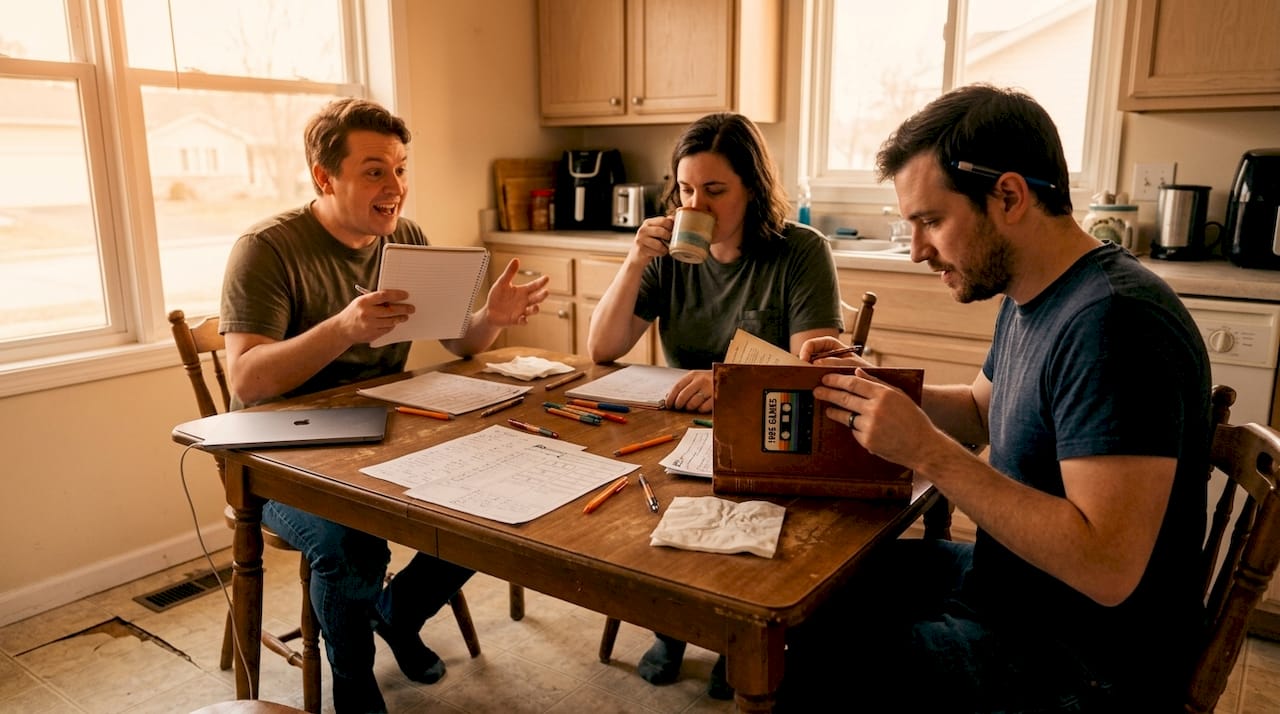
What actually happens in a Session 0? Think of it less as a rules lecture and more as a collaborative story kickoff meeting. You and your players align on what kind of adventure you are all signing up for. Session 0 can be supported with a modular “menu” of topic modules, ensuring player characters connect to each other and the game world. That modular approach is gold because it works for brand-new groups AND veteran tables who want to reset their social contract.
Here is a solid Session 0 topic menu you can use right now:
- Group goals: Do players want heavy roleplay, dungeon-crawling action, political intrigue, or a mix?
- Tone and content: Is this a gritty dark fantasy or a lighthearted romp? Nail the vibe before session one.
- Safety tools: Introduce X-Card, lines and veils, or any content boundaries. Absolutely non-negotiable for every table.
- Setting links: How do the player characters know each other? Where do they come from in your world?
- Character creation alignment: Make sure class and race choices make sense for your setting (no anachronistic gunslingers in a medieval low-magic world, please).
“Session 0 is the foundation of the social contract at your table. Skip it, and you are building your campaign on sand.”
The setting links piece is CRUCIAL. Players who feel personally tied to the world care more. They engage deeper. They do not need to check their phones. If every character has at least one hook into your setting (a hometown, a faction connection, a personal enemy), you have a table full of invested adventurers instead of passive spectators.
Developing your Dungeon Master skills includes learning how to facilitate this kind of pre-game conversation with confidence and warmth.
Pro Tip: Ask each player to connect at least one element of their backstory to a specific location, faction, or NPC in your setting. This gives you built-in story hooks AND makes players feel like co-authors of the world. Win-win.
Step-by-step: Dungeon Master workflow for running a session
After preparation and party setup, it is time to dig into the real-time flow of a DM-led session. This is the heart of the how-to, dice goblins. A repeatable GM workflow is organized around scene framing, encounter resolution, and pacing control, including the classic action declaration, roll, DC set, and resolve loop.
Here is the core session workflow broken down step by step:
- Frame the scene. Open with sensory details. Who is here? What do players see, hear, smell? Give them the where and the why immediately. “You step into a dimly lit forge. The air smells of sulfur and burnt iron. A hunched figure hammers at an anvil without looking up.” That is a scene. That is engagement.
- Invite player action. Ask open questions, not leading ones. “What do you do?” beats “Do you want to attack?” Let players surprise you.
- Player declares action. They say what their character attempts. Be specific. “I want to pick the lock” is more actionable than “I try to get through the door.”
- Set the Difficulty Class (DC). You decide how hard the task is (more on DC ranges below). Do this BEFORE the roll — no adjusting the DC based on results.
- Roll and resolve. Player rolls, adds their modifier, compares to DC. Then you narrate the result with flair. Success, failure, or a dramatic complication — all valid outcomes.
- Control pacing. Use short recaps (“So you have cleared the first floor and found the strange key”), scene transitions (“Meanwhile, across town…”), and downtime prompts to keep momentum flowing.
Pro Tip: Fewer rules interruptions mean richer storytelling. If a player wants to do something creative that technically bends a rule, say “yes, and” before reaching for the rulebook. You can rule-check between sessions. Keep the scene alive.
| GM approach | Best for | Trade-offs |
|---|---|---|
| Structured workflow | New DMs, complex campaigns | Less spontaneous |
| Pure improv | Experienced DMs, one-shots | High cognitive load |
| Hybrid (structured scenes, improv encounters) | Most tables | Requires flexible prep |
| Module-heavy | Beginners, convention play | Less personalization |
For more tactical session-running guidance, check out this breakdown on running engaging sessions and these beginner DM tips that cover everything from voice acting to villain motivation.
Troubleshooting: Common Dungeon Master hurdles and fixes
Every DM, even the greats, runs into the occasional snag. Troubleshooting keeps the adventure on course. The important thing is knowing what to look for and having a quick fix ready before your session spirals into chaos.
Here are the most common DM hurdles and exactly how to fix them:
- Too many NPCs: Players get confused when twelve named characters appear in session one. Fix: cap your named NPCs at five per session and use archetypes (“the gruff guard captain,” “the nervous merchant”) for flavor characters who do not need full bios.
- Unclear action results: If players are not sure whether they succeeded or failed, you lose tension. Fix: always narrate the consequence clearly before moving on. “The lock clicks open — but the noise echoes down the hallway” is perfect.
- Lost pacing: Sessions stall when players debate endlessly or combat drags. Fix: use a visible initiative tracker, set a soft “action deadline” in social situations, and give NPCs opinions that push the story forward.
- Unprepared encounters: Improvised combat without prepped stats leads to stalling. Fix: pre-stat your two combat encounters using basic monster entries, and keep a list of three backup filler encounters for unexpected detours.
- Rules disputes: Do not spend ten minutes mid-session hunting rules. Fix: make a “DM ruling” in the moment and look it up after. Log it for next time.
Start-of-session structure is not just narrative — it is about making the right information available for better decisions. A quick two-minute scene recap at the top of every session resets player context and dramatically reduces “wait, what were we doing?” moments.
DC Range Quick Reference:
Easy task: DC 5 | Moderate task: DC 15 | Hard task: DC 20 | Very hard: DC 25 | Nearly impossible: DC 30
Setting DCs correctly is genuinely one of the biggest skill jumps for new DMs. Too many DC 15s and everything feels the same. Mix your challenge ratings intentionally based on context. Is the player attempting something in their character’s specialty? Drop the DC. Is it a completely alien skill set? Bump it up. Always set the DC before the roll — never after.
If you are brand-new and want to build a solid foundation from the ground up, this starting D&D guide is a fantastic companion resource.
Perspective: Why efficiency can be more powerful than improvisation
Here is a hot take we stand behind fully: the most creative sessions we have ever seen were NOT born from pure improvisation. They came from structured prep that freed the DM’s mental bandwidth for actual creativity.
The TTRPG community often romanticizes the “wing it” DM. The legendary storyteller who needs no notes and conjures entire cities from thin air. And yes, those DMs exist. But they are the exception, NOT the template. For most of us — and for most sessions — efficiency in prep is what creates the mental space for those magical improvised moments.
Think of it this way. When you know your session outline cold, you are not burning cognitive energy remembering NPC names or tracking initiative order. That freed-up mental bandwidth goes directly into your performance. You can listen more closely to player choices. You can make richer in-the-moment decisions. You can be the storyteller your table deserves.
Workflow checklists and pre-session checklists are not training wheels. They are the scaffolding that lets experienced architects build skyscrapers. Over-prepping a session is almost always less damaging than under-prepping. You can always skip a planned encounter. You cannot conjure a compelling NPC from nothing when your players have just taken an unexpected left turn and you have zero backup content.
The balance we recommend: structured scene framing plus flexible encounter slots. Know your opening hook and your two big set pieces cold. Then leave deliberate “blank space” in the middle for player-driven moments. That blend of structure and flexibility is where the most memorable TTRPG sessions live.
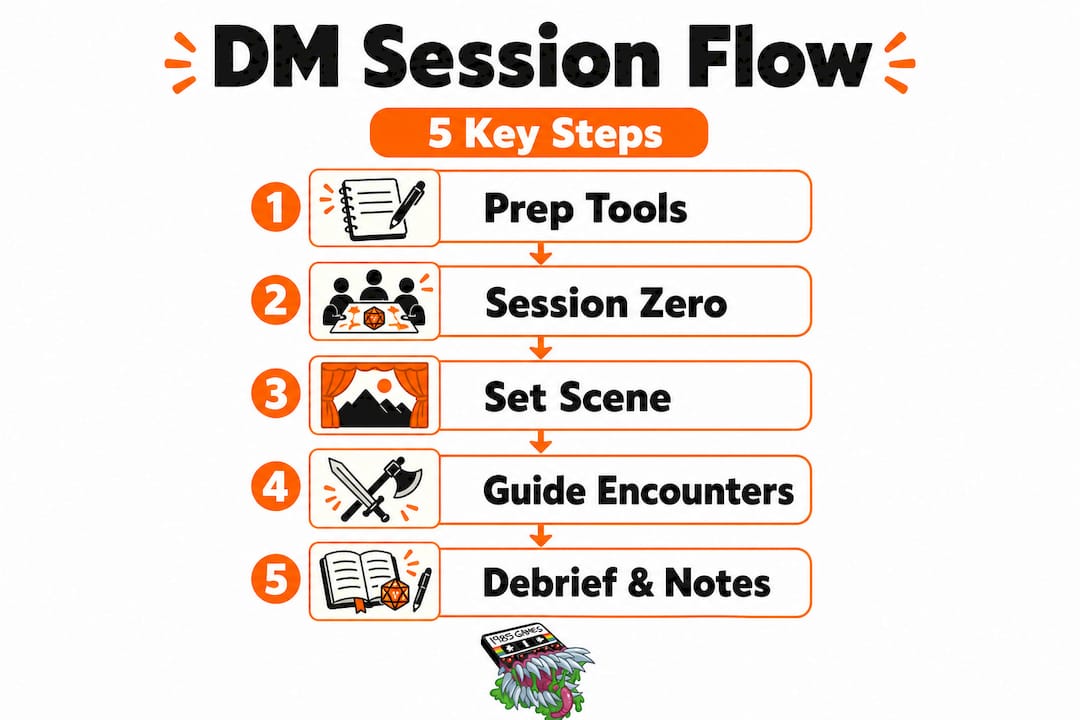
New and veteran DMs alike benefit from treating efficiency as a creative superpower, not a crutch.
Make your sessions legendary with premium DM tools
You have got the workflow. You have got the mindset. Now let us talk about the physical tools that make all of this prep come alive at the table.

Great terrain and battle map assets do something no verbal description fully can — they drop players into the scene instantly. When you lay out a richly detailed map of a cursed forest or a crumbling dungeon, the table goes quiet. Players lean in. That immersive snap is worth every second of setup time. Over at 1985 Games, we have got the goods to make that happen. Check out the Dungeon Craft Volume 2 for modular dungeon tiles that snap together into endless layout combinations, or grab the Cursed Lands terrain set for atmospheric overland and wilderness scenes that make players feel like they have actually stepped into the adventure. Pair either with your session checklist and you have got a prep workflow that is genuinely legendary.
Frequently asked questions
What is the easiest way for a new Dungeon Master to start running games?
Follow a step-by-step checklist, prepare a simple adventure with limited NPCs, and review the rules basics before inviting players. Starting with a published module also takes enormous pressure off your prep.
How many named NPCs should I introduce in my first session?
Limit named NPCs to five or fewer per session to keep the story manageable and players from getting confused about who is who.
What is Session 0 and why is it important?
Session 0 is a setup meeting where you align players on goals, safety tools, and story links. As the modular Session 0 approach shows, it lays the foundation for group cohesion and campaign success before play even begins.
How do you decide the Difficulty Class (DC) for an action?
Set DCs by challenge difficulty from 5 for very easy tasks up to 30 for nearly impossible ones, always locking in the number before the player rolls.
How can I keep sessions from bogging down or losing momentum?
Use clear pacing with concise scene descriptions and brief recaps, and rely on your session structure and prep checklist to maintain engagement and forward momentum throughout the night.