

TL;DR:
- TTRPG communities are welcoming and organized, emphasizing safety, etiquette, and inclusive culture.
- Multiple layers like home games, organized play, online communities, and conventions connect players worldwide.
- Accessories such as maps, dice, and music enhance immersion, strengthening social bonds and creativity.
Somewhere out there, a first-time player nervously Googles “how do I join a D&D group” and immediately pictures a dungeon of chaos, gatekeeping veterans, and impenetrable inside jokes. We get it. The TTRPG etiquette world can look intimidating from the outside. But here’s the twist: tabletop role-playing game communities are actually some of the most organized, welcoming, and creatively rich spaces you’ll find anywhere. Strong group norms, safety tools, and shared culture shape these scenes into something genuinely special. This guide maps out exactly how TTRPG communities work, from home tables to massive conventions, and how the right tools turn good sessions into legendary ones.
Table of Contents
- What is the TTRPG community? Culture, etiquette, and group norms
- How TTRPG communities organize: Home games to conventions
- Connecting online: Major hubs and how to find your group
- Why people stay: Social bonds, immersive play, and the role of accessories
- The surprising depth of TTRPG communities
- Upgrade your experience with the right accessories
- Frequently asked questions
Key Takeaways
| Point | Details |
|---|---|
| Etiquette and safety | Respectful behavior and session zero are key to healthy TTRPG groups. |
| Community layers | Home groups, organized play, and conventions each have unique roles in expanding the community. |
| Online accessibility | Finding groups and resources is easier than ever through thriving online platforms. |
| Immersive tools matter | Accessories like custom dice and maps boost fun and help players stay engaged. |
What is the TTRPG community? Culture, etiquette, and group norms
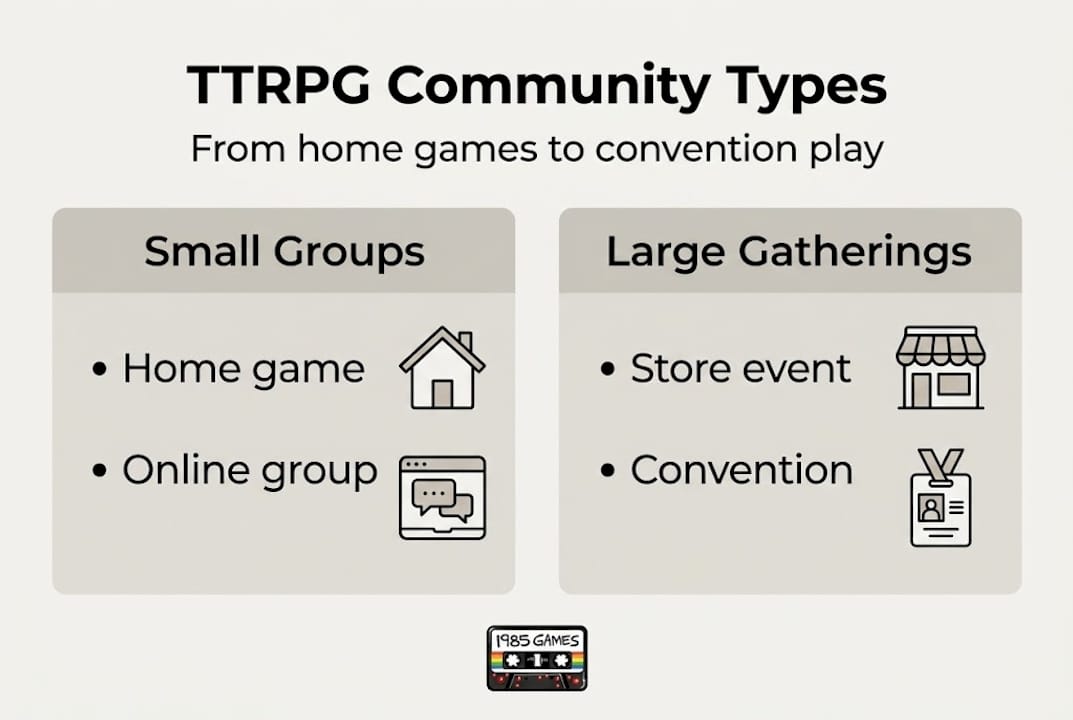
Let’s paint the picture. The TTRPG community isn’t one monolithic club. It’s a sprawling, interconnected web of home game groups, local game store regulars, online Discord servers, and convention crowds. Some groups have played together for a decade. Others meet strangers every weekend through organized programs. What ties them all together? A shared love of collaborative storytelling and, importantly, a set of unwritten (and sometimes very written) rules about how to play well together.
Healthy group dynamics in D&D and other TTRPGs depend on etiquette, safety tools, and that all-important first conversation called session zero. That’s a pre-campaign meeting where players discuss expectations, boundaries, and tone before a single die is rolled. Think of it as the group’s constitution. And inclusive gaming tips matter here too, because the best tables make room for everyone.
Core etiquette covers some obvious but often overlooked ground:
- Spotlight sharing: No one character hogs every scene. Great players lift each other up.
- Phone management: The dragon doesn’t pause for TikTok. Phones down during play.
- Respecting boundaries: Safety tools like Lines & Veils (topics permanently off the table vs. faded to black) and the X-Card (a physical or virtual card anyone can tap to skip uncomfortable content) protect the whole group.
“The difference between a great game and a miserable one often comes down to five minutes of honest conversation before play starts.” That’s the magic of session zero.
Wondering how different play styles stack up? Here’s a quick comparison:
| Feature | Casual home game | Organized play |
|---|---|---|
| Group size | 3 to 7 recurring players | Open, rotating players |
| Story flexibility | Full homebrew freedom | Official modules only |
| Commitment level | High, long campaigns | Drop-in friendly |
| Tone | Whatever the group decides | Standardized rules |
The group play spectrum is wide, and neither end is better. They just serve different needs.
Pro Tip: During session zero, ask every player three things: what excites them, what makes them uncomfortable, and what they hope to experience by campaign’s end. Those three answers build your whole game culture. Check out these D&D beginner essentials if you’re just getting started.
How TTRPG communities organize: Home games to conventions
Okay, you know how small groups operate. Now let’s zoom out. TTRPG communities are structured in layers, and each layer has its own vibe, entry point, and rewards.
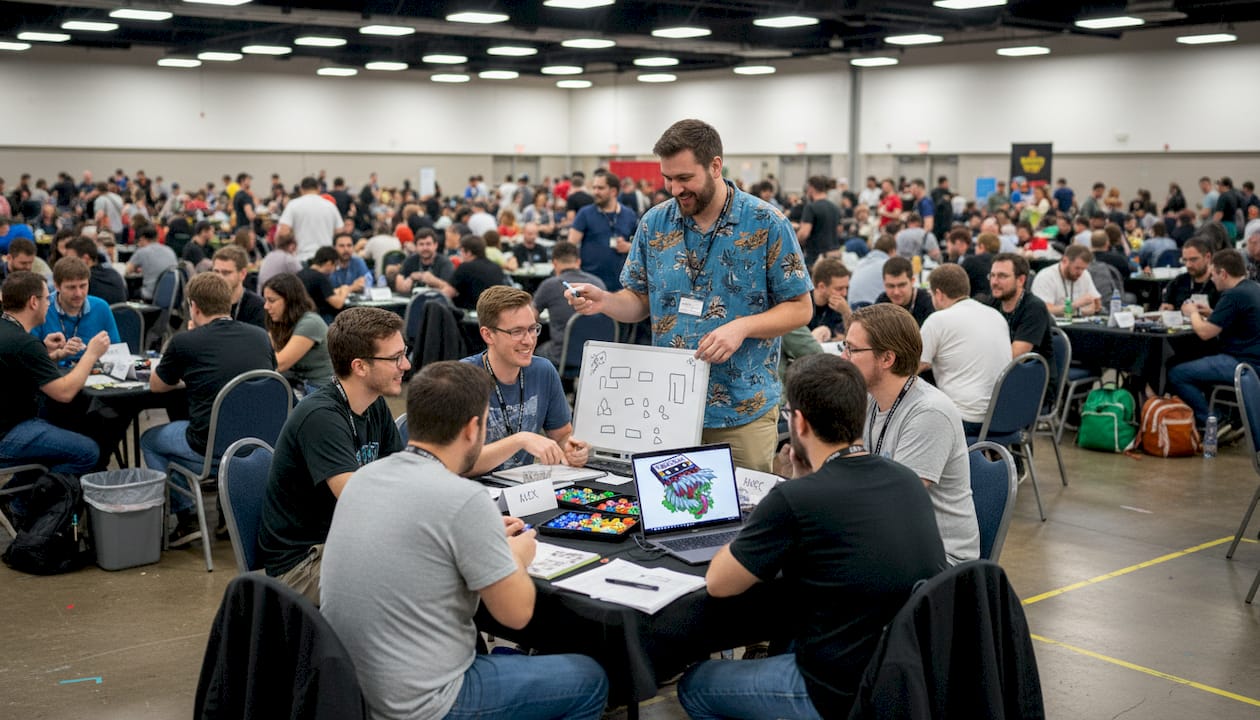
The community layers range from intimate home games to massive convention floors. Gen Con, the massive Indianapolis gaming convention, draws roughly 70,000 attendees every year. Roll20, a popular virtual tabletop platform, hosts over 10 million registered users. These are not small numbers. This is a full-blown cultural movement.
Here’s how the layers break down:
| Community type | Typical size | Openness | Best for |
|---|---|---|---|
| Home game | 3 to 7 players | Invite only | Deep, long campaigns |
| Local game store (LGS) | 10 to 30 players | Semi-open | Regular casual play |
| Organized play (AL, PFS) | Dozens per event | Fully open | Drop-in, newcomers |
| Online platforms | Millions of users | Fully open | Flexibility, variety |
| Conventions | Thousands of attendees | Fully open | Networking, events |
Organized play programs, like the Adventurers League (for D&D) and Pathfinder Society (for Pathfinder), use official modules and standardized characters so you can literally walk into any table anywhere in the world and play. That’s wild. And wildly useful if you travel.
Here’s how to join each layer:
- Home game: Ask friends, post on social media, or use platforms like StartPlaying.games to find paid DMs with open seats.
- Local game store: Walk in on game night. Most stores are thrilled to have new faces.
- Organized play: Find an Adventurers League event at a local store or convention and show up with a legal character (or borrow a pregenerated one).
- Online: Sign up for Roll20, Foundry VTT, or a Discord server’s LFG channel and post your availability.
- Conventions: Buy a badge, browse the event catalog, and sign up for open gaming slots in advance.
This TTRPG structure is one of the hobby’s secret superpowers. No matter where you are in life or geography, there’s a layer that fits.
Connecting online: Major hubs and how to find your group
From physical tables to global bandwidth. The internet didn’t just expand TTRPG communities. It basically gave them a rocket ship.
Online TTRPG hubs include Reddit (r/rpg and r/DnD each boast over 4 million members), Discord servers, and long-running forums like RPG.net. These spaces buzz with LFG posts (Looking for Group), rules debates that get surprisingly philosophical, Q&A threads, and community events.
Where to look for your people:
- r/lfg on Reddit: Post or browse game listings with filters for system, time zone, and experience level.
- Discord servers: Search for game-specific servers (D&D Beyond Official, Pathfinder, etc.) and use their LFG channels.
- RPG.net forums: Older but active, great for niche systems.
- StartPlaying.games: Connects players with professional dungeon masters.
- D&D Beyond: Has community tools and event listings built in.
Diversity is a genuine strength in online spaces. Black D&D communities and other affinity groups actively recruit DMs and players, creating spaces where representation isn’t an afterthought. That’s a beautiful thing. These groups often bring fresh storytelling perspectives and culturally rich worldbuilding that elevates the entire hobby.
If you’re burned out on mainstream community spaces, exploring D&D community alternatives can open up entirely new creative circles.
Pro Tip: When posting an LFG listing online, always mention your preferred tone (serious, comedic, horror, epic fantasy), session length, and whether you’re new or experienced. A specific post attracts the right players and filters out mismatches before they happen.
Why people stay: Social bonds, immersive play, and the role of accessories
Finding your group is only the beginning. The real magic is why people never want to leave.
TTRPG’s social benefits are well-documented: recurring groups build long-term friendships, players develop perspective-taking skills (basically, empathy with stat bonuses), and the games are actively used in libraries, schools, and veterans’ programs as tools for healing and connection. That’s not just cool. That’s powerful.
“We’ve had players in our campaign for three years who met as strangers. Now they’re in each other’s weddings. That’s what a long campaign can do.”
Why do players stay? Here’s the honest breakdown:
- Social ties: Recurring tables become genuine friendships. Your party is your crew.
- Creative outlet: TTRPGs let you write and star in your own epic story. No other hobby does that.
- Personal growth: Playing morally complex characters builds real emotional intelligence.
- Coping tool: Escapism is valid. A good session can reset a hard week.
- Shared stakes: Everyone at the table has something to lose (and gain) together.
Now let’s talk about the accessories. Because yes, you can play D&D with a printed PDF and a handful of borrowed dice. But the right tools? They transform a game.
Battle maps make dungeon crawls visceral. Custom dice give your character a personality before they say a word. Ambient music sets a tone that no amount of description alone can match. Enhancing tabletop immersion isn’t about spending a fortune. It’s about choosing tools that fit your group’s energy.
Pro Tip: Match your accessories to your group’s style. A gritty, low-magic campaign benefits from dark, muted battle maps and plain dice. A high-fantasy romp? Go full sparkle. Custom dice do more than roll numbers. They signal intention and build atmosphere.
The surprising depth of TTRPG communities
Here’s what most guides won’t tell you: the groups that follow the most structure are often the ones having the most creative fun. That feels counterintuitive, right? Rules stifling creativity is the classic fear. But a well-run session zero, a clear social contract, and established safety tools actually free players to take bigger risks. You can go to a dark emotional place in a scene because everyone knows the X-Card is right there.
And then there are affinity communities: music-enhanced play groups, DIY mapmakers, groups focused on specific cultural mythologies. These subgroups don’t fragment the hobby. They supercharge it. They bring tools, aesthetics, and storytelling traditions that cascade back into the mainstream.
Metagaming (using out-of-character knowledge to influence in-character decisions) gets a bad reputation. But in specific contexts, like bridging a player’s unexpected absence or working through a genuine moral dilemma as a group, it can deepen the experience rather than cheapen it.
The secret sauce? The best games are those that blend established etiquette with group-specific creativity. No two great tables look exactly alike. That’s the point. Running great D&D sessions isn’t about following a formula. It’s about reading your group and trusting the structure you’ve built together to hold the weight of real imagination.
Upgrade your experience with the right accessories
You’ve mapped the culture. You know how groups form, where to find them, and why they matter. Now, dear dice goblin, it’s time to gear up.

The right accessories don’t just look cool on the table. They signal that you’re invested, they deepen immersion, and they make every session feel like an event. Browse our dice sets collection for themed mystery sets, sharp-edge gems, and premium options that match every campaign mood. From sparkly arcane sets to gritty tactical rolls, there’s a dice set with your character’s name on it. Head over to 1985 Games and explore battle maps, player journals, and everything else your table needs to go from good to unforgettable.
Frequently asked questions
What are the most used safety tools in TTRPG groups?
The most common safety tools are Lines & Veils and X-Card, both introduced and discussed during a session zero before the campaign begins.
How do I join a TTRPG game if I have no local group?
You can find online games through Reddit, Discord, and RPG.net, all of which host active LFG forums where players and DMs post openings regularly.
What are the social benefits of playing TTRPGs regularly?
Regular TTRPG play builds friendships and perspective-taking, along with creative expression and emotional resilience that carry well beyond the game table.
Are there TTRPG communities for specific groups, like Black players?
Yes, diverse affinity groups exist online, including Black D&D communities on Reddit and Discord that actively welcome players and DMs from underrepresented backgrounds.