

Many dungeon masters struggle to design campaigns that captivate players across multiple sessions. The challenge lies in balancing detailed worldbuilding with the flexibility needed to accommodate player choices. Successful campaigns combine structured preparation with adaptive storytelling, allowing narratives to evolve organically while maintaining coherence. This guide breaks down the essential steps for creating engaging D&D campaigns, from initial planning through execution and real-time adaptation. You’ll learn how to structure your campaign across multiple layers, prepare core elements efficiently, design flexible narratives that respond to player agency, and handle common challenges that derail even well-planned adventures.
Table of Contents
- Key takeaways
- Understanding campaign structure and scale
- Preparing your campaign: key elements and planning sequence
- Designing dynamic narratives with flexibility and player integration
- Enhancing immersion and handling common challenges
- Enhance your D&D campaigns with 1985 Games
- Frequently asked questions
Key Takeaways
| Point | Details |
|---|---|
| Layered campaign structure | Successful campaigns balance World Layer, Adventure Layer, and Session Layer to stay coherent while adapting to player choices. |
| Player agency boosts engagement | Allow player choices to steer events with flexible planning to keep both structure and spontaneity intact. |
| Node web structures | Interlocking node based plots enable longer sessions with evolving narratives. |
| Central conflict first | Define the central conflict and supporting hooks before expanding locations and factions to prevent aimless worldbuilding. |
Understanding campaign structure and scale
Campaigns are structured in three interlocking layers: World Layer (geography, factions), Adventure Layer (events, antagonists), and Session Layer (encounters, NPCs). The World Layer establishes your setting’s geography, political factions, cultural norms, and overarching conflicts. This foundation provides context for everything that follows. The Adventure Layer contains your plot events, antagonist motivations, major story beats, and character arcs that unfold over multiple sessions. The Session Layer comprises individual encounters, specific NPCs, tactical challenges, and immediate decision points that drive each game night forward.
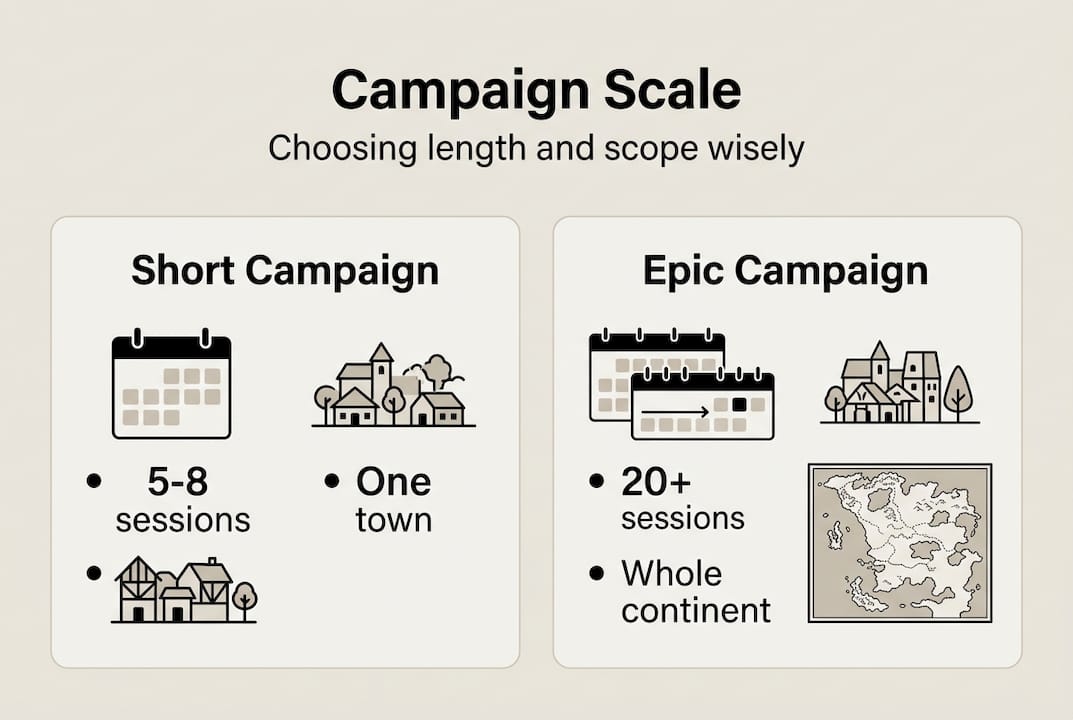
Understanding D&D campaign structure techniques helps you plan appropriately for your group’s commitment level. Short campaigns run 4 to 8 sessions and work well for testing new concepts or accommodating busy schedules. Mid-length campaigns span 12 to 30 sessions, allowing for character development and multi-arc storytelling. Long campaigns extend beyond 30 sessions, sometimes reaching 100 or more, creating epic sagas with deep player investment.
Campaign scale directly affects planning complexity and geographic scope. Short campaigns typically focus on a single town or dungeon, requiring minimal worldbuilding beyond immediate surroundings. Mid-length campaigns might span a region or small kingdom, demanding more faction detail and location variety. Long campaigns can encompass continents or planes of existence, necessitating extensive preparation and ongoing development.
| Campaign Scale | Session Count | Geographic Scope | Planning Complexity |
|---|---|---|---|
| Short | 4-8 sessions | Single location | Low, focused prep |
| Mid-length | 12-30 sessions | Regional area | Moderate, layered detail |
| Long | 30-100+ sessions | Continental or planar | High, extensive worldbuilding |
Pro Tip: Consider player availability and time commitment when choosing campaign scale to improve completion rate. Groups with inconsistent attendance benefit from shorter, self-contained arcs that can accommodate rotating participants.
These essential D&D tips for beginners apply equally to campaign planning: start small, build iteratively, and let player interest guide your development priorities. You can always expand a successful short campaign into something longer, but scaling down an overly ambitious project often proves difficult.
Preparing your campaign: key elements and planning sequence
Define central conflict first, then starting location with 3 NPCs and 2 factions, immediate hook, 2 nearby locations, 3 faction goals, and 1 ticking threat. This sequence ensures you build outward from a compelling core rather than getting lost in worldbuilding details that may never matter to your players. Follow this preparation order:
- Establish your central conflict or antagonist force that drives the overarching narrative
- Design your starting location with enough detail for 2-3 sessions of exploration
- Create 3 distinct NPCs with clear motivations, personalities, and connections to the conflict
- Develop 2 factions with opposing or complementary goals that create dynamic tension
- Craft an immediate hook that pulls characters into the action during session one
- Map 2 nearby locations players can discover through exploration or investigation
- Define 3 specific faction goals that will unfold whether players intervene or not
- Introduce 1 ticking threat that creates urgency and consequences for inaction
This approach to D&D campaign fundamentals prioritizes playable content over exhaustive worldbuilding. You need enough material to run engaging sessions while maintaining flexibility to adapt based on player choices.
| Approach | Starting Scope | Preparation Time | Player Engagement | Adaptability |
|---|---|---|---|---|
| Start Small (One Town) | Single settlement | 3-5 hours | High, immediate immersion | Excellent, easy to pivot |
| Start Big (Region) | Multiple locations | 10-15 hours | Moderate, potentially overwhelming | Limited, invested in broad plans |
Must-have elements for initial campaign setup:
- Three memorable NPCs with distinct voices and clear motivations
- Two factions with conflicting interests that create natural tension
- One immediate threat requiring player action within the first session
- Clear hooks connecting player backstories to campaign events
- Defined goals for major factions that advance independently
- Two to three nearby locations for early exploration
Pro Tip: Start with fewer, richer elements to keep early sessions focused and adaptable. You can always introduce additional complexity as the campaign progresses and you better understand player interests.
Using NPC card resources helps you track character details consistently across sessions. Well-organized preparation materials allow you to reference information quickly during gameplay, maintaining immersion and narrative flow.
Designing dynamic narratives with flexibility and player integration
Use node webs (6-10 locations/NPCs/events linked by clues) instead of linear outlines for flexibility. Node web design creates interconnected story elements that players can discover in any order, avoiding the frustration of missing crucial plot points or feeling railroaded down predetermined paths. Each node represents a location, NPC, or event containing clues that point toward multiple other nodes, creating a web of possibilities rather than a single storyline.
This structure allows players to pursue their interests while ensuring they continually uncover relevant information. If players skip a location entirely, they can still learn its secrets through NPCs or documents found elsewhere. The narrative remains coherent regardless of exploration order.
Prioritize player agency and flexibility over rigid plans; use hybrid node-based designs to balance structure and sandbox freedom. Hybrid approaches combine the directional momentum of structured adventures with the exploratory freedom of sandbox campaigns. You establish key story beats that must occur for narrative satisfaction while allowing players complete freedom in how they approach those moments.
Strategies to weave player backstories into your campaign:
- Transform elements from character histories into campaign antagonists or allies
- Use hometown locations as settings for major story arcs
- Introduce NPCs from player backstories at dramatically appropriate moments
- Create faction connections based on character backgrounds and motivations
- Design personal quests that intersect with the main campaign conflict
- Reference character goals and fears when crafting encounters and challenges
Effective running engaging D&D sessions requires embracing improvisation when players make unexpected choices. Prepare flexible story elements you can adapt on the fly rather than scripted scenes requiring specific player actions. When players derail your plans, repurpose prepared material rather than forcing them back on track.
Pro Tip: Embrace player derailment by repurposing story elements, enhancing player agency. That dungeon you prepared for the northern mountains works equally well relocated to the southern swamps. The merchant NPC becomes a bandit leader. The political intrigue translates to guild conflicts. Flexible preparation lets you honor player choices while using your prep work.
The best campaigns balance preparation with improvisation, creating frameworks that guide without constraining. When you design interconnected nodes rather than linear paths, player choices feel meaningful because they genuinely shape the narrative direction.
Your immersive session setup should support this flexible approach, allowing you to quickly reference relevant information regardless of which narrative thread players pursue.
Enhancing immersion and handling common challenges
Incorporate player backstories into narrative, create villains from character elements, use sensory details for environments. Immersion extends beyond combat encounters into how you describe spaces, NPCs, and atmospheric details. When players enter a tavern, describe the smell of roasting meat, the sound of dice clattering on wooden tables, the warmth from the fireplace contrasting with cold rain outside. These sensory details create memorable scenes that players recall sessions later.
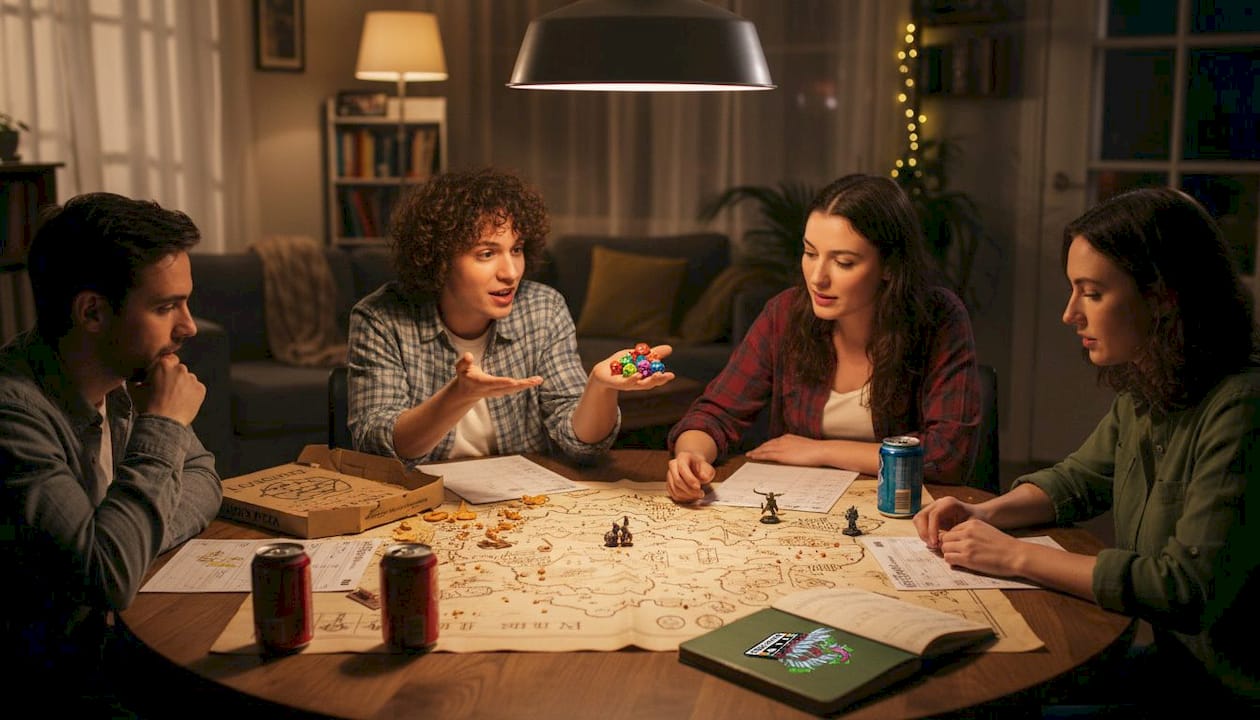
Environmental descriptions should engage multiple senses and suggest potential interactions. Rather than stating a room is empty, describe dust motes floating in shaft of light from a cracked window, the musty smell of old parchment, and faint scratching sounds behind the walls. This approach invites player curiosity and investigation.
Adapt on the fly: Adjust environments, use improvisation; repurpose sourcebook content. When players pursue unexpected leads, modify prepared encounters to fit the new context. That bandit ambush works equally well as a guild enforcer confrontation. The dungeon exploration becomes a warehouse investigation. Flexible thinking lets you use preparation without forcing predetermined outcomes.
Understanding the terrain role in D&D strategy helps you create dynamic combat encounters that feel integrated into your world rather than arbitrary battle maps. Environmental features should reflect location logic while providing tactical options.
Most campaigns end prematurely due to scheduling/life, not story completion. This reality should inform your planning priorities. Rather than building toward a single climactic ending, create meaningful moments throughout your campaign that provide satisfaction even if the group disbands unexpectedly. Focus on session-level victories, character development milestones, and resolved story arcs that feel complete.
Tips to manage common campaign hurdles:
- Schedule regular sessions at consistent times to build routine and commitment
- Communicate openly about group expectations and time availability
- Design story arcs completable in 3-5 sessions for natural stopping points
- Keep detailed session notes so players can reference past events after breaks
- Use recap techniques at session starts to re-engage players after time away
- Create backup plans for absent players without derailing the narrative
- Accept that some campaigns end early and focus on making each session memorable
Pro Tip: Focus on meaningful player moments over perfect story arcs to sustain engagement. The unexpected alliance, the dramatic betrayal, the clever solution to an impossible problem create lasting memories regardless of whether the campaign reaches its planned conclusion.
Equipping yourself with TTRPG accessories for immersion supports your ability to adapt quickly and maintain atmospheric consistency. Quality tools reduce cognitive load during sessions, freeing mental energy for improvisation and player interaction.
Enhance your D&D campaigns with 1985 Games
Creating immersive, well-organized campaigns requires both creative vision and practical tools. Keeping track of NPCs, factions, plot threads, and session notes becomes increasingly complex as your campaign grows.

Dungeon Notes campaign journals provide structured pages for organizing campaign details, tracking session summaries, and maintaining consistency across multiple game nights. These journals help you reference critical information quickly during gameplay, reducing interruptions and maintaining narrative flow. Dedicated sections for NPCs, locations, and plot threads ensure nothing falls through the cracks.
Visual aids significantly enhance environmental immersion. Dungeon Craft map titles volume 2 and Dungeon Craft cursed lands maps offer detailed terrain maps that bring your campaign locations to life. Quality battle maps help players visualize tactical situations and make informed decisions while adding professional polish to your sessions. These tools support the adaptive storytelling techniques discussed throughout this guide, giving you resources to enhance whatever direction your players choose.
Frequently asked questions
What is the best way to start planning a D&D campaign?
Begin by defining your central conflict or antagonist, then develop a focused starting location with a few key NPCs and factions. This approach provides enough material for engaging early sessions while maintaining flexibility to expand based on player interest. Avoid extensive worldbuilding before understanding what aspects your players find compelling.
How can I keep players engaged throughout a long campaign?
Incorporate player backstories and choices to create personalized stakes that make the narrative feel uniquely theirs. Use flexible node web designs to avoid linear predictability, allowing players to explore the story in their preferred order. Focus on meaningful story moments and character development rather than perfect plot execution, accepting that the journey matters more than reaching a predetermined destination.
What should I do if players derail the planned campaign storyline?
Adjust plans dynamically to incorporate player choices rather than forcing them back on track. Repurpose existing story elements as new plot threads that fit the direction players have chosen, maintaining your preparation investment while honoring their agency. View derailment as an opportunity for collaborative storytelling rather than a problem to fix, since player-driven narratives often create more memorable experiences than predetermined plots.
How much should I prepare before starting a new campaign?
Prepare enough material for two to three sessions of gameplay, focusing on the immediate starting area and core NPCs. This provides sufficient content to run engaging sessions without over-investing in elements that may never become relevant. You can expand preparation iteratively based on player interests and the directions they pursue, ensuring your effort focuses on content that will actually see use at the table.
How do I balance structure and flexibility in campaign design?
Use hybrid approaches combining directional story beats with sandbox exploration freedom. Establish key narrative moments that provide satisfying story progression while allowing players complete freedom in how they approach those moments. Design interconnected story nodes rather than linear sequences, ensuring players continually discover relevant information regardless of exploration order while maintaining narrative coherence.