

TL;DR:
- Focus on character motivations and session zero to create engaging, player-centered campaigns.
- Build conflict, factions, and threats beforehand to create a lively, urgent game world.
- Use intentional, flexible prep methods and trust improvisation over exhaustive detailed worldbuilding.
You’ve got a killer story idea, a group of excited players, and a blank notebook staring back at you like a final boss you’re not quite ready to face. Sound familiar? Campaign prep can feel like trying to build a city before anyone’s even agreed on a map. The good news: it doesn’t have to be a chaotic sprint into the unknown. With a smart framework, a dash of creativity, and a few tested strategies, you can walk into every session feeling like the most prepared, confident, and fun DM at the table. Let’s break it all down.
Table of Contents
- Set clear goals and connect with player motivations
- Map out the campaign’s foundation: Conflict, factions, and threats
- Streamline worldbuilding for relevance and impact
- Choose the right tools and prep style for your campaign
- Prep for agency, improvisation, and sandbox play
- Why less prep—done right—is better than more
- Level up your game prep with campaign essentials
- Frequently asked questions
Key Takeaways
| Point | Details |
|---|---|
| Start with story hooks | Tie campaign arcs to player goals for deeper involvement and longer engagement. |
| Prep what matters | Focus worldbuilding on immediate, impactful elements and avoid wasted effort on unnecessary lore. |
| Pick your prep style | Choose modules, homebrew, or a hybrid based on your time, experience, and table needs. |
| Empower player agency | Plan for improvisation and modular encounters to support creative, unpredictable play. |
| Less is more | Intentional, focused prep creates more fun and memorable campaigns than exhaustive notes. |
Set clear goals and connect with player motivations
Every legendary campaign starts with one question: why does this matter to the players? Not the world, not the villain, not the ancient prophecy. The players. Creating immersive campaigns begins the moment you understand who your players are and what makes their characters tick.
Session zero is your best friend here. Use it to learn each character’s backstory, fears, goals, and relationships. Then weave those threads directly into your campaign’s fabric. A rogue with a dead mentor? Make the villain connected to that loss. A paladin seeking redemption? Give them a moment where their oath is genuinely tested. When players see their own stories reflected in the world, engagement skyrockets.
A proven method is the rule of three hooks: give each player at least three personal reasons to care about the main conflict. One might be emotional (a lost loved one), one practical (they need the reward money), and one tied to their character arc (the quest reveals something about their past). Three hooks mean even the most player-driven chaos still circles back to the story.
Here’s what we recommend nailing down in session zero:
- Campaign tone: Dark and gritty? Swashbuckling adventure? Cozy mystery? Agree together.
- Table rules: What’s off-limits? What content are players excited about?
- Character connections: Do the PCs know each other? How?
- DM style: Are you a railroad builder or a sandbox wizard? Somewhere in between?
“Aligning campaign goals with player character motivations and backstories is the single fastest way to guarantee that players stay glued to your story, session after session.”
Pro Tip: Ask each player to write down their character’s three biggest goals before session one. You just mined a goldmine of plot hooks without doing any extra work.
Map out the campaign’s foundation: Conflict, factions, and threats
With your players invested, it’s time to build the engine that powers the whole campaign. Every great D&D story needs a beating heart, and that heart is made of conflict, competing factions, and a ticking threat that keeps things urgent. Think of it like a pressure cooker: the world should feel like it’s always just about to boil over.
Start here before you build anything else:
- Define your central conflict. Is it a war? A rising evil? A political conspiracy? One sentence should describe it clearly.
- Build 2 to 3 factions with their own goals, leaders, and opinions on the central conflict. Each faction should have a reason to interact with the players.
- Add a ticking threat. A cataclysm, a deadline, an invasion. Something that moves forward whether or not the players act, creating real stakes.
- Map how factions intersect. Do they hate each other? Are they secretly allied? Factions that react to each other create organic storytelling.
Running immersive campaigns gets a whole lot easier when you define your conflict and factions before diving into deep lore. Seriously, you don’t need thirty pages of history before session one. You need three factions with clear goals and one big scary problem.

Use this reference table to see how conflict, factions, and threats can stack in different campaign types:
| Campaign type | Central conflict | Key factions | Ticking threat |
|---|---|---|---|
| Political intrigue | The king is secretly corrupt | Noble houses, thieves’ guild, church | Coronation in 30 days |
| Classic dungeon crawl | An ancient evil awakens | Adventurers’ guild, cultists, townsfolk | Seal breaks at next full moon |
| Wilderness survival | Territory war for sacred land | Druids, expansion settlers, spirits | Sacred grove dies in one month |
| Urban mystery | Serial killer targets nobles | City watch, criminal syndicate, victims’ families | Next murder in three sessions |
“Prepping factions with independent goals is one of the most powerful things a DM can do. When factions pursue their agendas regardless of player action, the world feels alive.”
Use the DM checklist to make sure your faction notes are organized and accessible before every session.
Streamline worldbuilding for relevance and impact
Here’s a trap almost every DM falls into at least once. You spend 12 hours building an entire cosmology, mapping trade routes, and naming every noble family in the kingdom. And then your players spend the session in a tavern asking about rumors. Ouch.
Worldbuilding for immersion is most powerful when it’s focused. Worldbuild with intention based on scope, and skip the full histories unless a player specifically cares. Ed Greenwood, the creator of the Forgotten Realms, has spoken about this exact principle: build what you need, then build more when the story demands it.
Here’s how we compare different worldbuilding approaches at the table:
| Approach | Prep time | Table impact | Best for |
|---|---|---|---|
| Deep lore everything | 10+ hours/session | Low to medium | Writers, not DMs |
| NPC-first worldbuilding | 2 to 4 hours | High | Story-driven campaigns |
| Location-first worldbuilding | 1 to 3 hours | Medium to high | Dungeon crawlers and explorers |
| Just-in-time worldbuilding | 30 to 60 minutes | Very high | Time-strapped DMs |
Focus your limited prep time on:
- Key NPCs the players will meet soon, with distinct voices and motivations
- The next 1 to 2 locations in vivid, sensory detail
- One or two lore reveals tied directly to player backstories
- Encounter hooks that push players toward the main conflict
Pro Tip: Create a “lore shelf” document. When you invent cool world details that aren’t immediately relevant, park them there. You’ll use them later when the campaign naturally expands, and nothing goes to waste.
Avoid prepping entire political histories, detailed maps of areas players will never visit, or backstories for minor NPCs. Save that energy for moments that actually land at the table.
Choose the right tools and prep style for your campaign
Knowing what to prep is huge. But knowing how to prep saves your sanity. There are three main approaches, and each one suits different DMs and different groups.
Published modules are a gift, especially for newer DMs. Think Lost Mine of Phandelver or Curse of Strahd. They give you pre-built encounters, fleshed-out NPCs, and tested pacing.
Full homebrew campaigns offer creative freedom that modules can’t match. You build every corner of the world. But they demand more time, stronger improvisation skills, and a solid understanding of pacing. Not ideal when you’re still learning the craft.
Hybrid prep is where most experienced DMs land. Grab a published adventure, reskin the villain to match your player’s backstory, swap a dungeon for one you designed, and suddenly it’s yours without the full homebrew workload. Best of both worlds.
Here’s when each approach shines:
- Module: New DMs, time-strapped groups, players who want classic adventures
- Homebrew: Experienced DMs, players who crave unique settings, long-term campaigns
- Hybrid: Most groups, most experience levels, most situations (honestly)
For tools, campaign journals are an absolute powerhouse. Keeping notes in one place, organized by session, prevents that nightmare where you forgot what the players named the blacksmith three months ago. Engaging gameplay sessions start before you ever sit down at the table.
Here’s a reality check on scope: short campaign arcs typically run 4 to 8 sessions, while full epic campaigns often stretch to 30 or more sessions. Scale your prep accordingly. Over-preparing for session one of a potential 50-session campaign is a recipe for creative burnout.
Pro Tip: Check out beginner campaign tips if you’re still finding your DM feet. Starting smaller and building confidence beats burning out on an overambitious homebrew world every single time.
Prep for agency, improvisation, and sandbox play
Players. Will. Surprise. You. Always. That’s not a bug, it’s the entire feature of D&D. The goal isn’t to prevent player deviation. The goal is to prep in a way that makes deviation feel rewarding instead of terrifying.
Here’s a step-by-step approach for modular, flexible prep:
- Prep situations, not scripts. Instead of planning exact events, plan what factions and NPCs are doing right now. Let player choices collide with those situations naturally.
- Build fronts. A “front” (borrowed from the Apocalypse World design philosophy) is a threat that advances independently of player action. The dragon’s cult grows whether or not the players investigate. This creates a world that breathes.
- Stock a random table toolkit. Names, rumor tables, quick encounter seeds, and reusable NPCs. When players go somewhere unexpected, you’ve got instant content.
- Recycle and repurpose. That bandit camp you built last session? Rename it, reskin it, drop it in a new region. Smart DMs reuse their best material.
Using battle maps is another massive time-saver for improvisational play. When you have versatile terrain tiles on hand, any unexpected dungeon or encounter location snaps together visually in minutes.
“Track player agency signals across the session, adventure, and world layers. When consequences ripple visibly through all three layers, players feel like they’re shaping something real.” Campaign Planning and Worldbuilding
For sandbox campaigns especially, modular prep and reactive factions are your best tools for handling player deviations without burning out. Build reactivity into the world from day one, and improvisation stops feeling like crisis management.
Why less prep—done right—is better than more
Here’s the unpopular opinion: most DMs overprepare, and it actively hurts their campaigns.
We’ve seen it happen. A DM spends 20 hours building an intricate dungeon. The players skip it entirely to follow a rumor about a talking raven. All that work sits unused, and the DM feels defeated. That defeat? It bleeds into the session. Players can feel when their DM is frustrated or rigid.
The truth is, tabletop best practices point toward flexible prep over exhaustive prep. A DM who preps three strong scenes and trusts their improvisational instincts will almost always outperform one who scripted twenty scenes but can’t deviate from the plan.
The perfectionist trap is real. We all want our sessions to feel cinematic and polished. But D&D is a collaborative improv game at its core. The table makes the magic together. Your job isn’t to be a novelist delivering a finished story. Your job is to be the most enthusiastic “yes, and…” partner your players have ever met.
Building your improvisation muscles takes time, but it’s deeply rewarding. Start by committing to running at least two sessions with minimal prep. Notice where the gaps are. You’ll find that players often fill those gaps with their own creativity, and that creativity becomes the best content you never wrote.
The best DMs we know prep smarter, not harder. They trust their world, trust their players, and trust themselves to handle the unexpected. That trust is what turns a good campaign into a legendary one.
Level up your game prep with campaign essentials
Ready to make prep not just manageable but genuinely exciting? The right tools transform your setup from a chore into part of the adventure itself.
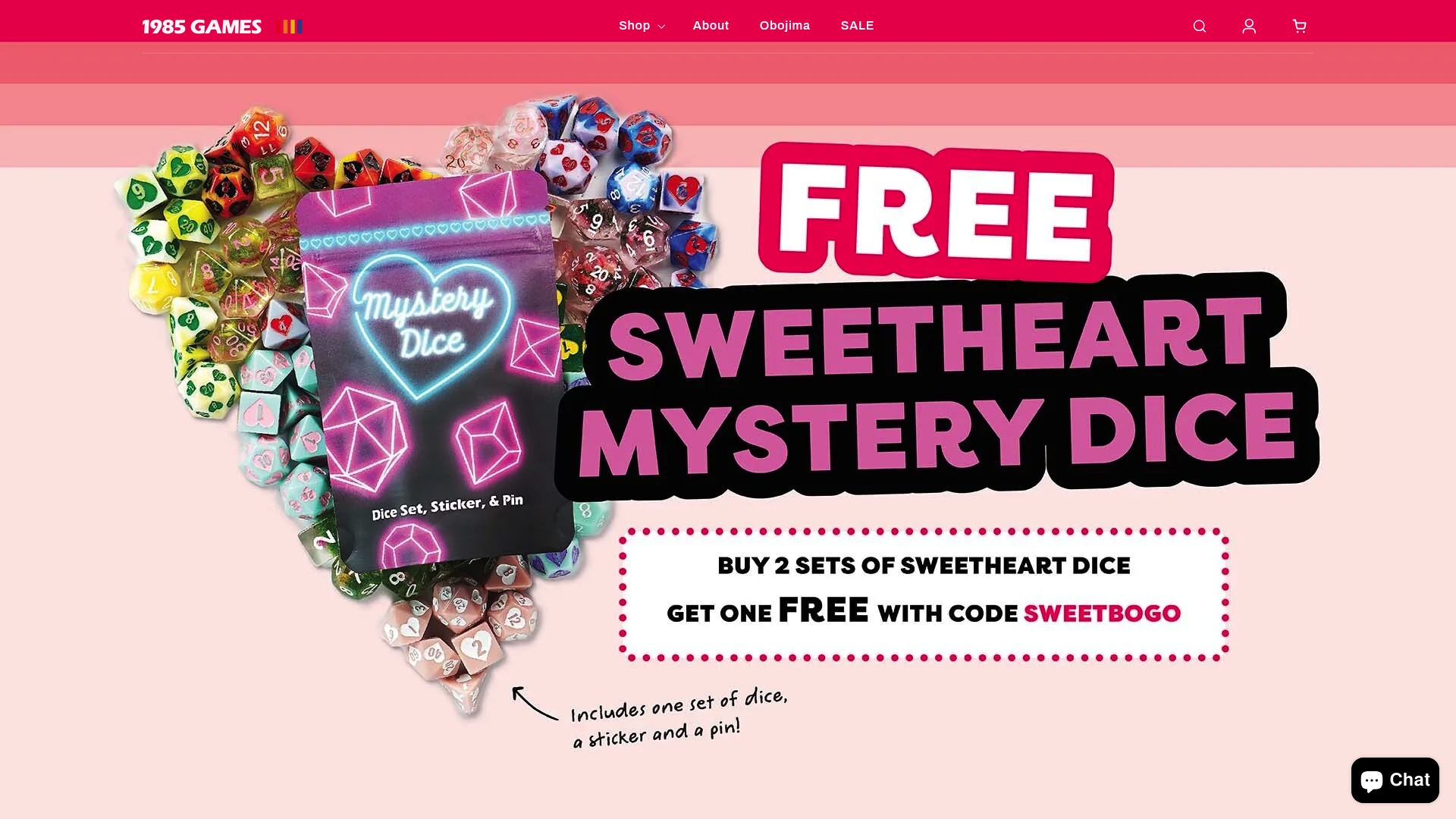
At 1985 Games, we’ve got exactly what DMs and players need to bring those campaign sessions to life. Our DM journals and campaign planners keep your notes, faction charts, and session recaps beautifully organized in one place. Our terrain battle maps are designed for flexible use, meaning they work whether you’re running a planned dungeon or an improvised tavern brawl. And our mystery dice sets? They bring just the right amount of chaos and excitement to every roll. Pair smart prep habits with handcrafted accessories built for immersion, and your table will feel the difference from session one. Explore what we’ve got waiting for your campaign.
Frequently asked questions
How do I keep players engaged over a long campaign?
Align campaign arcs with each character’s personal motivations and introduce fresh hooks tied to their evolving backstories at the start of every new arc to maintain long-term investment.
How much worldbuilding is necessary before starting?
Only build what you need for the first two or three sessions. Worldbuild with intention and let deeper lore emerge naturally as your players ask questions and explore.
Should I use a published module or create my own campaign?
If you’re newer to DMing or short on time, start with a published module like Lost Mine of Phandelver and customize it to suit your group’s tastes before jumping to full homebrew.
How can I prepare for unpredictable player choices?
Use modular prep and reactive factions so your world responds dynamically to player choices, combined with improvisation tools like random tables and reusable NPC templates.