

Many players believe a great TTRPG session only requires rulebooks, character sheets, and imagination. While these elements form the foundation, quality accessories significantly enhance the gaming experience through improved immersion, better organization, and tangible storytelling elements. From custom dice sets to detailed battle maps, the right accessories transform abstract concepts into visual, tactile experiences that deepen player engagement. Understanding what TTRPG accessories are, how they function during gameplay, and which ones suit your campaign style empowers you to create more memorable sessions that resonate with your entire gaming group.
Table of Contents
- What Are TTRPG Accessories And Why Do They Matter?
- Common Types Of TTRPG Accessories And Their Uses
- Crafting And Choosing Quality TTRPG Accessories
- Integrating Accessories To Enhance Your TTRPG Sessions
- Enhance Your TTRPG Experience With Quality Accessories From 1985 Games
- Frequently Asked Questions About TTRPG Accessories
Key takeaways
| Point | Details |
|---|---|
| Accessories enhance immersion | Physical tools like dice, maps, and journals make storytelling tangible and create deeper player engagement during sessions. |
| Multiple categories serve different needs | Dice sets, battle maps, campaign journals, and miniatures each address specific gameplay requirements from randomness to visualization. |
| Quality matters for longevity | Small-batch crafted accessories offer superior durability and unique aesthetics compared to mass-produced alternatives. |
| Integration requires planning | Introduce accessories gradually based on campaign style and player preferences to avoid overwhelming your gaming table. |
| Testing beats ratings alone | Hands-on evaluation ensures accessories function effectively during actual gameplay rather than relying solely on reviews. |
What are TTRPG accessories and why do they matter?
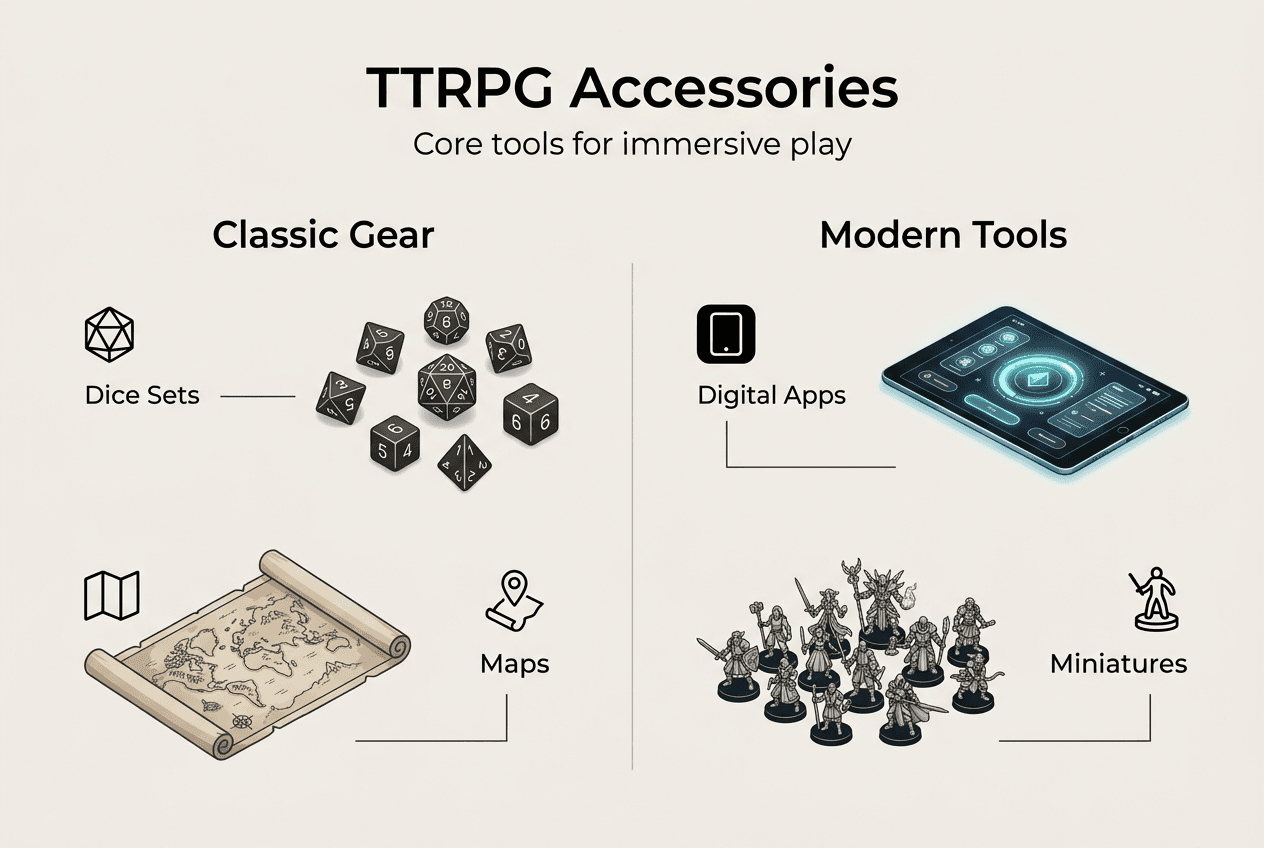
TTRPG accessories are physical or digital tools that enhance the tabletop role-playing game experience beyond core rulebooks and character sheets. These items serve practical functions while adding visual and tactile elements that transform abstract storytelling into concrete, memorable gameplay moments. Examples range from polyhedral dice sets and erasable battle maps to campaign journals and character miniatures.
The role of accessories in dnd extends far beyond aesthetic appeal. They create immersion by making fictional worlds tangible. When players roll unique dice or move miniatures across detailed terrain maps, abstract combat encounters become vivid scenes. This physical interaction strengthens emotional investment in characters and storylines, making victories more satisfying and defeats more impactful.
Accessories also solve practical organizational challenges during sessions. Campaign journals help dungeon masters track complex storylines, NPC relationships, and world-building details. Battle maps provide spatial clarity during tactical encounters, reducing confusion about positioning and movement ranges. Without these tools, sessions often bog down in lengthy descriptions or disputes about distances and locations.
Key benefits of quality accessories:
- Reduce cognitive load by externalizing information tracking
- Create shared visual references that align player understanding
- Add excitement through tactile engagement and anticipation
- Support different learning styles with visual and kinesthetic elements
Pro Tip: Start with one or two accessories that address your biggest gameplay pain points rather than purchasing everything at once.
Practitioner consensus emphasizes practical testing over metrics when evaluating accessories, with small-batch crafting noted for superior quality. This approach recognizes that gameplay effectiveness matters more than theoretical specifications. A beautifully designed dice tray that slides during use fails its purpose, while a simple but stable version succeeds.
“The right accessory doesn’t just decorate your table. It solves a problem, creates a moment, or deepens the story you’re telling together.”
Skipping accessories entirely often results in flat gameplay experiences where players struggle to visualize scenes or track complex information. The difference between describing a dungeon layout verbally versus showing it on a detailed map dramatically affects player engagement and tactical decision-making quality.
Common types of TTRPG accessories and their uses
Understanding the main accessory categories helps you identify which tools best serve your campaign needs and playing style. Each type addresses specific gameplay elements, from randomization to spatial visualization.
Dice sets form the foundation of most TTRPG mechanics, determining success or failure for character actions. Standard polyhedral sets include d4, d6, d8, d10, d12, and d20 dice. Custom dice add personality through unique materials, colors, or engravings that reflect character themes. Sharp-edge dice with precise manufacturing offer more balanced rolls, while mystery sets introduce surprise elements to your collection.
Campaign journals and notebooks serve as external memory systems for complex storylines. Dungeon masters use them to track NPC motivations, plot threads, and world details that emerge during improvisation. Players benefit from organized character notes, quest logs, and session summaries that maintain continuity across weeks or months between game nights.
Essential accessory categories:
- Dice sets (standard, premium, themed collections)
- Writing tools (journals, character sheets, note organizers)
- Visual aids (battle maps, terrain pieces, condition markers)
- Character representation (miniatures, tokens, standees)
- Storage solutions (dice bags, card holders, organizer boxes)
Terrain and battle maps transform abstract combat into visual tactical experiences. Grassland maps suit outdoor encounters, while city maps provide urban adventure settings. Erasable surfaces allow dungeon masters to customize layouts for specific encounters, adding walls, furniture, or environmental hazards as needed.
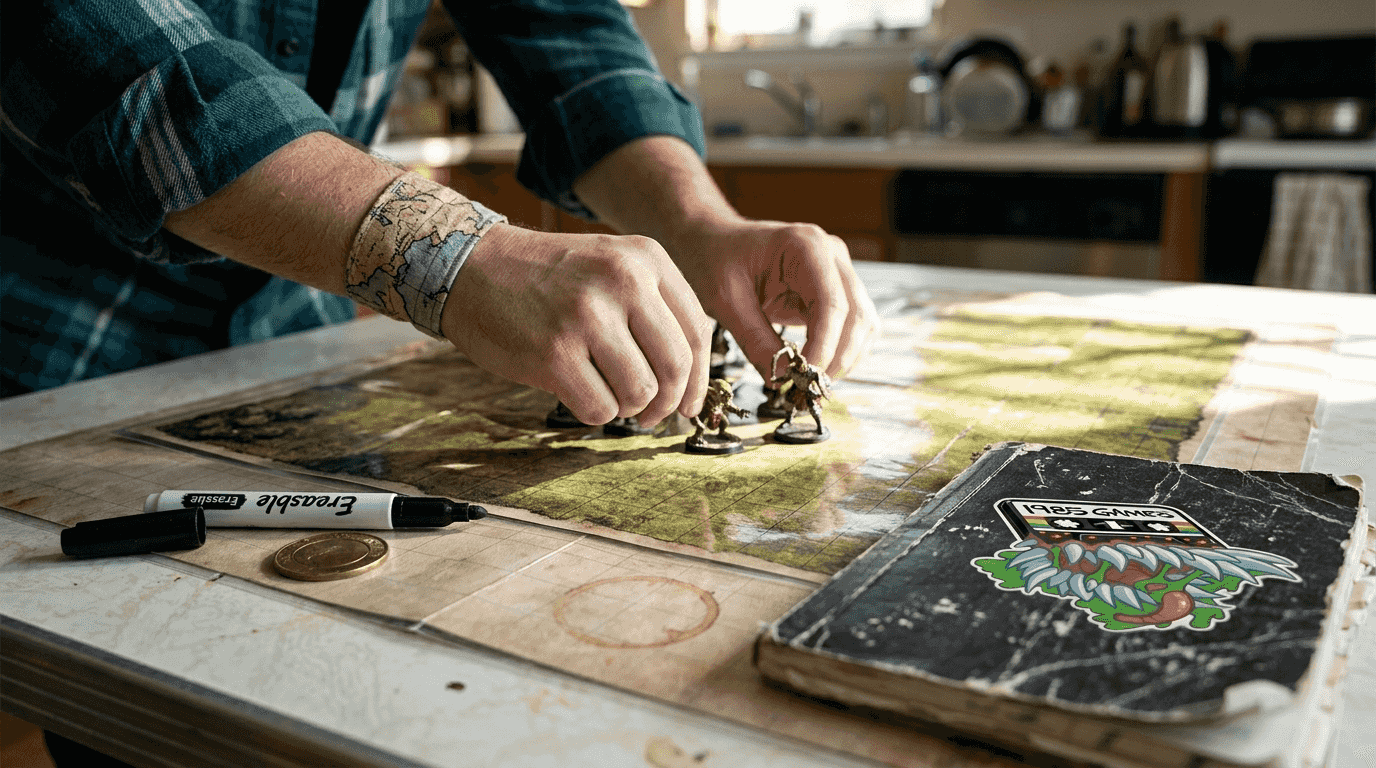
Miniatures and tokens represent characters, monsters, and NPCs during combat encounters. Three-dimensional miniatures offer maximum visual impact and help players emotionally connect with characters. Flat tokens provide affordable alternatives that still clarify positioning and turn order. Both options eliminate confusion about who stands where during complex battles.
| Accessory Type | Primary Function | Best For |
|---|---|---|
| Dice Sets | Randomization and excitement | All players and dungeon masters |
| Battle Maps | Spatial visualization | Tactical combat encounters |
| Campaign Journals | Information organization | Dungeon masters tracking complex plots |
| Miniatures | Character representation | Combat-focused campaigns |
| Condition Markers | Status tracking | Groups using many spell effects |
Digital tools increasingly augment physical accessories for hybrid play experiences. Virtual tabletops combine maps, tokens, and automation for remote gaming. However, many groups find physical accessories create stronger engagement through tactile interaction and reduced screen time during face-to-face sessions.
The best accessory combination depends on your campaign’s tactical complexity, storytelling focus, and player preferences. Combat-heavy games benefit most from detailed maps and miniatures, while roleplay-focused campaigns might prioritize journals and atmospheric props.
Crafting and choosing quality TTRPG accessories
Selecting durable, functional accessories requires evaluating materials, craftsmanship, and real-world performance rather than relying solely on product descriptions or star ratings. Quality directly impacts both longevity and gameplay effectiveness.
Hands-on testing reveals functionality that specifications cannot capture. A dice tray’s felt lining might look premium but shed fibers, while another design uses synthetic suede that maintains appearance through years of use. Battle map surfaces vary in how well they accept and erase markers, with some ghosting after repeated use.
Small-batch and artisanal accessories offer distinct advantages over mass-produced alternatives. Craftspeople often test products during actual gameplay, refining designs based on practical experience. Limited production runs allow for quality control that factory manufacturing cannot match. Unique designs also help your gaming table stand out, creating memorable visual experiences.
Quality indicators for TTRPG accessories:
- Material durability (reinforced stitching, scratch-resistant surfaces)
- Functional design (stable bases, easy-read fonts, accessible storage)
- Finishing quality (smooth edges, consistent coloring, secure closures)
- Practical dimensions (fits standard tables, portable for transport)
Materials significantly affect both aesthetics and longevity. Metal dice provide satisfying weight and durability but require padded rolling surfaces to prevent table damage. Resin dice offer endless color combinations and embedded designs but chip more easily than acrylic alternatives. Leather journals develop character through use, while synthetic covers maintain pristine appearance.
Craftsmanship shows in details like balanced dice that roll fairly, maps with accurate grid spacing, and journals with lay-flat bindings that stay open during use. Custom dice creation processes reveal how manufacturing methods affect final product quality, from mold precision to finishing techniques.
Pro Tip: Test erasable surfaces with your preferred markers before committing to expensive battle maps, as compatibility varies between brands.
Ergonomic design improves usability during extended sessions. Dice trays with slightly angled sides contain rolls without requiring excessive depth. Campaign journals with ribbon bookmarks allow quick reference switching. Card holders position information at readable angles without occupying excessive table space.
Balancing cost with functionality ensures you invest in accessories that genuinely enhance gameplay rather than collecting unused items. A single high-quality battle map with erasable surface provides more value than multiple printed maps for specific encounters. Versatile accessories that serve multiple purposes offer better returns than highly specialized tools.
Consider how accessories integrate with items you already own. Dice that match your character’s color scheme create cohesive aesthetics. Maps compatible with existing miniature scales prevent size mismatches. Storage solutions that accommodate current collections plus reasonable growth avoid premature replacement.
Integrating accessories to enhance your TTRPG sessions
Successfully incorporating accessories into gameplay requires thoughtful planning that considers campaign style, player preferences, and session pacing. Strategic integration maximizes benefits while avoiding table clutter or overwhelming participants.
Plan accessory use according to your campaign’s focus and complexity. Combat-heavy games benefit from detailed battle maps and miniatures that clarify tactical positioning. Roleplay-focused campaigns might emphasize atmospheric props and music instead. Mystery adventures could incorporate puzzle pieces or handouts that players physically manipulate.
Steps for introducing new accessories:
- Identify specific gameplay challenges accessories could solve
- Research options that address those needs within your budget
- Introduce one new accessory type per session initially
- Gather player feedback about whether items enhance or distract
- Adjust usage based on group preferences and practical results
Introduce accessories gradually to prevent overwhelming players with too many new elements simultaneously. Start with foundational items like quality dice and a basic battle map. Add complexity through terrain pieces, condition markers, or specialized tools as your group becomes comfortable with existing accessories.
Combining visual, tactile, and organizational tools creates multisensory experiences that engage different player preferences. Some players respond strongly to visual battle map details, while others connect more with tactile dice rolling or written journal entries. Comprehensive setup guides help balance these elements for maximum group engagement.
Effective accessory combinations:
- Battle maps plus miniatures plus condition markers for tactical clarity
- Campaign journals plus session recaps plus NPC cards for continuity
- Themed dice plus character-specific dice trays for personal investment
- Ambient music plus atmospheric props plus lighting for immersion
Regular maintenance between sessions preserves accessory condition and functionality. Clean erasable maps thoroughly to prevent ghosting. Store dice in protective bags or cases to avoid scratches. Organize loose components like tokens or cards in labeled containers for quick access during gameplay.
Use accessories as storytelling aids rather than mere props. A battle map becomes more engaging when terrain features create tactical choices and narrative opportunities. Unique dice might represent magical artifacts in your story, making their use during critical moments more meaningful. Campaign journals transform into in-world tomes that players can reference.
Rotate accessories based on current campaign needs rather than using everything simultaneously. A dungeon crawl benefits from detailed interior maps, while wilderness exploration might use theater of the mind with occasional sketches. This focused approach prevents table clutter and maintains clear sight lines between players.
Practical testing during actual sessions reveals which accessories genuinely improve your group’s experience versus those that sound appealing but prove cumbersome. Be willing to retire items that complicate rather than enhance gameplay, even if they seem valuable in theory.
Create designated storage and setup systems that streamline session preparation. Organize accessories by encounter type or campaign chapter. Prepare battle maps and miniatures for planned encounters in advance. This preparation allows you to focus on storytelling and player interaction rather than scrambling for materials mid-session.
Enhance your TTRPG experience with quality accessories from 1985 Games
Transforming your gaming sessions from good to unforgettable requires accessories that combine artisanal quality with practical functionality. 1985 Games specializes in handcrafted TTRPG tools designed by players who understand what works during actual gameplay.
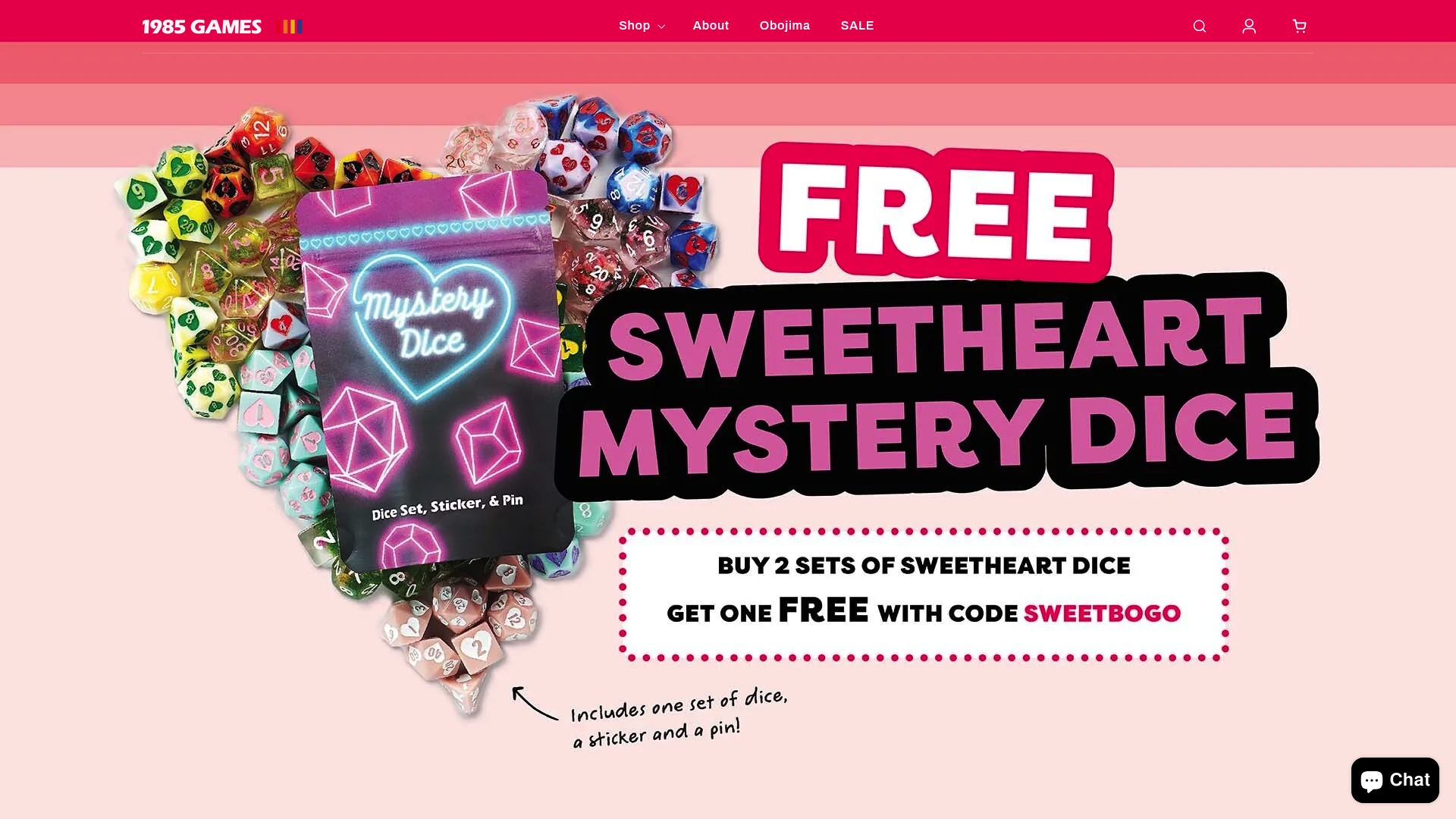
Our campaign journal collection helps dungeon masters organize complex storylines, track NPC relationships, and maintain world-building consistency across sessions. Each journal features lay-flat binding and quality paper that handles frequent page-turning without deterioration. The Dungeon Craft Vol 2 terrain maps provide erasable surfaces for customizable encounter layouts, from underground complexes to surface structures. Premium dice sets offer balanced rolls and unique aesthetics that reflect your character’s personality. Take advantage of our buy 2 get 1 dice set deals to build collections that serve multiple characters or campaigns while maximizing value.
Frequently asked questions about TTRPG accessories
What are the must-have TTRPG accessories for beginners?
Start with a quality polyhedral dice set, a basic erasable battle map, and a simple campaign journal for tracking important details. These three items address the core needs of randomization, spatial visualization, and information organization without overwhelming new players. Add miniatures or tokens as your group becomes comfortable with tactical combat.
How do accessories improve the gameplay experience?
Accessories transform abstract descriptions into tangible, visual elements that deepen immersion and emotional investment. They reduce cognitive load by externalizing information tracking, create shared reference points that align player understanding, and add tactile engagement that strengthens memory formation. Quality accessories also solve practical problems like unclear positioning or forgotten plot details.
Are custom dice worth the investment?
Custom dice provide both functional and emotional value when they reflect your character’s theme or campaign aesthetic. Precision-crafted dice offer more balanced rolls than cheap alternatives, while unique designs create excitement around critical moments. The investment pays off through enhanced personal connection and years of reliable use, especially for players who game regularly.
Can digital accessories replace physical ones?
Digital tools excel for remote gaming and offer automation benefits, but physical accessories create stronger engagement through tactile interaction during in-person sessions. Many groups find the best approach combines both, using digital tools for complex calculations while maintaining physical dice, maps, and journals for the sensory experience that deepens immersion and reduces screen fatigue.
How to maintain and store TTRPG accessories properly?
Clean erasable maps after each use to prevent marker ghosting, store dice in padded bags or cases to avoid scratches, and keep journals in dry locations away from direct sunlight. Organize loose components like tokens or cards in labeled containers for quick access. Regular maintenance extends accessory lifespan and ensures items remain functional and attractive through years of gaming sessions.