

Most players grab dice without thinking twice, assuming all polyhedral sets are created equal. The truth is that dice quality directly impacts your gameplay experience, from the fairness of critical rolls to the tactile satisfaction of each toss. Understanding what separates exceptional dice from mediocre ones helps you invest wisely in tools that enhance immersion, ensure balanced outcomes, and reflect your character’s personality. This guide breaks down the materials, balance testing, design elements, and selection criteria that define truly quality dice for tabletop role-playing games.
Table of Contents
- Key takeaways
- Why material and craftsmanship matter in quality dice
- How balance and fairness define dice quality
- The role of design, aesthetics, and theme in immersive gameplay
- Choosing the right dice set for your tabletop RPG needs
- Enhance your tabletop experience with quality game accessories
- FAQ
Key Takeaways
| Point | Details |
|---|---|
| Material quality | The die material determines weight, texture, durability, and how it contributes to table immersion across sessions. |
| Balance and fairness | Uniform weight distribution and testing prevent biased numbers and ensure fair outcomes during play. |
| Design craftsmanship | Engraving readability, durable paint, and edge finishing improve usability and the sense of premium quality. |
| Testing standards | Quality control includes salt water float tests and precision molding to catch defects before products reach customers. |
Why material and craftsmanship matter in quality dice
The physical composition of your dice determines how they perform across hundreds of gaming sessions. Materials such as resin, metal, and gemstone influence a die’s weight, feel, and longevity, creating distinct experiences at the table. Resin dice offer consistent density that promotes balanced rolls while remaining affordable and lightweight. Metal dice provide satisfying heft and produce distinctive sounds when they hit the table, though they require padded rolling surfaces to prevent damage. Gemstone dice deliver unmatched visual appeal and uniqueness, with natural stone patterns ensuring no two sets look identical.
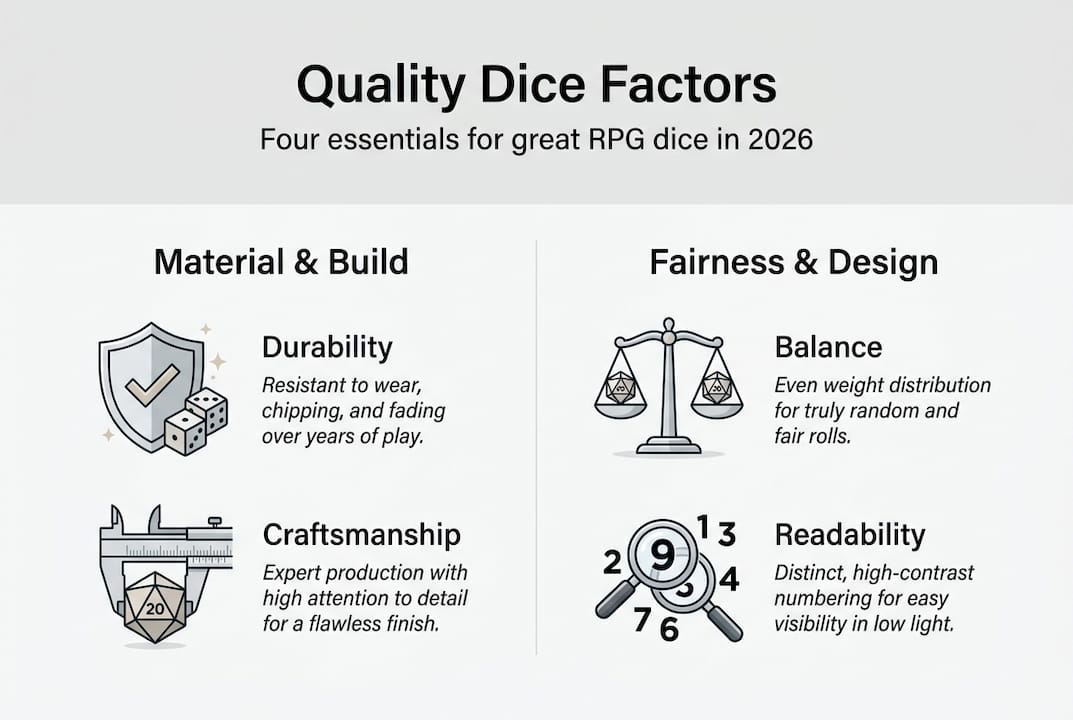
Craftsmanship quality reveals itself in subtle details that separate premium sets from mass-produced alternatives. Deep, crisp engraving ensures numbers remain readable after extended use, while shallow etching fades quickly and becomes difficult to read in dim lighting. Paint application quality determines whether your dice maintain their appearance or chip and wear within months. High-quality sets use durable paints or inlays that bond permanently with the die surface, resisting the friction of repeated rolls. Edge finishing also matters, smooth, polished edges prevent chipping and create consistent rolling physics, while rough or sharp edges can affect how dice tumble.
The relationship between material choice and gameplay immersion runs deeper than aesthetics alone. Heavy metal dice create dramatic moments during critical rolls, their substantial weight and resonant clatter building tension around the table. Translucent resin sets with internal inclusions like glitter or flowers catch light beautifully, adding visual interest to every toss. Wooden dice offer warmth and organic texture that complements nature-themed campaigns or druid characters.
Pro Tip: Match your dice material to your typical playing surface. Metal dice work beautifully on padded rolling trays but can damage wooden tables or glass surfaces. Resin offers versatility across all table types.
Consider these material characteristics when selecting premium dice sets for tabletop gaming:
- Resin provides optimal weight distribution for fair rolling physics
- Metal delivers satisfying tactile feedback and auditory experience
- Gemstone offers one-of-a-kind visual appeal with natural variations
- Acrylic tends toward lighter weight and budget-friendly pricing
- Wooden dice bring organic warmth suited to specific character themes
How balance and fairness define dice quality
Unbalanced dice undermine the randomness that makes tabletop RPGs exciting and fair. When manufacturing defects create uneven weight distribution, certain numbers appear more frequently than probability dictates. This bias can tilt encounters in unintended directions, making combat too easy or punishingly difficult based on flawed tools rather than tactical decisions. Fairness is ensured through balance testing and standardized production, separating quality manufacturers from those cutting corners.
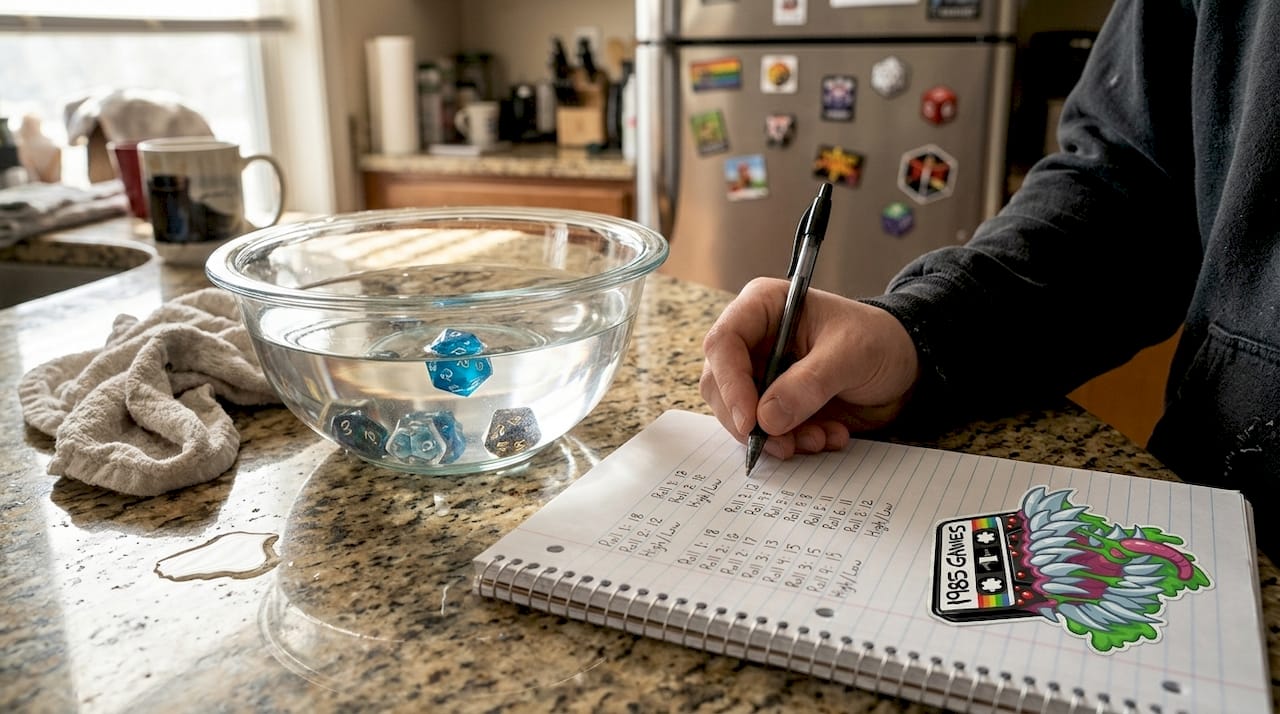
Reputable dice makers employ several testing methods to verify balance before products reach customers. Salt water float tests reveal weight distribution issues, as balanced dice rotate freely while biased dice settle with heavy sides facing down. Precision molds and quality control checks during production catch defects like air bubbles or uneven material density. Some premium manufacturers provide certificates documenting their testing procedures, giving players confidence in their purchase.
You can assess dice fairness yourself using straightforward home testing methods. Roll each die 60 times and record results in a simple tally chart. Perfectly balanced dice won’t show exactly equal distribution across such a small sample, but severe imbalance becomes obvious when specific numbers appear twice as often as others. The chi-square test offers statistical rigor for those wanting mathematical confirmation, though visual inspection of your tally often suffices for practical purposes.
Pro Tip: Test new dice before using them in critical campaign moments. Running 60 rolls per die takes only 10 minutes and prevents discovering balance issues during your character’s life-or-death saving throw.
Follow this process to evaluate your dice set quality:
- Create a tally sheet with rows for each possible number
- Roll the die 60 times in consistent conditions
- Record each result immediately to prevent memory errors
- Calculate the average frequency (60 divided by number of sides)
- Flag any number appearing 50% more than average as potentially biased
- Repeat the test if results seem questionable
Balance testing matters most for dice used in high-stakes situations. Your d20 determines attack rolls, saving throws, and ability checks that shape story outcomes. A biased d20 creates frustration when it consistently fails or succeeds beyond reasonable probability. Damage dice like d6s and d8s matter less since multiple dice average out individual biases, though quality sets maintain fairness across all polyhedrals.
The role of design, aesthetics, and theme in immersive gameplay
Dice appearance influences your emotional connection to characters and campaigns in ways that extend beyond mere decoration. Themed dice sets contribute to enhanced role-playing immersion and enjoyment, transforming functional tools into storytelling accessories that reflect character identity. A paladin player rolling gold and white dice adorned with holy symbols feels different than using plain black polyhedrals. The visual and tactile experience reinforces character choices and builds investment in narrative outcomes.
Color psychology plays a subtle but meaningful role in dice selection. Deep crimson sets evoke aggression and power suited to barbarian characters, while cool blues and purples suggest arcane mystery perfect for wizards. Earth tones in brown and green complement rangers and druids who draw power from nature. Translucent dice with internal elements like flowers, stars, or metallic flakes create visual interest that catches light during dramatic moments.
Font choice and number placement affect practical usability alongside aesthetic appeal. Ornate, stylized fonts look beautiful but can become difficult to read quickly during fast-paced combat. The best designs balance visual interest with clarity, using fonts that remain legible from across the table. Number size matters too, larger numerals help players with vision challenges or those gaming in dimly lit environments that enhance atmosphere.
Symbol integration offers another layer of thematic customization beyond standard numerals. Some sets replace the highest number with faction symbols, class icons, or campaign-specific imagery. A rogue might prefer dice with daggers marking natural 20s, while a cleric’s set could feature holy symbols. These personalized touches create memorable moments when that special symbol appears during critical rolls.
Themed dice enhance RPG gameplay through several design elements:
- Color schemes that match character class or personality traits
- Internal inclusions like glitter, flowers, or miniature skulls
- Custom symbols replacing standard numbers on key faces
- Texture variations from smooth polish to rough stone finishes
- Transparency levels ranging from clear to completely opaque
Matching dice to specific campaigns or characters deepens your role-playing experience. Players often maintain multiple sets, selecting dice that suit each character’s personality and story arc. Your stoic dwarf fighter deserves different dice than your chaotic halfling bard. Switching sets between characters creates a ritual that helps you shift mindsets and embody different personalities at the table.
Choosing the right dice set for your tabletop RPG needs
Selecting quality dice requires balancing multiple factors including material preferences, budget constraints, aesthetic desires, and practical gameplay needs. Different players require dice tailored to their style, with considerations for durability and theme, making informed choices essential for satisfaction. Understanding how various dice characteristics align with your priorities prevents buyer’s remorse and ensures your investment enhances rather than distracts from gameplay.
| Dice type | Best for | Price range | Durability | Special considerations | |—|—|—|—| | Standard resin | Everyday play, beginners | Budget-friendly | High | Versatile across all table surfaces | | Metal | Players wanting heft | Premium | Very high | Requires padded rolling surface | | Gemstone | Collectors, special occasions | Luxury | Medium | Handle with care, avoid hard impacts | | Sharp edge | Precision enthusiasts | Mid to premium | Medium | More accurate rolls, chips more easily | | Themed sets | Immersion-focused players | Varies widely | Depends on material | Match to character or campaign |
Your playing environment influences which dice work best for your situation. Home games with dedicated gaming tables accommodate any dice type, while players who game in public spaces or travel frequently need durable sets that survive transport. Metal dice require protective cases and rolling trays, adding bulk to your gaming bag. Lightweight resin sets travel easily and work on any surface without risk of damage.
Budget considerations don’t require sacrificing quality if you prioritize wisely. A single premium set used for important rolls alongside budget sets for less critical dice creates an economical approach. Many players invest in one exceptional d20 for attack rolls and saving throws while using standard dice for damage and other purposes. This strategy concentrates spending where it impacts gameplay most significantly.
Pro Tip: Build your dice collection gradually rather than buying everything at once. Start with one quality set that matches your primary character, then expand as you explore different classes and campaigns.
Follow this decision framework when selecting types of dice sets for DnD:
- Identify your primary use case (home games, travel, specific character)
- Determine your budget range and prioritize spending on frequently used dice
- Consider table surface compatibility and whether you need rolling accessories
- Evaluate aesthetic preferences including color, theme, and material
- Research manufacturer reputation and read reviews from other players
- Test dice balance if possible before committing to expensive sets
- Factor in long-term durability based on expected usage frequency
Dice readability deserves special attention during selection. Beautiful designs lose value if you constantly squint to determine results. Test visibility by viewing dice from typical playing distance, not just up close. High contrast between numbers and base color ensures quick reads. Metallic or iridescent finishes sometimes sacrifice readability for visual appeal, creating gorgeous dice that frustrate during actual play.
Personal style expression through dice creates opportunities for creativity beyond pure function. Your dice communicate personality before you speak, signaling whether you favor elegance, whimsy, darkness, or tradition. Coordinating dice with character sheets, dice bags, and other accessories builds a cohesive aesthetic that enhances your presence at the table. Some players match dice to miniature paint schemes, creating visual harmony across all game elements.
Enhance your tabletop experience with quality game accessories
Quality dice represent just one element of an immersive tabletop experience. The right terrain and battle maps transform abstract combat into vivid tactical encounters where positioning and environment matter. Detailed maps help players visualize complex scenarios, making strategic decisions more engaging and memorable. Battlemap city designs bring urban encounters to life with intricate street layouts and building details.

Dungeon masters seeking versatile terrain options benefit from modular map systems that adapt to different campaign needs. Dungeon craft vol 2 provides customizable components for creating unique underground environments. Browse the complete battle maps collection to discover terrain suited to wilderness adventures, urban intrigue, or dungeon delving. Combining premium dice with quality maps creates a complete sensory experience that elevates every session beyond theater of the mind alone.
FAQ
What types of materials make the best dice?
Resin offers the best balance of fairness, durability, and affordability for most players. Metal dice provide satisfying weight and sound but require padded surfaces to prevent table damage. Gemstone dice deliver unique visual appeal with natural stone patterns, though they need careful handling to avoid chips or cracks.
How can I test if my dice are balanced and fair?
Roll each die 60 times and record results in a tally chart to check for even distribution. Severe imbalance shows when specific numbers appear significantly more often than probability predicts. Some manufacturers provide balance certifications documenting their testing procedures for quality assurance.
Why do some dice sets cost more than others?
Premium prices reflect superior materials like metal or gemstone, intricate hand-crafted designs, and rigorous manufacturing standards. Higher-cost sets typically offer better balance, more durable finishes, and unique aesthetics. Investing in quality provides longer-lasting dice with fairer rolls and greater visual appeal.
Can themed dice really change my gameplay experience?
Themed dice strengthen your emotional connection to characters by providing visual and tactile reinforcement of personality traits. Rolling dice that match your character’s aesthetic creates memorable moments and enhances immersion. The psychological impact of using personalized tools contributes positively to storytelling flow and player engagement.
What is the best way to care for and store quality dice?
Store dice in padded cases or bags that prevent scratching and protect from impacts during transport. Keep them away from direct sunlight and extreme temperatures that can warp or discolor materials. Clean dice periodically with mild soap and a soft cloth, avoiding harsh chemicals that damage finishes or painted numbers.