

Rolling dice should feel like casting a spell, not flipping a flimsy piece of plastic. For dedicated Dungeons & Dragons players, the difference between generic dice and premium sets is more than appearance—it is about creating moments that heighten immersion around the table. Choosing premium dice sets means investing in craftsmanship, distinctive aesthetics, and tactile satisfaction, turning each roll into a memorable part of your RPG adventure.
Table of Contents
- Premium Dice Sets Defined and Myths
- Material Types and Visual Distinction
- Craftsmanship, Weight, and Gameplay Impact
- Immersion and Storytelling Enhancement
- Cost, Risks, and Alternatives Compared
Key Takeaways
| Point | Details |
|---|---|
| Premium Dice Enhance Gameplay | Handcrafted premium dice improve immersion and make rolling feel more significant during gaming sessions. |
| Myth Busting: What Premium Dice Are Not | Premium dice are not rigged for better rolls and one well-crafted set suffices for play; collecting is optional. |
| Cost-Effectiveness of Premium Dice | While the initial investment may be higher, premium dice often last longer, making them cost-effective over time. |
| Material Matters | Different materials like stone, metal, and resin offer unique experiences and durability, affecting gameplay and personal preference. |
Premium Dice Sets Defined and Myths
Premium dice sets are handcrafted, high-quality polyhedral dice designed for serious tabletop RPG players who want more than generic plastic rolls. They’re built to last, feel incredible in your hand, and actually look like they belong in a fantasy world.
Unlike standard plastic dice that come in starter sets, premium dice showcase superior craftsmanship, better balance, and materials that make rolling feel like a ritual rather than a chore.
What Actually Makes a Dice Set “Premium”
Several qualities separate premium dice from mass-produced alternatives:
- Material quality - Stone, metal, resin, or specialty polymers instead of cheap ABS plastic
- Precision manufacturing - Sharp edges (for metal or stone) or smooth, even surfaces with consistent coloring
- Hand-finishing touches - Detailed painting, gilding, or inlays that add personality
- Weight and balance - Heavier dice that feel substantial when rolled, not hollow or flimsy
- Unique aesthetics - Themed designs, custom colorways, or artistic flair you won’t find in bulk bins
Premium dice transform rolling from a mechanical action into a moment that heightens immersion and makes victories feel earned.
When you understand the different types of dice for D&D gameplay, you’ll recognize how premium craftsmanship impacts not just appearance but how they feel during a critical session.
Common Myths About Premium Dice (Debunked)
Myth 1: Premium dice are rigged to give better rolls.
False. A well-balanced premium die follows the same probability laws as cheap plastic. The difference? Premium dice actually stay balanced longer because they’re manufactured to tighter tolerances. Your Nat 20s aren’t more likely—they just feel more satisfying.
Myth 2: You need dozens of sets to play properly.
Incorrect. One premium set with all seven polyhedral dice (d4, d6, d8, d10, d12, d20, and percentile) works perfectly fine. Some players enjoy collecting multiple sets for different characters or campaigns, but that’s preference, not necessity.
Myth 3: Premium means prohibitively expensive.
Not always. Yes, high-end artisan sets can cost more, but quality premium dice start around $15-$40—reasonable for something you’ll use hundreds of times over years of gaming.
Myth 4: Metal dice damage tables and other dice.
They can. Metal dice are genuinely heavier and harder. That’s why many groups use dice trays or rolling towers to protect surfaces and prevent annoying rolling-off-the-table situations.
Myth 5: You need to “season” new dice.
This is superstition. Dice don’t learn or develop preferences through rolling. However, some players enjoy the ritual of “breaking in” a new set—it’s fun, even if not mechanically necessary.
Why Players Actually Buy Premium Sets
The real reasons are honest and straightforward:
- Immersion - Rolling beautiful dice makes fantasy feel more real
- Durability - Premium sets last years without fading or chipping
- Collecting - Many players enjoy owning different sets for different characters
- Gift-giving - They’re thoughtful presents for fellow players and DMs
- Tactile pleasure - The weight and feel genuinely matter during long sessions
Pro tip: Start with one quality set in materials that appeal to you (stone, metal, or specialty resin), then expand your collection only if you genuinely enjoy the hobby rather than feeling obligated.
Material Types and Visual Distinction
Different materials give dice completely different personalities. Stone feels weighty and ancient. Metal sings when it hits a table. Resin glows with swirled colors. Understanding your options helps you pick dice that match both your playstyle and aesthetic preferences.
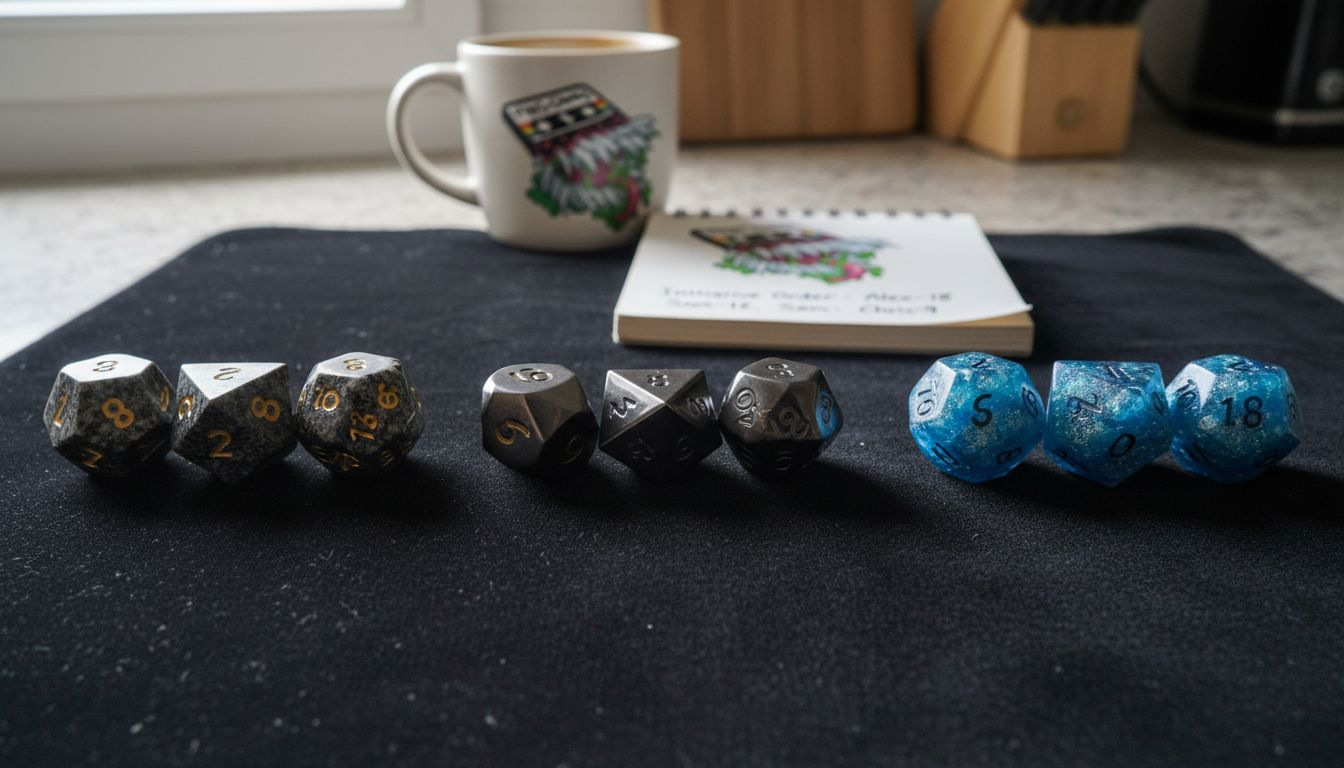
Each material type offers distinct advantages and trade-offs that affect gameplay experience and longevity.
Stone and Crystal Dice
Polished stone and crystal are premium choices for players who want heirloom-quality dice that last generations. These materials feel cool to the touch and carry genuine weight that makes rolling intentional.
Common stone options include:
- Obsidian - Deep black with a glass-like shine, often used for d20s
- Amethyst and quartz - Purple and clear varieties with natural sparkle
- Marble and slate - Smooth, classic aesthetic with cool surface texture
- Fluorite and aventurine - Green or blue stones with gentle shimmer
Stone dice can chip if dropped on hard surfaces, so they pair well with dice trays. They’re also slower to read because edges aren’t always sharply defined.
Metal Dice
Metal dice are for players who want maximum impact. Brass, steel, aluminum, and copper dice create an unmistakable clink sound that announces every roll with authority.
Metal advantages:
- Dramatically heavier, making rolls feel decisive
- Sharp, well-defined edges for crystal-clear number visibility
- Wear beautifully over time with natural patina
- Last essentially forever
The downside? Metal dice genuinely damage wooden tables and other dice. Many tables use rolling towers or dice trays to protect surfaces while maintaining that satisfying metallic roll.
Resin and Polymer Dice
Resin dice balance aesthetics and practicality. They’re cast in molds that allow for intricate designs, embedded objects, swirled colors, and special effects that stone and metal simply can’t achieve.
Resin comes in countless variations:
- Solid colors - Clean, modern look in virtually any hue
- Swirled or marbled - Multiple colors blended during casting
- Inclusion sets - Flowers, glitter, metallic flakes, or tiny objects suspended inside
- Translucent - Light passes through for a stained-glass effect
Resin dice offer better balance than metal (they’re lighter) while remaining durable. They won’t scratch tables the way metal does, making them ideal for shared tables or when durability matters more than dramatic flair.
Here’s a quick comparison of premium dice materials and their unique properties:
| Material | Play Experience | Durability | Visual Appeal |
|---|---|---|---|
| Stone | Heavy, ceremonial feeling | Can chip/crack | Elegant, gemstone look |
| Metal | Dramatic weight and sound | Lasts decades | Industrial, shiny finish |
| Resin/Polymer | Smooth rolls, balanced | Moderate longevity | Vivid colors, effects |
| Standard Plastic | Light, casual feel | Degrades quickly | Basic, minimal design |
Choose materials based on your table environment and rolling habits—metal demands respect and protection, while resin and stone offer flexibility without compromise.
Visual Distinction at a Glance
Here’s how to spot premium materials versus cheap plastic:
- Weight - Premium dice feel substantial; plastic feels hollow
- Edge definition - Numbers should be crisp and readable; blurry edges mean cheap molding
- Surface finish - Look for consistent coloring without streaks or bubbles
- Sound - Stone and metal create distinctive acoustic signatures; cheap plastic sounds dull
- Light interaction - Resin should have depth; translucent varieties should glow when backlit
Pro tip: Hold a premium die up to light and check for air bubbles or inconsistent coloring before committing—quality materials should feel flawless in hand.
Craftsmanship, Weight, and Gameplay Impact
Handcrafted dice aren’t just prettier—they fundamentally change how rolling feels during play. When a die has proper weight and balanced construction, every roll becomes a deliberate moment rather than a flick-and-forget action. This matters more than you’d think during a tense campaign.
Quality craftsmanship directly influences both the tactile experience and psychological weight of your rolls.
Why Weight Matters in Play
Heavier dice demand respect. A 20-gram metal die rolling across your table feels consequential. Light plastic dice? They tumble carelessly and land with an anticlimactic whisper.
The psychological impact is real:
- Heavy dice make critical rolls feel critical
- The sound and momentum create natural suspense
- Players unconsciously slow their rolls, building tension
- A satisfying clink on the table heightens immersion
Lightweight plastic dice roll too fast and too easily. When a Nat 20 happens with premium dice, the table feels it. When it happens with cheap plastic, half the players didn’t even notice.
Precision Manufacturing and Balance
Balanced dice roll fairly. Premium manufacturers use precision tolerances to ensure each face has equal probability of landing face-up.
What this means for gameplay:
- No face favors another face through weight distribution
- Consistent results over hundreds of rolls
- Peace of mind that your 1s aren’t rigged against you
- Cheap plastic dice often have uneven weight distribution from molding defects
You can’t see balance with your eyes, but you’ll feel it over time. After rolling a premium set for months, the randomness feels genuinely random. After rolling cheap dice, some players swear certain numbers come up too often (confirmation bias, but it feels real).
Hand-Finishing and Aesthetic Impact
Handcrafted details elevate immersion. When your dice are painted, gilded, or inlaid with care, holding them feels like owning something precious.
Aesthetic touches include:
- Custom painting with metallic accents or gradients
- Metal inlays on polished stone
- Hand-carved numbers instead of stamped imprints
- Personalized dice sets with character names or campaign symbols
Craftsmanship transforms dice from game tokens into artifacts that make you want to roll them, which is half the appeal.
When you pick up dice you love, you’re more engaged during play. You take your time. You enjoy the roll. You feel invested in outcomes. That’s not trivial—it strengthens immersion for your entire table.
Durability and Long-Term Value
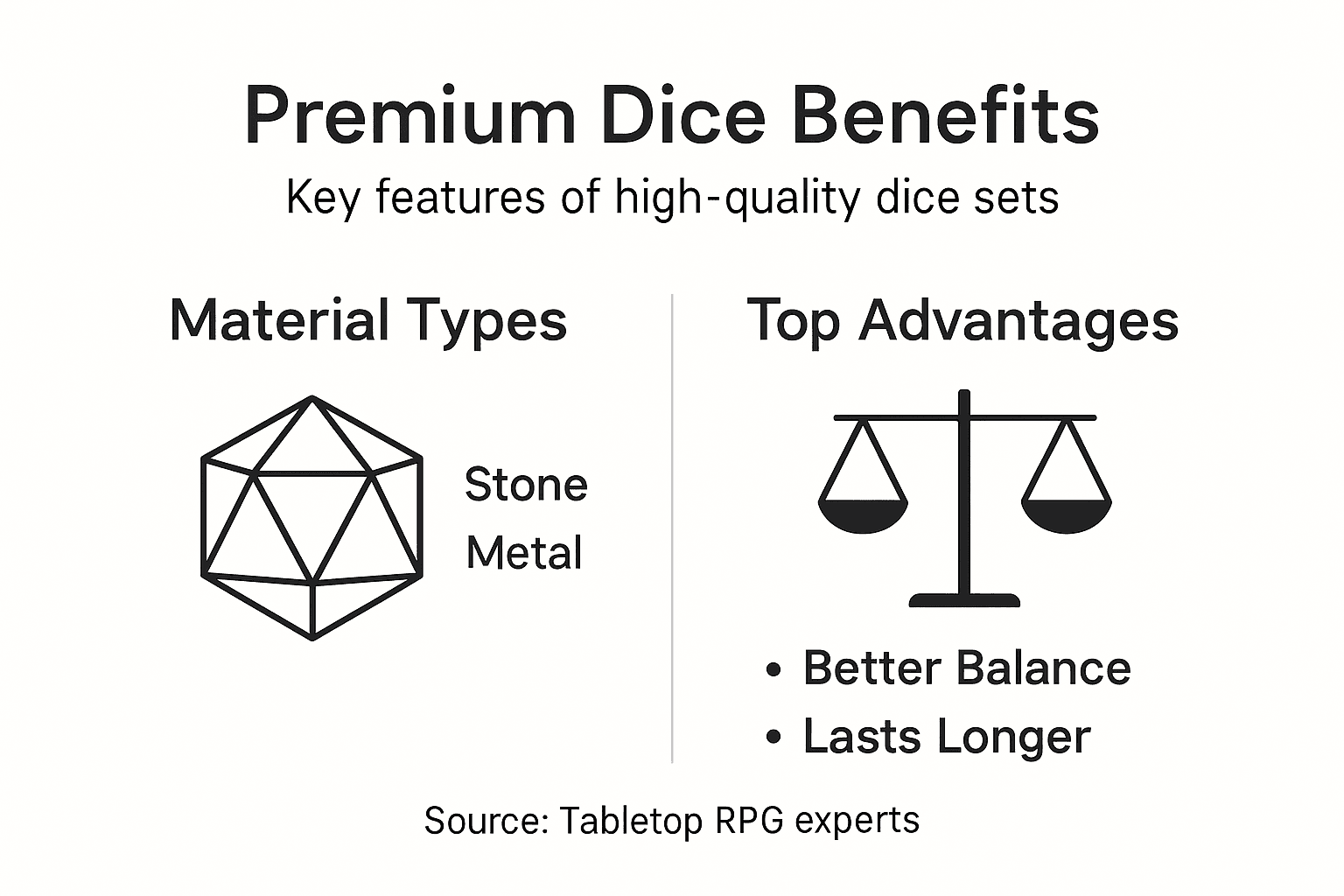
Premium dice actually save money over years of play. A $35 polished stone set lasts 10+ years without fading, chipping, or losing its aesthetic appeal.
Comparison:
- Cheap plastic set ($10) - Fades, warps, and cracks within 1-2 years
- Premium resin set ($25) - Stays flawless for 5+ years
- Stone or metal set ($35+) - Lasts essentially forever with care
When you calculate cost-per-use across years of campaigns, premium dice often cost less per roll than budget alternatives you have to replace repeatedly.
Proper storage methods protect your investment and keep premium dice looking pristine for decades.
Pro tip: Test a premium set’s weight in person before buying—hold it, feel how it rolls in your hand, listen to the sound—because that tactile experience is what you’ll be enjoying hundreds of times during play.
Immersion and Storytelling Enhancement
Premium dice don’t just sit on the table looking pretty—they actively pull players deeper into the world. When a dragon’s fate depends on rolling a gorgeous obsidian d20, the moment feels real. Your brain connects the beautiful object in your hand to the story unfolding around the table.
This sensory bridge between physical and fictional worlds is where premium dice shine.
How Dice Connect Players to Story
Premium dice become part of the narrative. They’re not just probability tools; they’re magical artifacts that determine destiny. A player holding a swirled resin die with their character’s colors embedded in it? They’re not just rolling for initiative. They’re channeling their character’s essence into that moment.
The psychology works like this:
- Beautiful objects command attention and focus
- Thoughtful weight and sound signal importance
- Holding something precious makes outcomes feel earned
- Visual appeal keeps players mentally present during long sessions
Cheap plastic dice whisper “this is a game.” Premium dice whisper “this is your story.”
Creating Memorable Campaign Moments
The right dice make critical rolls unforgettable. When your ranger needs a Nat 20 to save the party from a dragon, rolling with a premium die transforms that moment into table legend.
Think about what you remember from past campaigns:
- That clutch saving throw at the final hour
- The unexpected critical hit that changed everything
- Rolling triple ones and the table erupting in laughter
- A player holding a die they’d carried for years
Those memories stick because they felt significant. Premium dice strengthen that feeling by making the roll itself feel ceremonial.
Themed Sets and Character Connection
Dice with personality match characters with personality. A rogue’s player might prefer dark, sharp-edged metal dice. A cleric might choose soft, luminous resin with holy symbols. A barbarian? Raw stone that looks like it was carved in a dwarven forge.
Many players use different dice sets for different characters, creating a tangible connection between the physical die and the fictional identity.
This matters more than it sounds. When you pick up your character’s dice, you’re mentally stepping into their perspective. You’re not just playing someone else; you’re becoming them through ritual and object.
The Table Atmosphere Effect
Premium dice raise the table’s overall energy. When everyone brings beautiful dice, the entire gaming surface becomes an art display. The table looks intentional. Sacred, even.
Beautiful dice on the table tell your group “we care about this story,” which unconsciously makes everyone take the session more seriously.
Compare two tables: one with mismatched plastic dice in crushed boxes, one where everyone brought polished stone or shimmering resin sets. The premium table feels different. Players sit straighter. They listen more carefully. They invest emotionally.
It’s not magic. It’s just what happens when you surround yourself with objects that matter.
Dice as Keepsakes
Premium dice often outlive the campaigns they were rolled in. A die set used in your first D&D campaign becomes a keepsake. Years later, holding those dice brings the entire story flooding back.
Cheap plastic dice get tossed when they crack. Premium dice? They’re passed between friends, displayed on shelves, brought to new campaigns, and eventually handed down as gaming heirlooms.
Pro tip: Choose a premium set that visually matches your character’s personality or campaign’s aesthetic—when you love how your dice look, you’ll want to roll them constantly, deepening your immersion.
Cost, Risks, and Alternatives Compared
Premium dice aren’t free, and they come with real considerations. Metal dice scratch tables. Stone dice crack if dropped. Some players genuinely prefer the simplicity and affordability of budget options. Let’s be honest about the trade-offs.
Choosing premium dice means weighing investment, risk, and whether alternatives might suit your table better.
The Real Cost Breakdown
Premium dice pricing varies wildly. A single polished stone d20 costs $8-15. A complete resin set runs $25-40. High-end artisan metal sets? $60-150+. Standard plastic sets cost $5-10.
But cost-per-use tells a different story:
- Cheap plastic set ($10) replaced every 18 months = $6.67 per year
- Premium resin set ($30) lasting 10 years = $3 per year
- Metal set ($80) lasting 20+ years = $4 per year or less
Over a decade of weekly gaming, premium dice often cost less than constantly replacing budget alternatives. The upfront expense stings, but the long-term math favors quality.
Below is a summary of cost effectiveness across dice types, highlighting long-term value:
| Dice Type | Upfront Cost | Average Lifespan | Yearly Cost (est.) |
|---|---|---|---|
| Plastic Set | $10 | 1-2 years | $5-$10 |
| Premium Resin | $30 | 8-10 years | $3-$4 |
| Metal Set | $80 | 20+ years | $3-$4 |
| Stone Set | $35 | 10+ years | $3-$4 |
Real Risks and Downsides
Metal dice genuinely damage surfaces. A 20-gram brass die rolling across hardwood will eventually leave marks. Drop one on your foot? It hurts. This is why many tables require dice trays or rolling towers with metal dice.
Stone dice risks:
- Chipping or cracking if dropped on tile or concrete
- Slower to roll and read due to less defined edges
- Can be expensive to replace individual dice
Resin dice are the most forgiving, but can still crack under extreme stress or temperature changes. No die is indestructible.
Alternatives Worth Considering
Some tables genuinely prefer alternatives to physical premium dice. Digital dice rollers, playing cards, spinners, and tokens offer accessibility and cost benefits for players with different preferences or needs.
Why players choose alternatives:
- Budget constraints - Apps and digital tools cost nothing
- Accessibility - Some players prefer randomization methods they can control easier
- Portability - Phone dice rollers travel lighter than sets
- Noise concerns - Digital rolls don’t interrupt quiet play
- Shared tables - Public gaming spaces sometimes ban metal dice
Alternatives lack the tactile satisfaction and storytelling presence of physical dice, but they work perfectly fine for randomization.
The best dice set is one your table actually uses consistently—premium quality only matters if you’re willing to protect and maintain it.
When Budget Dice Make Sense
Not everyone needs premium dice. If you’re:
- New to gaming - Start cheap, upgrade later when you know your preferences
- Sharing a table - Avoid metal on communal surfaces
- Testing different styles - Buy budget sets in various materials first
- Running one-shots - Temporary campaigns don’t need heirloom dice
Budget dice work fine for casual play. They roll fairly and generate random numbers just as well as premium alternatives.
Making Your Decision
Ask yourself these questions:
- Do you game regularly (weekly or more)?
- Will you keep these dice for years?
- Do you have a dedicated gaming table?
- Does the tactile and aesthetic experience matter to you?
- Can you commit to protecting your investment?
Yes to most? Premium dice make sense. No to several? Budget or alternatives work perfectly.
Pro tip: Buy one premium set in a material you genuinely love before committing to a full collection—if you use it constantly over three months, you’ve found your sweet spot; if not, you haven’t wasted thousands.
Elevate Your Game with Premium Dice Sets from 1985 Games
Choosing premium dice means embracing quality, durability, and immersion for every roll. If you want dice that feel substantial, crafted to last, and designed to deepen your connection to the story, 1985 Games offers a stunning selection of handcrafted dice sets tailored for serious tabletop RPG players. From unique resin blends to sharp edge mystery dice, our collections bring the perfect balance of aesthetics and function so your rolls truly matter.

Discover how premium craftsmanship transforms ordinary dice into treasured game artifacts by exploring our range of themed mystery dice sets, sharp edge designs, and premium collections. Don’t settle for cheap plastic when your gaming experience deserves the best. Visit 1985 Games today and choose the dice that will carry your adventures for years to come.
Frequently Asked Questions
What makes a dice set considered ‘premium’?
Premium dice sets are characterized by their quality materials like stone, metal, or specialty polymers, precision manufacturing, hand-finishing touches, weight and balance, and unique aesthetics that enhance the overall gaming experience.
Do premium dice really roll more fairly compared to standard plastic dice?
Yes, premium dice are manufactured with tighter tolerances, which means they have better balance and are less likely to favor specific numbers, ensuring fairer rolls.
Is it necessary to have multiple premium dice sets for different characters?
No, a single premium set with all seven polyhedral dice (d4, d6, d8, d10, d12, d20, and percentile) is sufficient for gameplay. However, many players enjoy collecting different sets for various characters or campaigns as a preference.
How do the materials used in premium dice affect gameplay?
Different materials, such as stone, metal, and resin, offer unique weights, sounds, and visuals that enhance the tactile experience and immersion during gameplay. Heavier dice can create a more significant psychological impact, making results feel more consequential.