

TL;DR:
- Organizing your dice collection enhances gameplay efficiency and protects your valuable sets.
- A well-curated system fosters intentional play, reduces loss, and elevates your gaming atmosphere.
Let’s be real, dice goblins. We’ve all been there. You’re mid-session, the Dungeon Master is watching, the tension is peak Nat 20 territory, and you’re frantically digging through a chaotic pile of polyhedral dice trying to find your d8. Chaos, stress, ruined vibes. Knowing how to organize dice collection the right way isn’t just about neatness. It’s about protecting your precious hoard, speeding up gameplay, and turning your gaming setup into something that genuinely excites you every single session. This guide covers everything: tools, methods, mistakes to dodge, and the real magic that happens when your collection finally has a home.
Table of Contents
- Gathering your tools and assessing your dice collection
- Step-by-step methods to organize and store your dice
- Avoiding common mistakes and troubleshooting your dice organization
- Enjoying the benefits of a well-organized dice collection
- Why organizing your dice collection is more than just tidiness
- Discover curated dice sets and accessories for your collection
- Frequently asked questions
Key Takeaways
| Point | Details |
|---|---|
| Assess your collection | Inventory your dice types and quantities before choosing the right storage tools. |
| Use protective storage | Containers with soft liners like felt prevent damage and preserve dice quality. |
| Organize by category | Sort dice by type, color, or use to improve accessibility during gameplay. |
| Avoid overcrowding | Keep compartments spacious enough to prevent scratches and facilitate easy retrieval. |
| Maintain regularly | Clean and reorganize periodically to keep your collection neat and functional. |
Gathering your tools and assessing your dice collection
Before we start reorganizing, let’s take stock. How bad is it actually? One drawer stuffed with mixed dice from seven different campaigns? A bag so full of d6s you could fill a cereal bowl? No judgment here. The first step to dice organization tips that actually stick is knowing exactly what you’re working with.
Most tabletop RPG sets include seven dice types: the d4 (the tiny caltrop of doom), d6, d8, d10, d12, d20, and the percentile die (a second d10 marked in tens). Count how many complete sets you own, how many loose singles are floating around, and whether any are special or limited edition. Knowing your numbers tells you what kind of storage you actually need.
Here’s a quick breakdown of storage options and what they work best for:
| Storage type | Best for | Material options | Portability |
|---|---|---|---|
| Dice vault | 1 to 3 sets, premium display | Wood, acrylic, metal | Medium |
| Modular tray | Large collections, sorting by type | Plastic, foam | High |
| Zipper dice bag | Travel and quick sessions | Fabric, velvet | Very high |
| Display case | Collector showpieces | Wood, glass | Low |
| Compartment box | Mixed sets and accessories | Plastic, wood | Medium |
A dice vault made from high-quality wood with felt liners protects dice and provides serious aesthetic appeal. We’re talking artisan-level storage that doubles as a mood-setter on your table.
What to gather before you start:
- A flat surface to sort everything on
- Labels or a label maker
- Small bags or zip pouches for grouping spares
- Your chosen storage containers (vaults, trays, or boxes)
- A soft cloth for cleaning dice before storing
Pro Tip: Choose storage with compartments sized for complete standard sets (7 dice) plus a few extras. Cramming 14 dice into a 7-slot tray is how scratches happen. Give your dice some breathing room.
Once you know your collection size, you can curate and protect dice sets with much more confidence and intention. Knowledge first, storage second.
Step-by-step methods to organize and store your dice
Alright, dice goblins. Tools gathered. Collection assessed. It’s time to actually DO the thing. Here’s a step-by-step approach to dice collection management that works whether you own two sets or twenty.
Step 1: Dump and sort Pour everything out onto a flat surface. Every single die. Yes, even the ones in the couch cushions.
Step 2: Sort by type or system Group your dice using whichever category makes the most sense for your play style:
- By material (metal, resin, acrylic, wood)
- By color or aesthetic (great for players who pick dice based on vibes)
- By game system (D&D sets separate from Call of Cthulhu sets, for example)
- By complete sets vs. singles
Step 3: Decide on a primary organization method
- Complete set storage: Keep every 7-piece set together in a single compartment or small pouch
- Type-based storage: Dedicate an entire section to all d20s, another to all d6s, and so on
- Session-ready storage: Keep your current campaign’s dice front and center, everything else in secondary storage
Step 4: Load your storage system Place complete sets into your vault or compartments. Label each section if you’re using a modular tray. Store rare or special sets in their own protected space.
Step 5: Create a “daily driver” zone Your most-used dice deserve prime real estate. Put them in an easy-access tray at the front of your setup.
Step 6: Stow the extras Loose singles and backups go in labeled pouches inside a secondary container. Out of the way, but findable in ten seconds.
The wooden dice vault features compartments for sets and gaming accessories, combining practicality with elegance that genuinely upgrades your entire gaming corner.
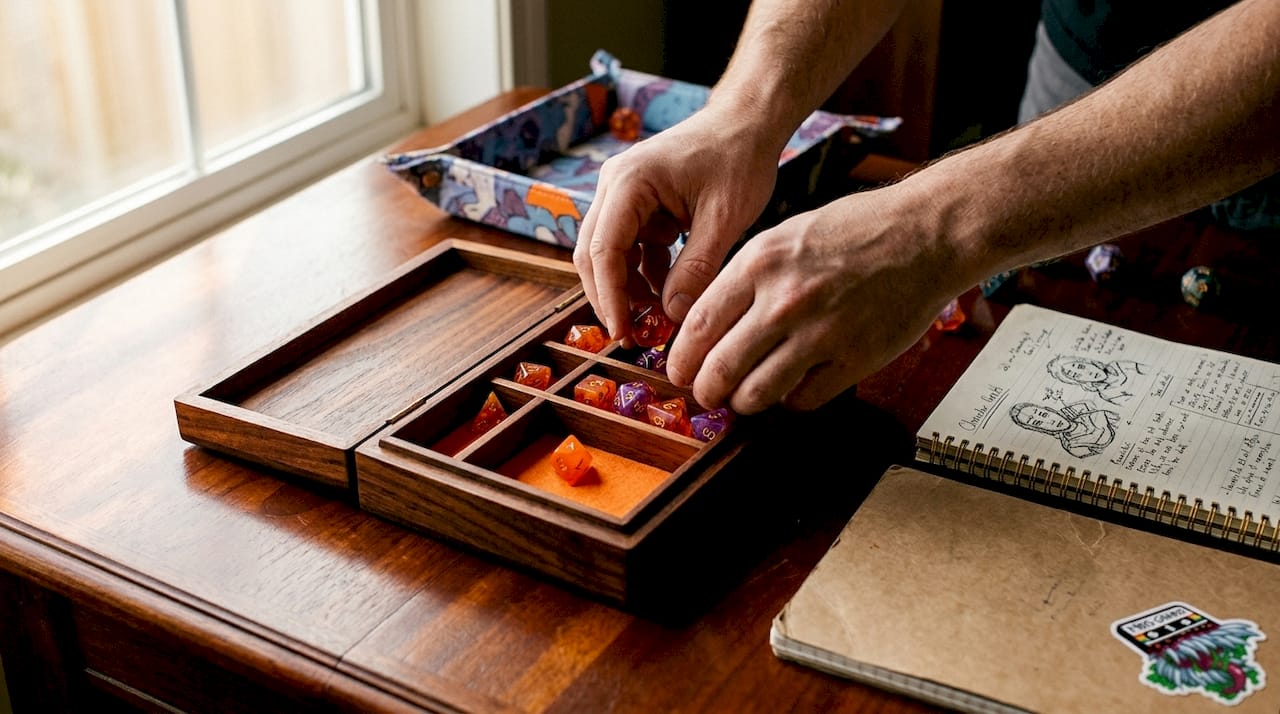
Here’s a comparison of the two most popular approaches:
| Approach | Pros | Cons | Best for |
|---|---|---|---|
| Compartmentalized vault | Looks amazing, protects well | Limited capacity | 1 to 5 curated sets |
| Multi-tray system | Scales with any collection size | Less visually polished | Large or growing collections |
For more ideas on how unique tabletop dice organization ideas can level up your setup, it’s worth browsing how other collectors approach the challenge. And for the full picture on RPG accessories for gameplay immersion, your dice storage is just one piece of a much cooler puzzle.
Pro Tip: Keep frequently used dice in an open rolling tray with a felt base. That way they’re already out and ready when the session starts, which is a tiny thing that somehow makes the whole evening feel more intentional.
Avoiding common mistakes and troubleshooting your dice organization
You’ve set up your system. It looks great. Then three sessions later, somehow everything is a mess again. Sound familiar? Let’s fix that before it happens.
Common dice organization mistakes (and what to do instead):
- Overcrowding compartments. Dice sliding around a packed tray scratch each other. Keep compartments at 80% capacity max.
- Mixing game systems. Blending your D&D dice with your Pathfinder and Blades in the Dark sets sounds efficient until you’re hunting for the right d10 in the middle of a heist encounter.
- Ignoring wear and dust. Dice, especially resin and acrylic ones, collect dust and oils from hands. A wipe-down before storing keeps them in great condition.
- Skipping labels. Unlabeled compartments always drift into chaos. Even masking tape with a marker works.
- Forgetting about transport. Your home system might be perfect, but if you game at a friend’s place, you need a portable option ready to go.
“Felt liners in dice vaults not only protect dice but create a cozy home, preventing scratches and dings.” A soft lining is not a luxury. It’s the difference between dice that look great for years and dice that look beat up after one road trip.
Troubleshooting a chaotic collection:
- Lost dice: Set up a dedicated “found dice” pouch where strays go immediately. Sort them during your next organization session.
- Cluttered trays: Schedule a monthly five-minute reset. Pull everything out, re-sort, and re-label if needed.
- Damaged storage: Replace worn or cracked containers before they start damaging your dice. The storage is not more important than what’s inside it.
Pro Tip: Line every storage container with felt, even the ones that didn’t come with it. Craft store felt sheets cut to size in about two minutes and cost almost nothing. Your future self will thank you, and so will your dice.
Revisiting your dice collection protection tips periodically helps keep your system from quietly falling apart over time.
Enjoying the benefits of a well-organized dice collection
Here’s the payoff. Here’s why you did all of this.
An organized collection doesn’t just look good sitting on your shelf. It actively makes your gaming better. When you know exactly where your lucky d20 lives, you stop the pre-session scramble. You walk in ready. That shift in energy? Your whole table feels it.
The real benefits of keeping dice organized:
- Faster gameplay. No more holding up the table while you dig through a pile. You grab what you need in seconds.
- Longer dice lifespan. Proper storage prevents the micro-scratches, chips, and fading that come from dice bumping around loose.
- Better display value. A beautifully crafted dice vault adds sophistication and warmth to gaming setups, enhancing the overall experience. Your table setup becomes something you’re genuinely proud of.
- Peace of mind. You know exactly what you own, where it is, and whether any pieces are missing.
- Easier collection growth. When your current system is organized, adding new sets is easy and exciting instead of stressful.
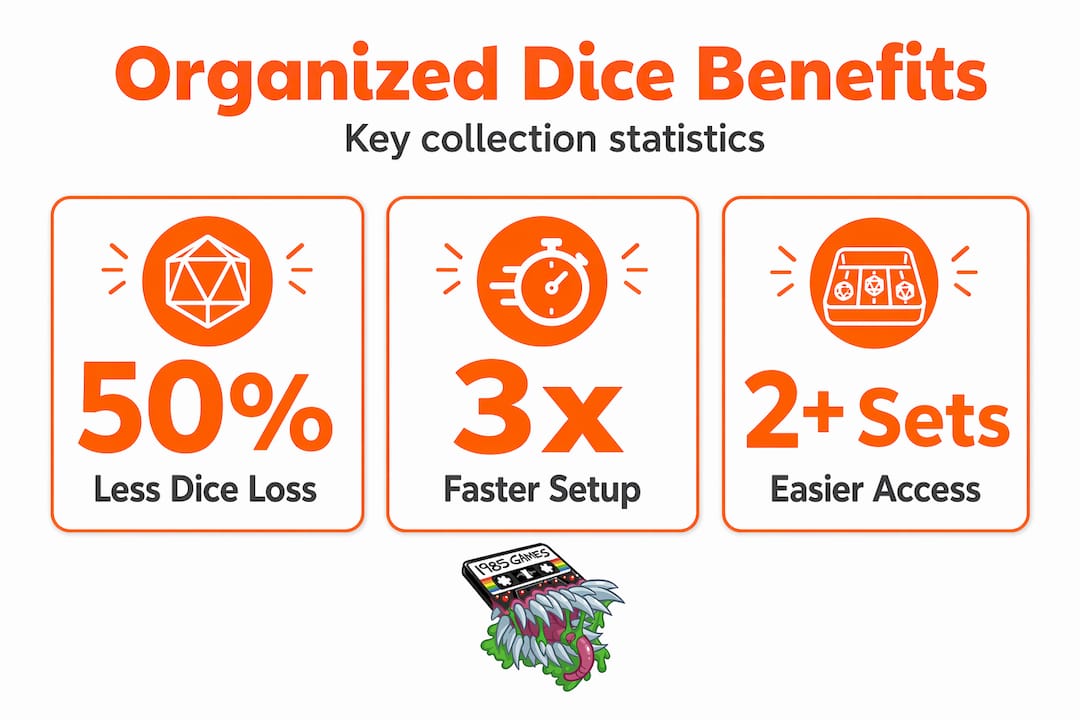
📊 Stat worth knowing: Organized collections reduce dice loss by up to 50% according to collector surveys. Half your missing dice might just be hiding in plain chaos.
For new players, organization creates confidence. For veteran players, it creates efficiency. Both matter enormously at the table. Pairing your organized collection with the right TTRPG accessories for immersive gameplay is the full package.
Why organizing your dice collection is more than just tidiness
Here’s our honest take, and it might surprise you. Organizing your dice isn’t really about storage optimization or even protecting your investment. It’s about how you show up to the game.
When your dice have a proper home, something shifts. You stop treating your collection like clutter and start treating it like what it actually is: a curated part of your creative life. There’s a psychological element here that most organization guides skip entirely. The ritual of opening a well-kept vault, selecting your set for tonight’s session, and placing it at your spot on the table? That’s not just tidiness. That’s mindset preparation. You’re signaling to your brain that it’s time to play.
We’ve noticed in gaming communities that players with organized collections tend to engage more intentionally during sessions. They know their tools, they’re not distracted by missing pieces, and they arrive with an energy that elevates the whole group. A good dice setup is quietly contagious.
Organized tools shape organized thinking. When your dice are sorted and ready, your mind follows suit.
There’s also a community dimension to this. Sharing a beautifully organized collection, whether at the table or online, opens conversations. Other players ask questions, share their own setups, and sometimes discover dice types or storage solutions they’d never considered. Your organized hoard becomes a point of connection, not just a personal system.
The misconception we want to challenge is that organization is a secondary concern, something you do when your collection gets “too big.” Nope. Starting organized, even with your first two sets, builds habits that make every expansion feel easy and every session feel intentional. Check out the full context on dice collecting history and trends to see how the community has evolved around this hobby.
Pro Tip: Build a small pre-session ritual around your dice storage. Open your vault, pick your set, maybe roll a single d20 just for fun. It sounds silly until you try it. That little moment of intention genuinely sets the tone for a better session.
Discover curated dice sets and accessories for your collection
Ready to take your well-organized dice collection to the next level? Your system is in place. Now it’s time to fill it with dice worth organizing.

At 1985 Games, we’ve got dice set deals including a buy 2 get 1 free offer that’s basically a love letter to dice goblins everywhere. Premium sets, mystery drops, sharp edge beauties. All worthy of their very own vault compartment. Pair them with a player’s journal for campaigns to track your sessions in style, or grab a DM journal for game masters to keep your world-building as organized as your dice. Because once you’ve tasted the joy of a truly put-together gaming setup, there’s no going back.
Pro Tip: Pair every new dice set with a dedicated compartment and a small label. Future you will roll a Nat 20 of gratitude.
Frequently asked questions
What is the best way to store a growing dice collection?
Using compartmentalized dice vaults or modular trays lined with felt provides protection and easy access as your collection grows. The dice vault with felt liners offers compartments for multiple sets plus room for accessories.
How can I keep my dice from getting scratched or damaged?
Store dice in containers with soft felt liners or padded compartments to prevent scratches during both storage and transport. Felt liners in dice vaults protect dice from everyday dings and surface damage.
Are there specific organizers designed for tabletop RPG dice?
Yes, wooden dice vaults and modular trays are built specifically for RPG dice, often with compartments sized for standard 7-piece sets. The wooden vault holds three sets plus gaming accessories in one elegant package.
How often should I reorganize or clean my dice collection?
Reorganizing and cleaning your dice every few months keeps accessibility high, prevents clutter buildup, and lets you catch any damage early before it spreads to neighboring pieces.